


Automated Document Creation Compared to Freelancers: What the Research Shows
Written with AI assistance under our editorial guidelines
Automated document creation tools now boost productivity by up to 70% and reduce costs by 60% compared to freelancers, with global spending on document automation software projected to reach nearly $19 billion by 2030. The choice between automation and human freelancers depends on your priorities around speed, accuracy, budget, and quality needs in your 2026 workflow.
Welcome to the battlefield of document creation in 2025—a place where AI-powered platforms and freelance talent collide, reshaping how businesses, agencies, and even solo hustlers approach every file, report, or contract. The debate around automated document creation vs freelancers isn’t just a theoretical exercise or a clickbait headline. It’s about the real-world fight for budgets, quality, time, and even the soul of creative work. Whether you’re drowning in missed deadlines, battling inconsistent output, or on a relentless quest to modernize your document workflow, this is your moment of reckoning. In this deeply researched, myth-busting guide, we pull back the curtain to expose the 9 brutal truths nobody else will tell you about choosing between automation and freelancer muscle. Forget the hype—here’s what’s actually happening, who’s winning, who’s losing, and how you can outsmart the chaos with data-driven clarity.
The document dilemma: Why this debate matters now
The rise of automation in the gig economy
It’s impossible to ignore the shockwaves sent through the freelance market by the rapid rise of AI-powered document creation tools. In less than five years, platforms once dismissed as “just another SaaS” have become juggernauts, capable of churning out contracts, whitepapers, and even nuanced marketing decks at a pace no human could dream of matching. According to Rossum’s Document Automation Trends 2025 Report, automation boosts productivity by up to 70% and slashes costs by as much as 60% compared to hiring freelancers. This isn’t some Silicon Valley fever dream—it’s documented and measurable, with global spending on document automation software growing at a 17% CAGR and projected to hit nearly $19 billion by 2030 (LLCBuddy, 2024).

But this story didn’t start in the age of AI. Document creation has evolved from the ink-stained hands of ancient scribes, through the rise of secretarial pools, to the explosion of the gig economy, and finally, to today’s algorithmic engines. Each step has been driven by the unending demand for speed, accuracy, and scale. Now, in 2025, the lines between human skill and machine speed are blurring faster than ever. Platforms like filecreator.ai are not just automating the dull stuff—they’re redefining what “work” even means.
"The lines between human skill and machine speed are blurring faster than ever." — Alex, industry observer
Why does this matter right now? Because the stakes have never been higher. With over 76 million freelancers operating in the US alone (Upwork, 2023), and businesses under relentless pressure to cut costs and speed up workflows, the choices leaders make today will decide who thrives and who fades into obsolescence.
What users really want: Speed, quality, or control?
Let’s get real about the pain points that drive this debate. For every manager who’s been burned by a missed deadline, every entrepreneur who’s cringed at a copy-paste contract, and every HR lead who’s lost sleep over compliance risks—this is personal. The wish list is brutally simple: documents need to be fast, flawless, and fiercely reliable. Yet, the roads to get there are anything but straightforward.
While human freelancers offer flexibility and that elusive creative “spark,” they also come with hidden costs and a roulette wheel of quality. Automation, on the other hand, promises ruthless efficiency, but often at the expense of nuance and adaptability. Here are the hidden benefits of automated document creation vs freelancers that experts rarely mention:
- Predictable turnaround times: Automated platforms operate 24/7—no sick days, no timezone drama.
- Consistent branding and compliance: AI tools enforce templates and standards, minimizing rogue formatting or legal slip-ups.
- Scalability on demand: Need 1,000 contracts? Automation handles surges that would bury even the most caffeinated freelancer.
- Lower operational overhead: Fewer emails, less project management, and no invoice fright.
- Data-driven improvements: Feedback loops and analytics inform continuous process optimization.
But modernization isn’t a luxury anymore—it’s a survival imperative. Competitive pressure, regulatory demands, and relentless market expectations force organizations of every size to adopt smarter, faster, and more controlled document workflows. For forward-thinking operators, resources like filecreator.ai are a lifeline, providing scalable solutions for the realities of 2025.
Myths and misconceptions: Separating hype from reality
The world is awash in myths about automation and freelance work. First up: the seductive notion that automation is always cheaper. Yes, automated document creation reduces costs by 40–60% in many cases (Templafy, 2024), but savvy operators know that hidden factors—like integration, customization, and support—can nibble away at those savings.
On the flip side, the cult of freelancer creativity is ripe for challenge. Are freelancers “more creative” or “inherently reliable”? Sometimes—when you find the right one. But that’s a lottery, not a guarantee. Lapses in communication, context gaps, and the occasional AWOL artist are as much a part of the freelance experience as breakthrough ideas.
Let’s set the record straight with a few definitions:
The use of software and algorithms to execute repetitive, structured tasks with minimal human intervention. In document creation, this means turning templates and data into polished files at scale.
An ecosystem where temporary, freelance, or contract work replaces traditional employment. Fueled by digital platforms and characterized by flexibility—and precarity.
The set of quality assurance practices ensuring documents meet standards for accuracy, compliance, and branding.
Unofficial technology solutions adopted by teams or individuals without explicit approval from IT departments. In the world of document creation, this can mean anything from unsanctioned template hacks to rogue AI trials.
It’s natural to resist automation in creative domains. There’s a sense that pressing “generate” is a betrayal of craftsmanship. But ignoring technology’s relentless advance doesn’t protect jobs or creativity—it just makes the transition messier and more painful.
Automated document creation: How does it really work?
Under the hood: AI engines, templates, and integrations
Automated document creation isn’t magic—it’s math, code, and an ever-growing library of best practices. At its core, today’s top tools rely on advanced AI engines trained on millions of real-world documents, learning the patterns of language, structure, and compliance. When you enter your data or pick a template, the system applies context-aware algorithms to assemble content, format it, and validate it against industry standards.

What sets advanced systems like filecreator.ai apart isn’t just raw speed. It’s the ability to adapt outputs to highly specific industries—think legal, finance, or healthcare—while supporting complex integrations with cloud platforms, CRMs, and compliance frameworks. This means documents flow straight from data source to finished file, slashing manual effort and risk.
Integration is the secret sauce. Automated document platforms mesh seamlessly with Google Drive, Salesforce, Slack, and countless other apps, making the entire workflow frictionless. Real-time compliance checks and audit trails keep legal and regulatory headaches at bay—a must in a world where non-compliance can mean seven-figure fines.
Real-world applications: From legal to creative
The most powerful proof is in the field. Consider these scenarios:
- Legal: Automated contract generators can create, review, and update NDAs, MSAs, or lease agreements for global teams with zero manual edits.
- Marketing: Platforms churn out pitch decks, brochures, and even social media calendars that are on-brand every time.
- HR: Onboarding packs, policy handbooks, and performance review templates are delivered instantly—no more template wrangling.
- Finance: Automated tools assemble quarterly reports, financial statements, and investor briefs, cross-checking figures for accuracy.
Here’s how to master automated document creation in practice:
- Define your template library: Start with professionally designed, industry-compliant templates.
- Integrate your data sources: Connect CRMs, HRIS systems, or other repositories.
- Customize inputs: Enter variable fields or upload datasets.
- Set compliance parameters: Lock in rules for branding, privacy, and legal standards.
- Generate, review, and iterate: Use feedback to refine templates for continuous improvement.
Automation excels at standardized, high-volume tasks—think onboarding 100 new hires overnight. But it can stumble spectacularly with bespoke requests, nuanced tone, or rapidly changing requirements.
"Sometimes, the smartest solution is knowing when not to automate." — Jamie, workflow strategist
Risks, blind spots, and hard truths
The power of automation comes with a dark side. Data privacy risks loom large; storing sensitive client info on third-party AI platforms demands watertight security and explicit compliance checks. Intellectual property (IP) questions swirl—does your AI vendor keep a copy of every document? Who owns auto-generated content?
| Tool Name | Cost per Month | Speed (Docs/Hour) | Compliance Checks | User Rating |
|---|---|---|---|---|
| filecreator.ai | $49 | 250 | Automated | 4.9/5 |
| Templafy | $65 | 200 | Manual/Partial | 4.4/5 |
| Rossum | $89 | 300 | Automated | 4.7/5 |
| Freelance Average | $600 (per doc) | 1-2 | Manual | 3.7/5 |
Table 1: Feature matrix comparing automated document tools and freelancers. Source: Original analysis based on Rossum, 2025, Templafy, 2024, LLCBuddy, 2024.
There’s also the specter of “shadow IT”—rogue deployments of unapproved platforms that fragment workflows, create version control issues, and expose organizations to risk. The remedy? A risk-aware approach: centralize governance, vet vendors rigorously, and build strong audit trails.
Freelancers: The human edge in a machine age
Not dead yet: Why top talent still matters
The obituary for freelance talent is premature. In the trenches of high-stakes projects, it’s often a lone freelancer—armed with insomnia, intuition, and a library of fringe references—who pulls off a last-minute miracle. Consider the story of a marketing campaign teetering on disaster until a copywriter rewrote the tagline, saving the brand’s reputation and bottom line. These are the moments automation simply can’t replicate.

Empathy, nuance, improvisation—these aren’t just buzzwords. They’re the difference between a contract that’s enforceable and one that’s ironclad, between a pitch deck that’s generic and one that gets funded. Studies on human-AI collaboration show that hybrid teams, where freelancers and automation work in tandem, produce higher-quality outputs than either alone (Ruul 2023 Freelancer Report).
The freelancer experience: Chaos, creativity, and compromise
From the freelancer’s POV, this landscape is equal parts chaos and opportunity. Flexibility and autonomy are intoxicating, but the risks—feast-or-famine cycles, client drama, payment runarounds—are ever-present.
"You can’t automate intuition—or client drama." — Morgan, veteran freelancer
Red flags to watch out for when hiring document freelancers:
- Missing digital footprint: No verifiable portfolio or testimonials—proceed with caution.
- Overpromising, underdelivering: Guarantees of “same-day” masterpiece work are rarely fulfilled without AI assistance.
- Vague pricing: Ambiguous scope and add-on fees lead to budget chaos.
- Inconsistent communication: Ghosting, misaligned expectations, and slow response times derail projects.
The most successful freelancers now embrace AI tools to boost productivity—using platforms like filecreator.ai to prep drafts, automate formatting, or run compliance checks. The hybrid freelancer isn’t a relic—they’re the new power user.
Hidden costs and uncomfortable truths
Hiring freelancers brings invisible baggage. Management overhead, endless rounds of revisions, and the lurking specter of quality control nightmares can sink even the best-laid plans. Missed deadlines aren’t just annoying—they can cascade into lost deals and reputational damage.
| Cost Component | Freelancers (avg) | Automation (avg) |
|---|---|---|
| Initial Draft | $400 | $10 |
| Revisions/Edits | $150 | $0-$5 |
| Project Management | $80 | $2 |
| Compliance Checking | $60 | Included |
| Total Cost per Doc | ~$690 | ~$17 |
Table 2: Cost-benefit analysis—freelancer vs automation. Source: Original analysis based on Templafy, 2024, Ruul, 2023.
Emotional labor is a hidden tax—burnout and churn are rampant, impacting both freelancers and clients. Navigating the gig economy safely demands clear contracts, milestone check-ins, and, ideally, a backup plan for when things go off the rails.
Showdown: Automated document creation vs freelancers
Speed, scale, and reliability: Who wins?
Let’s talk speed. Urgent projects—a thousand NDAs by Monday—are where automation decimates human competition. While a top freelancer might crank out two complex documents a day, AI-powered platforms like filecreator.ai routinely process hundreds per hour without breaking a sweat. According to Rossum, 2025, automation can deliver 250+ documents per hour; the average freelancer manages 1–2.

When it comes to scalability, automation simply doesn’t blink. Whether it’s ten, a hundred, or a thousand documents, AI scales linearly, while freelancers hit a wall. Reliability? Automation executes with precision, version control, and zero sick days—human error rates drop by up to 50% (Templafy, 2024), while freelancers, however talented, remain subject to the whims of distraction, burnout, and bad Wi-Fi.
Quality and creativity: Machine logic vs human nuance
Speed isn’t everything, though. Where automation stumbles is in the small print—the subtlety of tone, brand-specific quirk, or the strategic pivot in a crisis. Automated tools are only as smart as their training data, and “template blindness” creeps in when every output starts to look—well, automated.
Some creative breakthroughs simply can’t be engineered. When a contract needs a clause that’s never existed, or a marketing deck needs a new narrative angle, humans outshine machines every time.
Timeline of evolution:
- Pre-2015: Manual drafting dominates; freelancers thrive.
- 2015–2020: Template-based automation emerges; mixed results.
- 2020–2023: AI-driven document generation enters the mainstream.
- 2024: Hybrid workflows (AI + freelancers) become the gold standard.
- 2025: Automation handles the routine; freelancers handle the exceptional.
Cost, risk, and the bottom line
Visible costs—subscription fees, hourly rates—are only part of the picture. Hidden costs lurk in the form of revisions, project management, compliance headaches, and, for freelancers, the ever-present specter of missed deadlines.
| Cost Type | Freelancers (avg per doc) | Automation (avg per doc) |
|---|---|---|
| Upfront Fee | $400 | $10 |
| Revision Cost | $150 | $0–$5 |
| Management | $80 | $2 |
| Compliance Risk | High (manual) | Low (automated) |
| Data Breach Risk | Medium | Medium |
| Total | ~$690 | ~$17 |
Table 3: Total cost of ownership comparison, 2025. Source: Original analysis based on Rossum, 2025, Templafy, 2024, LLCBuddy, 2024.
And the risks? Data breaches, compliance fines, and reputational damage hit those who cut corners on workflow integrity. The savviest businesses now blend both approaches to maximize value—use automation for high-volume workflows, and bring in freelance talent for creative and complex cases.
Hybrid futures: When humans and AI collaborate
AI-augmented freelancers: The new power users
Meet the new breed of freelancer: part artist, part AI whisperer. These professionals have learned to harness automation to triple their output, using platforms like filecreator.ai to automate the mundane and reserve their brainpower for strategy, creativity, and problem-solving.

The emergence of “AI whisperers”—freelancers who can coax the most out of both human and machine—has sparked an arms race for talent. Agencies and platforms now offer blended teams, delivering both the efficiency of automation and the insight of human expertise.
Decision frameworks: How to choose what’s right for you
So how do you decide? The calculus depends on your budget, urgency, complexity, compliance requirements, and your need for authentic brand voice.
- Assess document volume: High-volume, repetitive tasks? Lean into automation.
- Evaluate complexity: Complex, creative, or sensitive projects? Human expertise is irreplaceable.
- Factor in compliance: Regulated industries demand robust audit trails—automation shines here.
- Consider brand nuance: If every word matters, keep a human in the loop.
- Calculate total cost: Look beyond sticker price to include management, revisions, and risk.
Ask yourself: What’s my risk tolerance? Where does speed matter most? Can I afford to sacrifice nuance for scale? For a more nuanced self-assessment, platforms like filecreator.ai offer resources tailored to your workflow realities.
The hybrid workflow: Best practices for 2025
The best operators now run hybrid workflows: the AI drafts, the human reviews, and feedback loops drive ongoing improvement. Here are a few unconventional uses for blending both worlds:
- AI drafts, freelancer polishes: Speed meets creativity in marketing and legal work.
- Freelancers use AI for research: Supercharge output, eliminate drudgery.
- Continuous feedback loops: Humans correct, AI learns, process evolves.
- Quality control by design: Automated checks catch errors before they hit your inbox.
Embed feedback cycles, insist on auditable outputs, and invest in upskilling teams on both sides of the divide. The future isn’t about choosing sides; it’s about orchestrating a workflow where everyone plays to their strengths.
Society, culture, and the future of work
Who wins, who loses: The gig economy vs the AI economy
The macro impact of automation on freelance work is playing out in real time. With over 1.57 billion freelancers worldwide, and 49% of companies reporting positive business outcomes from freelance hiring (Freelancermap, 2025), the freelance economy is vast. But as 74% of companies adopt AI to speed up recruitment and document workflows, the gig economy is being forced to adapt.
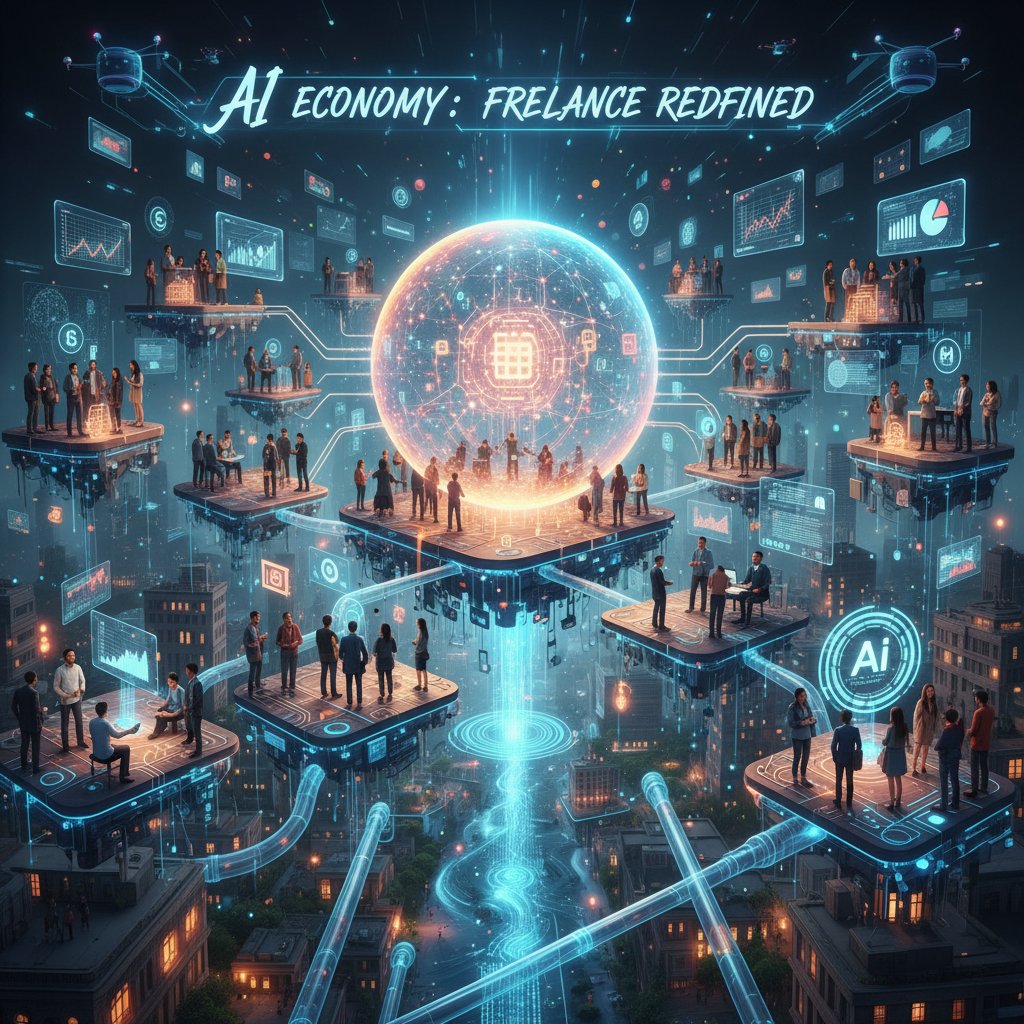
Displacement is real, but so is reskilling. The most vulnerable are those who ignore change; the winners are those who evolve. The reality is blunt: Automation doesn’t kill jobs; it changes what it means to work.
"Automation doesn’t kill jobs; it changes what it means to work." — Alex, labor economist
Ethics, equity, and responsibility
Automating creative work raises a hornet’s nest of ethical dilemmas. From AI bias seeping into contract language to the risk of deepening digital divides, leaders can’t afford to look away.
Systematic and unfair prejudice in automated outputs, often due to unrepresentative or flawed training data.
The principle of fair access to digital tools and opportunities, regardless of socioeconomic status.
The demand that AI decision-making processes be open, explainable, and accountable.
Responsibility for errors, bias, and misuse lies with those who deploy the tools—not the tools themselves. Businesses must audit outputs, retrain models, and build human oversight into every automated workflow. Responsible adoption means measuring impact, not just output.
Predictions: Where do we go from here?
Forecasting is a fool’s game, but a few patterns are undeniable.
- The hybrid model dominates: AI handles the routine, humans handle the exceptional.
- Reskilling becomes survival: Freelancers and employees alike level up or fall behind.
- New roles emerge: AI trainers, workflow auditors, compliance stewards.
- Quality trumps quantity: Those who blend speed with nuance win more deals.
The only certainty is change. Stay curious, challenge your assumptions, and use resources like filecreator.ai to stay one step ahead.
Case studies: Lessons from the real world
Disaster averted: When automation saved the day
Picture this: A multinational corporation, hours from a regulatory deadline, discovers a critical error in hundreds of contracts. Manual review would have taken days, but thanks to automated document creation, the company identifies, corrects, and reissues every contract in under an hour—avoiding a multi-million-dollar penalty.

What went right? Integration with compliance systems, real-time error detection, and scalable output. The lesson: automation isn’t a threat; it’s insurance against the unpredictable.
Lessons learned? Always have an automated “plan B,” document workflows, and regular audit trails.
When freelancers outperformed the machines
On the flip side, a fast-growing startup needed a pitch deck for a make-or-break investor meeting. Automated tools delivered a serviceable draft—but it was a last-minute rewrite by a seasoned freelancer, rich with narrative flair and market insight, that clinched the deal.
The context? High stakes, subjective judgment, and the need for a story only a human could craft. Key takeaway: Don’t automate what deserves to be crafted; treat AI as a canvas, not a paint-by-numbers kit.
"Sometimes, what you need is a little chaos." — Jamie, creative director
Toolkit: Resources, checklists, and references
Quick reference: Automated document creation vs freelancers at a glance
| Factor | Automation | Freelancers | Best Use Case |
|---|---|---|---|
| Speed | Instant (bulk) | 1–2 docs/day avg | High-volume, standardized work |
| Cost | $10–$20 per doc | $400–$700 per doc | Budget-conscious, repetitive tasks |
| Quality (baseline) | High, consistent | Variable | Compliance, branding, legal documentation |
| Quality (creative) | Limited | High (top talent) | Creative, complex, or bespoke requirements |
| Scalability | Unlimited | Limited | Enterprise workflows, mass mailings |
| Compliance | Automated | Manual | Regulated industries (finance, legal, HR) |
| Risk | Data/privacy issues | Deadline slippage | Use both for maximum safety |
Table 4: Quick-glance comparison, original analysis based on Rossum, 2025, LLCBuddy, 2024, Ruul, 2023.
Use this table to fast-track decisions about which approach fits your current needs. For deep dives, refer to earlier sections on automation and freelancers.
Self-assessment: Which approach fits your workflow?
Let’s get practical. Use this checklist to decide your next move:
- Is speed or quality your top priority?
- How many documents do you need per month?
- Do you require compliance and audit trails?
- How critical is brand voice or creativity?
- What’s your risk tolerance for missed deadlines?
- Do you have in-house review capacity for AI drafts?
- Are you prepared to manage freelancers or prefer turn-key tools?
The answers reveal your true workflow DNA—use these insights to drive smarter, safer, more cost-effective choices.
Further reading and expert sources
For those ready to dig deeper:
- Rossum’s Document Automation Trends 2025 Report
- Freelancing Trends 2025: Freelancermap
- LLCBuddy: Document Generation Software Stats
- Ruul 2023 Freelancer Report
- Upwork Freelance Forward 2023
Continuing your education is the best defense against disruption. Track new studies, attend webinars, and regularly audit your document creation workflows to capitalize on the latest innovations.
Conclusion: Rethinking the future of work, one document at a time
By now, the 9 brutal truths of automated document creation vs freelancers should be unmistakably clear: automation slashes costs and errors, freelancers inject creativity and nuance, and the smartest teams orchestrate both for epic results. If you’ve ever assumed this debate had a simple answer, it’s time to think again.
Challenge your assumptions—automation is not always the villain, nor is freelance talent a universal savior. Rethink what “work” really means in 2025: it’s not about battling for relevance, but about evolving, collaborating, and choosing the right tool for every job.
The real winners? Those who stay curious, keep learning, and use resources like filecreator.ai to make informed, future-proof decisions. The future of work isn’t something that happens to you—it’s something you shape, one document at a time.
Sources
References cited in this article
- Rossum’s Document Automation Trends 2025 Report(rossum.ai)
- Freelancing Trends 2025: Freelancermap(freelancermap.com)
- LLCBuddy: Document Generation Software Stats(llcbuddy.com)
- Ruul 2023 Freelancer Report(ruul.io)
- Upwork Freelance Forward 2023(upwork.com)
- WorkGenius.com(workgenius.com)
- Forage.ai Guide(forage.ai)
- Rannsolve: Document Processing 2025(rannsolve.com)
- Team-GPT: AI Automation Examples(team-gpt.com)
- Conga: How to Automate Documentation(conga.com)
- Templafy: Automated Document Creation(templafy.com)
- AIMultiple: Legal AI Use Cases(research.aimultiple.com)
- Gavel: Best Legal Document Automation Software(gavel.io)
- Inkit: Document Automation Risks(inkit.com)
- Litera: Legal Document Risks(litera.com)
- Medium: Freelance Writing in the Age of AI(medium.com)
- Montanus: Freelance Writers vs AI(montanus.co)
- WeLoveSalt: Freelance Trends 2025(welovesalt.com)
- Business Reporter: Human Resources(business-reporter.co.uk)
- Alli AI: Human vs AI Content Creation(alliai.com)
- SurferSEO: AI vs Human Content(surferseo.com)
- SticklerProofreading: Human Proofreaders vs AI(sticklerproofreading.com)
- Oneflow: Document Generation Guide(oneflow.com)
- Templafy: Document Automation Software(templafy.com)
- JunHammer: AI-Human Collaboration(junhammer.com)
- Workday: AI Trends Outlook 2025(blog.workday.com)
- MatrixMarketingGroup: AI-Driven Case Studies(matrixmarketinggroup.com)
- Upwork: Best AI Tools for Freelancers(upwork.com)
- TheDigitalProjectManager: AI Workflow Automation(thedigitalprojectmanager.com)
- FlowForma: AI Workflow Automation Tools(flowforma.com)
- HRStacks: The Future of Freelancing After the AI Revolution(hrstacks.com)
- Ruul: Best AI Tools for Freelancers(ruul.io)
Perfect Documents, Instantly
Filecreator.ai transforms the way you produce professional documents. Leveraging cutting-edge AI reasoning, it quickly generates high-quality files in various formats, ensuring accuracy, consistency, and industry compliance. Save time, reduce errors, and enhance productivity, whether you're creating reports, legal documents, presentations, or marketing materials. Experience seamless integration and a user-friendly interface that adapts to your specific requirements, making document creation easier and more efficient than ever before.
Get startedStart Creating Professional Documents Today
Join thousands of professionals who trust AI-powered document generation
Frequently Asked Questions
How much can automation improve productivity compared to hiring freelancers?
According to Rossum's Document Automation Trends 2025 Report, automation boosts productivity by up to 70% and slashes costs by as much as 60% compared to hiring freelancers.
What is the projected market size for document automation software by 2030?
Global spending on document automation software is growing at a 17% CAGR and is projected to hit nearly $19 billion by 2030.
What types of documents can AI-powered platforms now create?
AI-powered document creation platforms are capable of churning out contracts, whitepapers, and nuanced marketing decks at a pace no human could match.
Why does the debate between automated document creation and freelancers matter in 2025?
The debate matters because it directly impacts budgets, quality, time, and the future of creative work as AI-powered platforms reshape how businesses approach document creation workflows.
Continue Reading
Explore more from Professional Document Generator

Automatic Document Creator or Freelancer: Which Delivers
This article compares speed, cost, and quality outcomes to show which approach fits different business needs.

AI Versus Freelance Document Writers: What the Shift Reveals
AI-powered document creation outperforms freelance writers on speed, consistency, and cost. This article examines why businesses are shifting away from the gig model.

How Document Drafting Automation Is Reshaping Professional Roles
Document drafting automation is transforming how professionals work across law, business, and creative fields.

AI Document Creator: Efficiency Versus Hidden Costs
AI document creators automate pitch decks, contracts, and reports. This article examines the efficiency gains, hidden trade-offs, and impact on workplace roles.

Automated Document Creation: Where It Delivers and Where It Fails
Automated document creation reduces manual paperwork and improves compliance. This article explains the real benefits, the risks to watch, and when implementation succeeds.

Automated Document Design Software: Benefits and Hidden Risks
Automated document design software automates document creation but brings hidden costs. This article explores what's working, what's failing, and the risks involved.