


HR Document Creation Tool Myths That Are Killing Your HR Team
Written with AI assistance under our editorial guidelines
Manual HR documentation consumes billions of hours annually, driving burnout in 81% of HR leaders. Document creation tools reduce paperwork burden, improve compliance accuracy, and accelerate onboarding—directly addressing the hidden costs killing HR team productivity and retention.
If you think an HR document creation tool is just another box to tick in your workflow, you’re missing the point—and risking far more than you realize. In 2025, Human Resource teams stand at a brutal crossroads: paperwork fatigue, relentless compliance demands, AI disruption, and the myth of “good enough” templates. This isn’t another tired pitch for digital transformation. This is a wake-up call, built on real data, hard truths, and the kind of critical analysis that separates HR leaders from the walking burned out. Whether you’re drowning in paperwork, wrestling with inconsistent templates, or skeptical about the next big thing in automation, this deep-dive will arm you with the facts, strategies, and sharp questions your competitors are afraid to ask. Get ready—this won’t be a comfortable read, but it might just save your job.
Why paperwork is HR’s silent killer: The cost you never calculated
The hidden toll of manual HR documentation
Manual HR documentation is a silent predator. It doesn’t make headlines, but it quietly devours time, energy, and morale. In 2023 alone, the U.S. federal sector logged over 10.5 billion hours of paperwork—an eye-watering statistic revealed by the Office of Management and Budget. Think about that: billions of hours, most of it invisible, spent on forms, compliance checks, and document shuffling. These aren’t just numbers; they translate to real burnout. According to Sage’s 2024 HR report, 81% of HR leaders experience burnout, with 95% feeling overwhelmed by paperwork alone. That’s not inefficiency—it’s an existential threat to the function of HR.

The implications ripple outward: delayed onboarding, missed compliance windows, and employees left waiting for critical decisions. Even worse, 68% of job candidates abandon applications because of excessive paperwork, notes peopleHum’s 2023 study. If you’re still relying on manual processes, you’re not just costing your company time—you’re draining its competitive edge.
| Cost Factor | Impact Area | Hidden Consequence |
|---|---|---|
| Paperwork Time | Productivity | Burnout, turnover, slow response |
| Compliance Errors | Legal/Financial | Fines, lawsuits, reputation loss |
| Inefficient Onboarding | Talent Acquisition | Candidate drop-off, skill gaps |
| Manual Data Entry | Operational Efficiency | High error rates, rework |
| Template Inconsistency | Brand/Trust | Mistrust, internal confusion |
Table 1: The unseen costs of manual HR documentation.
Source: Original analysis based on Sage, 2024, [OMB, 2023], [peopleHum, 2023]
Burnout, compliance nightmares, and wasted hours
You can ignore the paperwork mountain, but your nervous system won’t. Chronic stress is the norm for 84% of HR leaders, according to Sage (2024), with most reporting that the burden of manual documentation is pushing them to the edge. This isn’t just about mental health—it’s about business risk.
“The volume of documentation in HR is at an all-time high, and most teams are woefully under-equipped. Every unchecked box is a potential compliance minefield.” — HR Director, PeopleSpheres, 2024
- Mental fatigue and burnout: The endless cycle of updating forms, chasing signatures, and double-checking compliance isn’t just tedious—it’s fundamentally unsustainable. Burnout rates are spiking, and turnover among HR professionals is reaching historic highs.
- Compliance landmines: With regulations growing more complex, every missed deadline or outdated clause in a contract can trigger fines, lawsuits, or worse—public scandal.
- Wasted potential: When HR leaders are trapped in document hell, they’re not strategizing, developing talent, or building culture. The cost? A disengaged workforce and missed business opportunities.
The myth of 'good enough' templates
Many organizations still cling to the comfort of generic HR templates—forms downloaded off the internet or patched together from a decade-old library. The illusion is that they’re “good enough.” The reality? Templates become outdated fast, fail to reflect regulatory changes, and offer no protection against inconsistency. It’s a dangerous game: one small error in language or missing clause can spiral into a compliance crisis. Worse, generic templates sap trust—both inside and outside the organization. Employees notice. So do regulators.
The bottom line: “Good enough” templates aren’t. They’re a stopgap that often creates more problems than they solve. It’s time to retire the idea that half-baked documentation will hold up in a world where scrutiny is relentless and error margins are razor-thin.
From typewriters to AI: The secret history of HR document creation
How technology has reshaped HR’s paperwork burden
Rewind fifty years, and HR’s document arsenal was a fortress of filing cabinets, carbon copies, and manual typewriters. Every process—onboarding, policy creation, compliance checks—was a marathon of physical labor. Then came word processors, followed by the rise of the spreadsheet and networked computers. Each wave promised less drudgery, but the paperwork load rarely shrank; it just changed shape.
| Year | Technology | Effect on HR Documentation |
|---|---|---|
| 1970s | Typewriters & Carbon | Slow, error-prone, manual duplication |
| 1980s | Basic Word Processing | Faster editing, but still siloed |
| 1990s | Networked PCs | Shared access, more forms but more complexity |
| 2000s | Digital Templates | Faster document generation, risk of copy-paste |
| 2010s | Cloud HR Suites | Centralization, collaboration, version issues |
| 2020s | AI-powered Automation | Real-time generation, compliance checks, scale |
Table 2: Evolution of HR document technology.
Source: Original analysis based on Betterworks, 2024, SelectHub, 2024
The dirty secret? Each upgrade solved one pain point and exposed another. The digital age brought efficiency, but also a copy-paste culture and versioning chaos. HR documentation didn’t get easier—it just got faster (and sometimes, sloppier).
The rise (and fall) of generic templates
By the early 2000s, digital templates were everywhere. On the surface, they offered salvation: instant access, consistent branding, and a single source of truth. In reality, they became a new trap. HR teams copied and pasted policies without context, lost track of updates, and introduced inconsistencies that plagued audits and internal reviews.
As more organizations woke up to the pitfalls, the demand for smarter tools grew. The fall of generic templates was inevitable: static, inflexible, and unable to keep pace with changing regulation, they became a liability rather than an asset.
“Templates were a revolution—until they became a crutch. Now, they’re a source of risk.” — HR Tech Analyst, SelectHub, 2024
AI: The disruptor nobody saw coming
The explosion of AI-powered HR document creation tools has been nothing short of seismic. No longer limited to basic templates, today’s systems generate tailored, compliant documents in real time, flag errors, and even adapt to changing regulations. The age of “one-size-fits-all” is over. Now, HR can produce offer letters, policy updates, and compliance documentation in minutes, with accuracy and nuance that simply wasn’t possible before.

This leap didn’t come without growing pains. Human oversight is still essential—AI can amplify mistakes as easily as it corrects them. But the genie is out of the bottle: AI isn’t just supporting HR, it’s redefining what’s possible.
How HR document creation tools really work (and where they fail)
Breaking down the tech: AI, templates, and integrations
Peeling back the curtain on any HR document creation tool reveals a mix of technologies—each with strengths, and each with limitations.
- AI Engines: These analyze inputs (like job roles, compliance requirements, or policy changes) to generate text that’s tailored, accurate, and up-to-date. The best systems learn continuously, flag ambiguities, and surface compliance risks.
- Dynamic Templates: Unlike static documents, these adapt to each use case, pulling in the latest legal language, company branding, and role-specific content.
- Integrations: The real power comes when HR document tools hook into payroll, talent management, legal, and other platforms—eliminating re-entry and minimizing data mismatches.
- Version Control: Critical for audits, advanced tools log every change, timestamp revisions, and allow rollbacks if errors slip through.
- User Permissions: Security isn’t optional. Fine-grained controls ensure only authorized staff can generate, edit, or approve documents.

Definition list: Key terms in modern HR documentation tools
An artificial intelligence model that generates, reviews, and suggests changes to HR documents based on company policies, laws, and best practices.
A digital document structure that updates automatically to reflect the latest regulatory, branding, and role-specific changes.
The seamless connection of the HR document creation tool with other business systems (like payroll or legal) to ensure data consistency and minimize manual entry.
A system that tracks, logs, and manages every change to a document, enabling accountability and rollback.
Access rules that define who can view, edit, or approve various document types, reducing the risk of unauthorized changes.
The promise vs. the reality: Feature comparison
The marketing hype around HR document creation tools is relentless. But how do the promises stack up against lived reality? Here’s a clear-eyed breakdown:
| Feature | Leading Tools (2025) | Most Competitors |
|---|---|---|
| AI-driven Document Generation | Yes (context-aware, compliant) | Basic auto-fill |
| Real-time Compliance Checks | Automated, up-to-date | Manual review |
| Multi-format Export (PDF, DOCX, etc) | Full support | Limited formats |
| Dynamic, Industry Templates | Extensive, customizable | Basic, static |
| Deep System Integrations | Payroll, Legal, HRIS | Siloed or none |
| User Permission Control | Granular, audit-ready | Basic or missing |
| Version Control | Detailed, transparent | Limited/none |
Table 3: How modern HR document creation tools compare.
Source: Original analysis based on Betterworks, 2024, SelectHub, 2024
When automation backfires: Learning from real mistakes
Automation is a double-edged sword. When it works, it can save hours and eliminate errors. When it fails, the fallout is swift and severe. Consider the 2024 case of a multinational retailer that automated its employee contracts with a new “AI-powered” tool. The system failed to update a key clause on overtime pay, leading to a costly lawsuit and a public relations firestorm. Internal audits revealed the problem: the template library had not been updated in over a year, and no human review was conducted before mass deployment.
Case study: The compliance clause catastrophe
A retailer eager to streamline HR documentation implemented an automation tool promising “set-and-forget” ease. Months later, hundreds of contracts were flagged by auditors for missing regulatory updates. The oversight cost the company more than $2 million in legal fees and settlements, not to mention a battered employer brand.
“Automation handled at arms-length is a ticking time bomb. You need oversight—always.” — HR Compliance Lead, PerformYard, 2024
Who’s using HR document creation tools—and what they won’t tell you
Inside the HR teams leading the charge
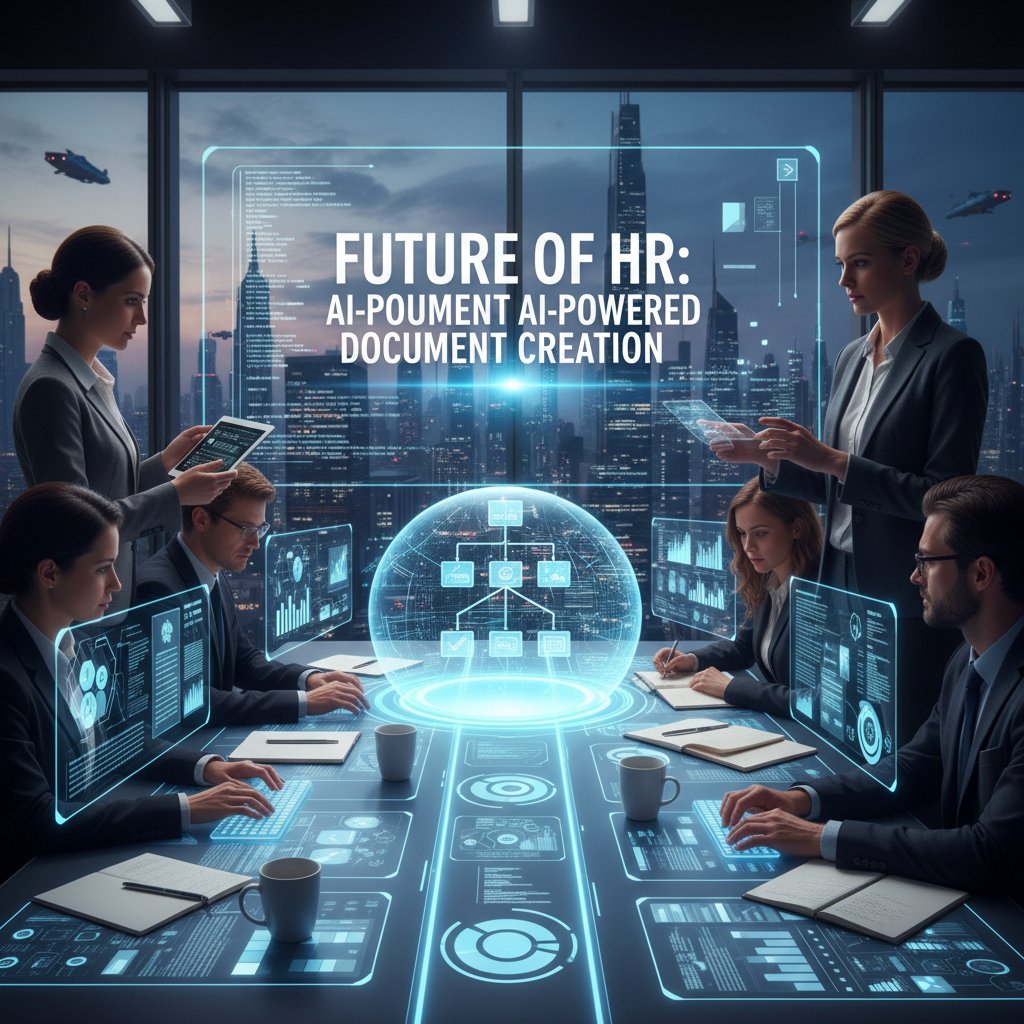
Behind every successful HR transformation is a team willing to ditch the status quo and face the discomfort of change head-on. High-performing HR teams in tech, finance, and healthcare are leveraging document automation not just to cut costs, but to deliver faster decisions, improve compliance, and—crucially—reclaim time for strategy. These teams use AI-powered tools to generate personalized offer letters in minutes, update policies at scale, and ensure every document is audit-ready.
The real secret? Adoption isn’t about technology—it’s about culture. These teams invest in training, align automation with real business outcomes, and monitor closely for errors or bias.
The silent majority: Reluctant adopters and their regrets
For every bold adopter, there’s a silent majority dragging their feet—often pressured by budget constraints, change fatigue, or fear of “breaking something that isn’t broken.” The regrets pile up quickly:
- Delayed implementation: Teams wait too long to automate, missing out on efficiency gains while competitors leapfrog ahead, as shown in [FlexJobs, 2024].
- Overreliance on IT: HR expects IT to “handle it,” resulting in mismatched solutions and missed user needs.
- Copy-paste disasters: Legacy templates are imported into new tools without review, carrying over outdated language and compliance failures.
- Training shortfalls: Staff are handed a shiny new tool without adequate training—errors go unnoticed until they explode.
filecreator.ai and the new wave of digital HR
Into this chaotic landscape steps platforms like filecreator.ai—a Professional Document Generator designed to obliterate the old pain points. At its core, the tool leverages cutting-edge AI reasoning to ensure that documents aren’t just generated quickly, but also adhere to industry best practices, compliance standards, and the specific needs of each business. This isn’t about simply replacing Word templates—it’s about reimagining how documents are created, managed, and deployed across the entire organization.
By automating the drudgery and minimizing error-prone manual intervention, tools like filecreator.ai free up HR leaders to focus on strategic priorities: talent development, culture building, and proactive risk management. The smartest teams don’t just “use” automation—they harness it as a competitive weapon.
The brutal truths: What no vendor will tell you about automation
Automation can amplify your mistakes
Automation is an amplifier. Give it flawless inputs, and it delivers consistency at scale. Feed it outdated or sloppy data, and it will broadcast your mistakes across the entire organization—instantly and irreversibly.
- Garbage in, garbage out: If your templates or data sources are flawed, automation spreads those errors far and wide at lightning speed.
- Compliance isn’t automatic: Automated tools need regular updates to reflect evolving regulations. Neglect this, and you’re inviting fines.
- Human oversight is non-negotiable: No tool replaces the need for human review, especially in high-stakes documents like contracts and policy updates.
- Customization trade-offs: Over-customizing automation tools can lead to complexity, making errors harder to detect and fix.
- Security lapses: Weak permission controls or insecure integrations can expose sensitive employee data, leading to breaches and reputational damage.
The compliance cliff: Risks you’re probably ignoring
Compliance is a moving target. The best HR document creation tool won’t save you if you ignore the regulatory landscape. Here’s a breakdown of common compliance risks:
| Risk Factor | Description | Potential Impact |
|---|---|---|
| Outdated Templates | Missed regulatory updates | Fines, legal action |
| Incomplete Data | Missing required fields in forms | Non-compliance, rework |
| Insecure Storage | Lack of encryption and access controls | Data breaches, lawsuits |
| Poor Audit Trails | No record of changes or approvals | Failed audits, penalties |
| Lack of Localization | Templates not adapted to local regulations | Legal exposure, confusion |
Table 4: The compliance cliff in HR documentation.
Source: Original analysis based on [Paycom, 2024], PerformYard, 2024
“AI gives HR superpowers, but without regular oversight and compliance checks, it can also create super-sized risks.” — Betterworks, 2024
Why most tools overpromise (and how to spot red flags)
It’s tempting to believe every promise on a vendor’s website—but most tools exaggerate their capabilities. Here’s how to spot the warning signs:
- No mention of compliance updates: If a tool doesn’t clearly explain how it stays current with legal requirements, steer clear.
- Opaque AI logic: Tools that can’t explain their decision-making process are a black box—you can’t trust what you can’t understand.
- Hidden fees: Watch for pricing models that penalize you for scaling up or adding integrations.
- Lack of real references: If no reputable companies are willing to vouch for the tool, that’s a giant red flag.
- No audit trail: Absence of detailed change logs means you can’t prove compliance or investigate errors.
How to choose the right HR document creation tool (without getting burned)
Step-by-step guide to vetting your options
Choosing the right HR document creation tool is a high-stakes decision—you can’t afford to get it wrong. Here’s a battle-tested process:
- Map your pain points: Identify exactly where manual processes are costing you time, money, or compliance risk.
- List must-have features: Focus on compliance, integration, version control, and user permissions.
- Demand demos and real data: Insist on seeing the tool in action with your own use cases—not generic canned demos.
- Check references: Talk to current users in your industry; press for honest feedback.
- Scrutinize compliance: Ask how the tool keeps templates up to date and logs changes for audits.
- Test integration: Make sure the tool plays nicely with your existing HRIS, payroll, and legal systems.
- Evaluate support: Will you get expert help when problems arise, or are you on your own?
- Pilot and review: Run a controlled pilot, monitor results, and make the call based on data—not promises.

Checklist: Are you ready to automate your HR docs?
Before you leap, pressure-test your readiness:
- You have clear documentation of current processes and pain points.
- Your data is clean, up-to-date, and organized.
- Leadership is committed to training and change management.
- You have a robust compliance monitoring process in place.
- IT can support integrations and security requirements.
- There’s a plan for regular template review and updates.
- You’re ready to invest in ongoing oversight, not just “set-and-forget” automation.
The hidden costs and benefits most overlook
Adopting an HR document creation tool isn’t just about license fees. Here’s what often gets missed:
| Cost/Benefit | Overlooked Detail | Impact |
|---|---|---|
| Training Time | Staff need onboarding and upskilling | Upfront investment, long-term gain |
| Integration Complexity | IT resources for setup | Delays, hidden costs |
| Error Correction | Time to fix automation mistakes | Potential downtime, risk exposure |
| Compliance Savings | Automated audit trails | Reduced legal risk, faster audits |
| Employee Experience | Faster, clearer communications | Improved retention, engagement |
Table 5: The real cost-benefit equation in HR document automation.
Source: Original analysis based on [PerformYard, 2024], [SelectHub, 2024]
Beyond HR: How document automation is changing the entire organization
Cross-departmental wins and culture shifts
What starts in HR rarely stays there. Document automation is a force multiplier across every business function. Legal teams are generating contracts in hours, not days; finance teams are streamlining reporting and audits; marketing creates branded collateral with zero bottlenecks. The result? A culture shift toward speed, precision, and transparency.

This isn’t just technological change—it’s a catalyst for new ways of working, driving collaboration and breaking down silos.
Unconventional uses for HR document tools
- Healthcare: Generating patient consent forms and compliance records automatically, reducing risk of missing documentation.
- Sales: Auto-generating NDAs, proposals, and follow-ups as soon as deals move forward.
- Operations: Streamlining safety and incident reports, ensuring they’re instantly routed to stakeholders.
- Procurement: Digitizing contracts and vendor agreements, slashing approval times and cutting error rates.
- IT: Managing policy updates for security and acceptable use, with automatic tracking of acknowledgments.
What HR can learn from other industries
In manufacturing, strict process automation has driven error rates down and efficiency up—HR can replicate this discipline in document workflows.
Marketing’s obsession with tailored messaging finds a parallel in HR’s ability to generate role-specific, personalized documents at scale.
Finance and healthcare live or die by compliance—HR must adopt the same relentless focus, using automation as both shield and sword.
Expert predictions: The future of HR document creation in 2025 and beyond
Will AI replace HR documentation—or just make it smarter?
Many fear that AI-driven HR document creation tools are out to replace humans. The reality is sharper: AI is making documentation smarter, faster, and less painful, but it’s not erasing the need for human expertise. According to expert analysis from Betterworks (2024), “AI will grant superpowers to HR leaders, managers, and employees alike, giving them the ability to predict future workforce needs, vastly reduce bias, improve employee engagement, increase retention, boost efficiency, and address skills gaps.” The smart move is to partner with AI—let it handle the drudgery, but keep your eye on the details that only human judgment can assess.
“AI is not a replacement; it’s a force multiplier for HR teams ready to embrace change.” — Betterworks, 2024
The next wave: Personalization, privacy, and power shifts
The current state of HR document creation is already impressive, but the next frontier—now emerging—is hyper-personalization and robust privacy. Modern tools enable HR to tailor every document to the individual, while integrated privacy controls ensure compliance with global data regulations. This shift isn’t just technological; it’s a redistribution of power, giving employees more visibility and control over their own information.

What to watch: Trends and threats on the horizon
- AI-driven document audits are exposing hidden compliance gaps in real time, but they require vigilant oversight to avoid false positives.
- Privacy regulations are tightening, demanding that every tool in the stack meets global standards (think GDPR, CCPA).
- Employee expectations are rising—clarity, speed, and transparency are the new baseline.
- Cross-border HR requires instant localization and compliance adaptation, making static templates obsolete.
- The market is consolidating: expect more all-in-one solutions and fewer niche tools.
- Security threats are evolving; document automation must be paired with airtight access controls and encryption.
- Integration with workflow and collaboration platforms is now table stakes, not a luxury.
Your move: Action steps and takeaways for HR leaders
Priority checklist: Implementing HR document automation
Rolling out a new HR document creation tool? Here’s your high-stakes checklist:
- Audit your existing documentation: Identify outdated templates, compliance gaps, and workflow bottlenecks.
- Engage stakeholders: Bring IT, compliance, and frontline HR into the decision-making process.
- Vet and pilot tools: Choose solutions that align with your needs, and insist on a real-world pilot.
- Train relentlessly: Ensure every user understands both the tool and the compliance context.
- Integrate and secure: Connect your automation tool to other critical systems and lock down permissions.
- Monitor and refine: Track key metrics—speed, error rates, compliance success—and adjust processes as needed.
- Document the change: Keep a clear record of every step, decision, and update for future audits.
Key takeaways: What separates leaders from laggards
- Leaders treat document automation as a strategic priority, not a side project.
- They invest in regular reviews and compliance updates, never set-and-forget.
- User training is embedded, not an afterthought.
- Security and privacy are core requirements, not add-ons.
- Success is measured by impact—time saved, errors prevented, compliance assured.
Final thoughts: Redefining the value of HR in the digital age
In the relentless churn of 2025, the HR document creation tool is more than a digital convenience—it’s a lifeline. The leaders who thrive aren’t those who chase every shiny object, but those who demand accountability, seek out the brutal truths, and harness automation to build trust, not just tick boxes. As HR moves from paperwork purgatory to strategic powerhouse, the line between human expertise and AI-powered efficiency blurs—and that’s where the real magic happens.

If you’re ready to escape the paperwork trap and claim your seat at the strategy table, the time to act is now. The difference between leading and lagging in HR isn’t technology alone—it’s the courage to face reality and use the right tools to rewrite the rules. Start with a clear-eyed look at your own documentation chaos, and let the facts—not the hype—guide your next move.
Sources
References cited in this article
- PeopleSpheres: HR Burnout(peoplespheres.com)
- PerformYard: HR Statistics(performyard.com)
- SelectHub: HR Trends(selecthub.com)
- ThePeopleSpace: Job Cuts(thepeoplespace.com)
- Betterworks: HR Trends(betterworks.com)
- peopleHum: HR Stats(peoplehum.com)
- Gartner: HR Benchmarks(gartner.com)
- Groom Associates: HR Stats(groomassocies.com)
- Canadian HR Reporter(hrreporter.com)
- theHRD: Strategy(thehrdirector.com)
- BrightHR: Document Management(brighthr.com)
- DAU: Evolution of Typing(dau.edu)
- ThinkAutomation: Office Mechanisation(thinkautomation.com)
- Visier: HR History(visier.com)
- The HR Digest: HR Trends 2024(thehrdigest.com)
- Beekeeper: HR Trends(beekeeper.io)
- Gartner: AI in HR(gartner.com)
- SHRM: AI in HR(shrm.org)
- Josh Bersin: AI Disruption(joshbersin.com)
- FileCenter: Document Automation(filecenter.com)
- HRLineup: Document Management(hrlineup.com)
- Technical Writer HQ: HR Document Management(technicalwriterhq.com)
- SaaSworthy: HR Software(saasworthy.com)
- OpenPR: Market Analysis(openpr.com)
Perfect Documents, Instantly
Filecreator.ai transforms the way you produce professional documents. Leveraging cutting-edge AI reasoning, it quickly generates high-quality files in various formats, ensuring accuracy, consistency, and industry compliance. Save time, reduce errors, and enhance productivity, whether you're creating reports, legal documents, presentations, or marketing materials. Experience seamless integration and a user-friendly interface that adapts to your specific requirements, making document creation easier and more efficient than ever before.
Get startedStart Creating Professional Documents Today
Join thousands of professionals who trust AI-powered document generation
Frequently Asked Questions
What percentage of HR leaders experience burnout according to the article?
According to Sage's 2024 HR report cited in the article, 81% of HR leaders experience burnout, with 95% feeling overwhelmed by paperwork alone.
How much paperwork time was logged in the U.S. federal sector in 2023?
The U.S. federal sector logged over 10.5 billion hours of paperwork in 2023 alone, according to data from the Office of Management and Budget.
What percentage of job candidates abandon applications due to excessive paperwork?
According to peopleHum's 2023 study, 68% of job candidates abandon applications because of excessive paperwork.
What are the main consequences of relying on manual HR documentation processes?
The article identifies delayed onboarding, missed compliance windows, employee delays on critical decisions, high error rates from manual data entry, compliance errors leading to fines and lawsuits, and talent acquisition challenges as key consequences of manual HR documentation.
Continue Reading
Explore more from Professional Document Generator

HR Document Generators: What Changes and What Doesn't
HR document generators automate manual documentation tasks but introduce new compliance risks. This article examines what these tools actually change and where HR teams should focus attention.

Generate Automated HR Documents Without Losing the Human Factor
Discover insights about generate automated HR documents

Generate HR Documents That Prevent Audits, Chaos and Burnout
Discover insights about generate HR documents

Professional HR Documents: Why Compliance Matters for Your Business
Professional HR documents protect companies from legal risk. This article explains why generic templates fail, the real costs of poor documentation, and how to create bulletproof HR paperwork.

Automated HR Documentation: Benefits, Risks, and Hidden Costs
Automated HR documentation reduces HR risk while preserving jobs. This article examines the benefits, hidden costs, and seven key truths shaping HR transformation today.

Generate HR Documentation Online Without Risking Compliance Chaos
Discover insights about generate HR documentation online