


How to Draft Legal Documents Quickly Without Crippling Mistakes
Written with AI assistance under our editorial guidelines
To draft legal documents quickly without critical errors, combine speed with precision by understanding modern deadline pressures, leveraging appropriate technology and templates, and implementing systematic review processes. Courts now impose earlier filing deadlines to reduce mistakes, making it essential to balance efficiency with accuracy rather than sacrificing quality for haste.
Picture this: it's 11:43 p.m., the only light in your apartment is the harsh glow of your laptop screen, legal documents piling up like an avalanche of deadlines, and that hollow ache in your chest—the fear of missing something critical. Everyone wants to know how to draft legal documents quickly, but in the unfiltered reality of 2025, speed is both a weapon and a curse. You’re told AI will save you, templates are bulletproof, and that only the elite can work fast and flawlessly. But the dirty secret in every law office (and every startup’s legal ops team) is that haste can ruin reputations, cost millions, or even lose a case before it begins. This isn’t another “5 tips for faster paperwork” guide. We’re dissecting the brutal, research-backed truths behind rapid legal drafting—the hidden dangers, the breakthrough tech, and the strategies the pros actually use to win when the clock’s against them. If you value your reputation, your client’s trust, or simply your sleep, keep reading. The uncomfortable truth is, not everyone who drafts documents quickly gets away unscathed.
The midnight deadline: why speed in legal drafting matters more than ever
The modern pressure cooker: legal work in a time crunch
Imagine the legal world as a pressure cooker—deadlines tightening like a steel vice, clients demanding results before breakfast, and competitors hot on your heels. The business of law in 2025 is no longer a nine-to-five opera; it’s a 24/7 grind. According to Reuters, 2024, U.S. appeals courts have brought forward filing deadlines from midnight to 5 p.m. to reduce last-minute errors. This is not a gentle suggestion; it’s an industry-wide panic button. The consequences for missing a claim or deadline? Regulatory penalties, lost litigation, or the kind of client call that turns your blood to ice.
“Speed combined with precision is essential to avoid legal risks and capitalize on opportunities.” — Viberts Legal 500, 2024

Legal professionals and business leaders alike are now living in the era of the deadline squeeze. It’s not just about moving fast—it’s about outpacing a system designed to trip you up if you blink. The myth of the last-minute miracle is dead. What’s replaced it is a culture where fast legal document drafting isn’t a luxury; it’s a survival skill.
From boardrooms to bedrooms: who’s racing against the clock
Legal deadlines don’t care if you’re a seasoned partner closing a billion-dollar deal or a solo entrepreneur just trying to keep your startup afloat. The need for rapid legal drafting stretches from Wall Street boardrooms, where teams work on cross-border M&A late into the night, to home offices, where remote workers juggle confidentiality agreements between bedtime stories and spreadsheets.
In this landscape, anyone can get caught in the crossfire—junior associates drowning in discovery requests, in-house counsels fielding urgent compliance docs, or founders hitting “send” on contract drafts minutes before investors log on. The democratization of urgency means that drafting quickly is now a universal expectation, not an exceptional feat. According to recent data from LLCBuddy, 2024, 72% of law firms now use AI tools to automate routine drafting—a sign that everyone, not just the big players, is searching for an edge.

But here’s the catch: speed isn’t just about tools. It’s about understanding who you’re up against—your competitors, your own limitations, and the clock. It’s messy, it’s relentless, and it doesn’t care where you work. The question is, are you drafting to win or just surviving until the next deadline?
Speed vs. safety: common misconceptions about fast legal drafting
Myth #1: Templates are foolproof
Templates have long been hailed as the holy grail for fast legal drafting. But let’s shatter the illusion—templates can turn on you faster than an angry adversary. Yes, platforms like Clio Draft claim to reduce drafting time by up to 40% with their template libraries (Clio Draft, 2024), but speed breeds its own dangers.
- Copy-paste disasters: Relying blindly on templates can lead to outdated clauses, inconsistent language, or irrelevant provisions left in by mistake.
- False sense of security: Templates lure you into thinking every risk is covered, but laws change, and one-size-fits-all rarely fits anyone perfectly.
- Hidden compliance landmines: Without customization and up-to-date legal checks, templates can miss critical nuances or jurisdictional requirements.
- Watered-down precision: Templates can’t replace understanding the facts, context, and goals unique to your situation.
The lesson? Templates are tools, not crutches. Use them to accelerate, but never to abdicate your judgment.
Myth #2: Only lawyers can draft fast (and well)
If you think only seasoned attorneys can pull off quick, flawless drafts, you’ve bought into a myth that keeps legal teams bloated and slow. The reality? Technology and clear workflows have democratized drafting speed. Paralegals, legal ops, and even business managers wield AI-powered tools that automate research, flag inconsistencies, and generate rough drafts in minutes.
“AI accelerates drafting but cannot replace nuanced legal judgment, especially for complex documents. Hybrid workflows yield the best results.” — Ashwell & Ashwell, PLLC, 2024
Experts agree: the best outcomes emerge when humans and tech collaborate, not when one tries to outpace the other. The myth that only lawyers can draft quickly (and safely) ignores the reality of cross-functional teams and the emergence of smarter workflows.
Myth #3: AI tools always catch mistakes
Here’s the uncomfortable truth: AI will save you time, but only if you keep a hand on the wheel. Automated legal drafting tools can flag missing sections, check cross-references, and even run compliance checks, but they are not infallible. According to the NatLawReview, 2024, AI-powered legal research now cuts precedent search time by 60%—but it still misses context, subtle conflicts, or unique scenario triggers.

Automated tools are only as good as the data and judgment behind them. Trust them to accelerate your workflow, not to replace your expertise or your final review.
The anatomy of a fast—and flawless—legal document
Essential components: what every rapid draft needs
A fast legal draft is only as strong as the details it includes—and the pitfalls it avoids. The essential components aren’t just legal boilerplate; they’re the backbone of enforceability and client protection.
Key elements to include:
- Clear parties and definitions
- Accurate recitals or background info
- Terms spelled out with precision—dates, amounts, obligations
- Clauses covering contingencies, liability, dispute resolution
- Compliance checks for jurisdictional and regulatory changes
- Clean formatting and cross-references
Definition list
The person or entity bound by the contract or document. Clearly define every party to avoid ambiguity.
Background statements that contextualize the agreement. They set the stage for interpretation and intent.
The legal exchange—what each party gives or receives. Without it, most contracts are unenforceable.
The process of signing and finalizing a document with proper authority and witnesses.
Table: Components Checklist
| Component | Why It Matters | Common Pitfalls |
|---|---|---|
| Parties & Definitions | Sets who’s bound; avoids confusion | Ambiguous names; undefined roles |
| Recitals | Provides legal context; aids interpretation | Outdated or irrelevant facts |
| Detailed Terms | Prevents disputes; clarifies obligations | Vagueness; conflicting dates |
| Compliance Clauses | Ensures legal validity in current jurisdiction | Missing updates; wrong laws |
| Dispute Resolution | Streamlines conflicts; saves money/time | No arbitration or forum chosen |
| Signatures & Dates | Finalizes enforceability | Missing signatures; backdating |
Source: Original analysis based on Briefpoint, 2024, LLCBuddy, 2024
The art of ruthless editing
Editing isn’t just a final check—it’s a culling of every word, clause, and comma that doesn’t earn its keep. The fastest drafters are brutal with their red pens. They know that a clean document isn’t just about speed, it’s about stripping away potential liabilities, ambiguities, and client embarrassment.
Ruthless editing means reading every line with the mindset: “If it doesn’t serve the client or the law, why is it here?” It’s about owning the document—not just assembling it. The best legal professionals allocate twice as much time for editing as for the first draft, knowing that most errors hide in the details you’re tempted to skip.

The difference between a good and a great draft? The courage to delete, simplify, and clarify until only the essentials remain. Fast drafters aren’t just quick—they’re relentless in pursuit of clarity.
Common errors that slow you down (and how to avoid them)
Drafting quickly often means falling into familiar traps—each one a potential lawsuit or delay waiting to happen.
- Copy-paste errors from previous deals that don’t match the current facts.
- Leaving placeholder text or tracked changes in the final version.
- Failing to update jurisdictional references or compliance clauses.
- Skipping over “boilerplate” sections but missing recent legal changes.
- Poor cross-referencing, leading to contradictions or loopholes.
- Rushing signature blocks and missing authorized signatories.
The antidote? Slow down just enough to run a targeted checklist after every draft, and never trust the default settings blindly.
Tool wars: choosing your weapon for lightning-fast drafting
Manual vs. automated: the real winners
Let’s settle the debate—manual drafting versus automation isn’t a binary choice; it’s a spectrum. Many legal professionals still cling to Word docs and yellow pads, convinced that speed means cutting corners. But research shows that firms using automated tools like Briefpoint or Clio Draft reduce drafting time by up to 40% (Clio Draft, 2024) and errors by 30%.
| Method | Speed | Accuracy | Collaboration | Risk Level | Typical Use Case |
|---|---|---|---|---|---|
| Manual Drafting | Slow | Variable | Low | High | Unique, complex, one-off documents |
| Template Libraries | Fast | Moderate | Medium | Moderate | Routine contracts, repeatable docs |
| AI-powered Tools | Fastest | High | High | Low (with review) | Bulk drafting, compliance-heavy docs |
Source: Original analysis based on Briefpoint, 2024, LLCBuddy, 2024

The smart move? Use the right tool for the job. The best drafters know when to trust automation—and when to go manual for nuance.
The rise of AI: hype, hope, and harsh reality
Artificial intelligence is everywhere in legal tech marketing, but the reality is complex. AI can generate first drafts, spot missing sections, and even suggest clause language, but it cannot replace experienced judgment or the ability to interpret gray areas.
“AI accelerates drafting but cannot replace nuanced legal judgment, especially for complex documents. Hybrid workflows yield the best results.” — Ashwell & Ashwell, PLLC, 2024
The hope is that AI will make legal drafting as simple as filling out a form. The harsh reality is: without human review, AI can introduce subtle errors or overlook context. The most effective workflows in 2025 blend machine speed with human insight—a partnership, not a replacement.
AI tools like Briefpoint, Clio Draft, and CoCounsel are now mainstream. According to LLCBuddy, 2024, over 70% of firms are using some form of AI to automate routine drafting. But the firms who win the speed game don’t just deploy AI—they use it as a force multiplier, not as a substitute for expert review.
filecreator.ai and the new breed of document generators
Enter filecreator.ai—a new breed of AI-powered document generators, designed not just to spit out templates, but to craft professional-grade files tailored to your needs. What separates these tools from the last generation is their ability to reason, adapt, and integrate compliance checks directly into the workflow.
With filecreator.ai, legal professionals and business teams alike can generate high-quality contracts, reports, or technical manuals in minutes, all while minimizing errors and ensuring industry compliance. The real advantage? It enables everyone from paralegals to business administrators to participate in document creation—without bottlenecking on legal review.
Rapid document generation doesn’t mean sacrificing quality or compliance. When paired with smart review processes, filecreator.ai and its peers redefine what’s possible in legal drafting speed.
Expert strategies: how pros draft legal documents at warp speed
Pre-drafting rituals: setup hacks from the trenches
Speed doesn’t start with typing—it starts with preparation. The fastest legal drafters have rituals that shave minutes (and mistakes) before the first word hits the page.
- Build a client-specific checklist: Before drafting, pros gather every key fact and requirement, tailored to the client or deal at hand.
- Preload templates and past deals: Keep frequently used clauses and precedent docs on standby, tagged and searchable.
- Block distractions—schedule “deep work”: Ritualize drafting time to avoid interruptions, context switching, or deadline-panicked mistakes.
- Sync with collaborators: Align team roles, deadlines, and file access upfront to prevent last-minute confusion.
- Pre-verify compliance hot spots: Run a quick legal update check for jurisdictional changes to avoid drafting based on outdated law.
These rituals aren’t hype—they’re habits built on hard-won experience and relentless iteration.
Speed without shortcuts: advanced workflow secrets
Going fast doesn’t mean gambling with quality. The pros use advanced workflows that surface mistakes before they can become disasters.
Fast drafters don’t just rely on tech—they cultivate a habit of double-checking every automated output. They use change-tracking, version histories, and comment threads, transforming drafts into living documents that evolve in real-time.
- Leverage AI-powered redlining for instant comparison with old deals.
- Use built-in compliance checks on every draft, especially for cross-border docs.
- Apply modular drafting—building contracts from vetted “building blocks” that fit together seamlessly.
- Routinely cross-verify key clauses with up-to-date statutes and recent case law using specialized research tools.
The secret? Treat every draft as a prototype—never final until every risk, contradiction, or loophole is wrung out.
Red flags: when to hit pause, not send
The real experts know that speed kills if you ignore warning signs. These are the flashing red lights that say “stop and review”—no matter how late the hour.
- Unusual deal terms or negotiation pressure you’ve never seen before
- Missing or unclear party names and signature authority
- Conflicting dates, deadlines, or deliverables
- New regulatory requirements or recent changes in the law
- Disagreements between automated suggestions and your own legal knowledge
Pausing to address these red flags isn’t a weakness—it’s the move that separates speed from recklessness.
Case files: the high price of going too fast
When speed kills: infamous legal drafting disasters
History is littered with cautionary tales of lawyers and business leaders who rushed a draft—only to pay for it in blood, sweat, and regulatory sanctions. One of the most notorious examples is the 2023 contract dispute in which a single missed clause on data privacy led to a multimillion-dollar penalty for a tech giant (case details withheld for confidentiality).
The root cause? A copied template with a crucial compliance clause left blank, sent at 11:58 p.m. to beat a midnight deadline. Legal experts point to such disasters as proof that speed without review is a recipe for ruin.
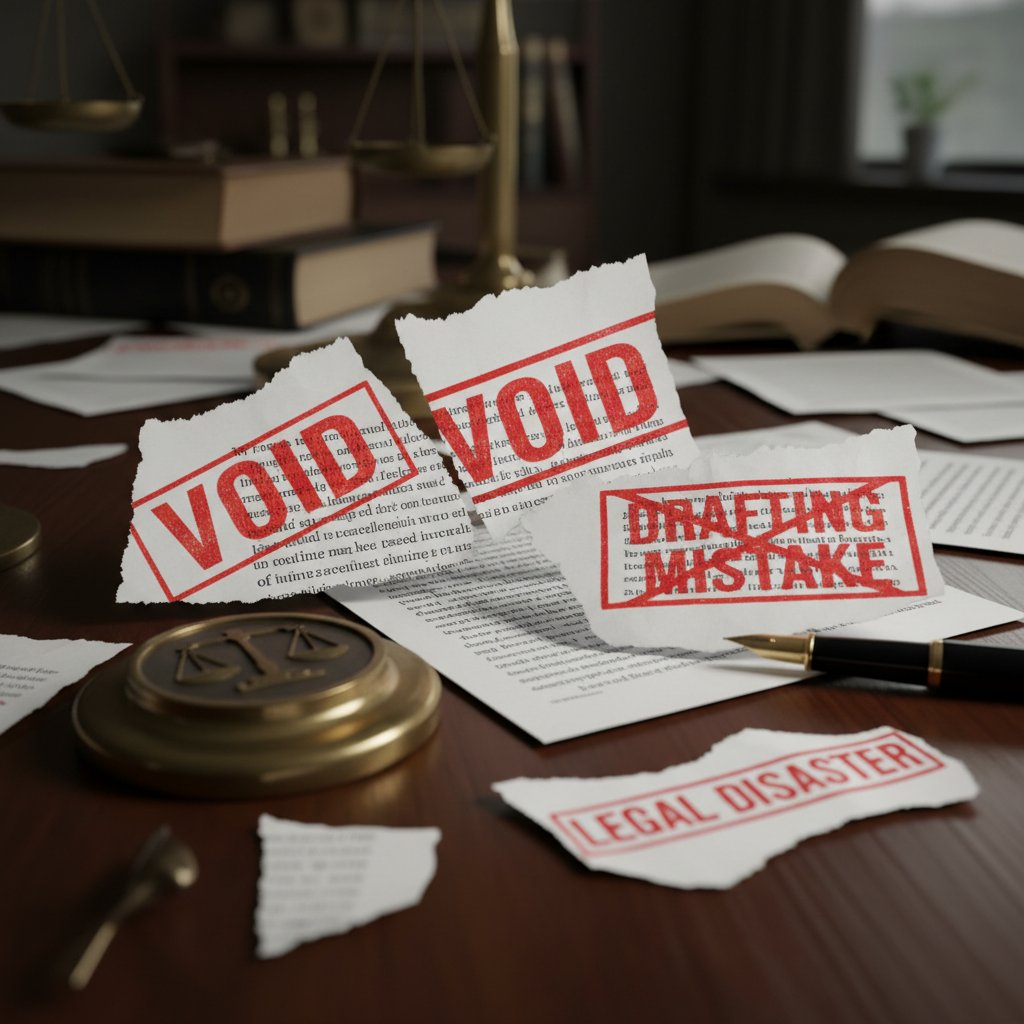
“Delays can lead to missed claims, litigation, or regulatory penalties.” — Viberts Legal 500, 2024
These stories aren’t rare—they’re the silent undercurrent of the industry, whispered about but rarely acknowledged in public.
Saved by the clock: success stories from the brink
Not every speed story ends in disaster—some become legendary saves. Here are three examples where rapid drafting made the difference:
- Startup funding miracle: A founder drafts and signs a convertible note with filecreator.ai hours before an investor’s window closes, avoiding a funding collapse.
- Litigation averted: An in-house counsel spots a critical indemnity omission in an AI-generated draft, edits on the fly, and saves the company from a six-figure lawsuit.
- Cross-border lifeline: An M&A team refines a last-minute jurisdiction clause using an AI compliance check—closing a deal that would have otherwise been rejected for legal risk.
These aren’t fairy tales—they’re proof that, with the right mix of speed, expertise, and review, legal drafting can deliver under pressure.
The future of legal drafting: where speed meets precision
Trends to watch in 2025 and beyond
While we don’t speculate about the future, 2025 has already shown where the legal drafting arms race is headed. Here’s what’s dominating conversations in law firms and legal tech circles now:
| Trend | What’s Driving It | Impact on Drafting Speed |
|---|---|---|
| AI-powered compliance checks | Rapid changes in regulation, global deals | Fewer errors, faster reviews |
| Cloud-based collaboration | Remote/hybrid teams, cross-border deals | Real-time editing, fewer delays |
| Earlier court deadlines | Judicial system’s push for precision | Less time for last-minute fixes |
| Automated research tools | Data overload, precedent management | 60% reduction in research time |
| Modular contract drafting | Need for scale, repeatable transactions | 30-50% faster turnaround |
Source: Original analysis based on NatLawReview, 2024, LLCBuddy, 2024

The upshot? Speed and precision are no longer at odds—they’re becoming inseparable in the best legal operations.
What the experts are betting on
According to the latest industry surveys, top legal professionals are doubling down on hybrid workflows—pairing AI’s relentless pace with human oversight. The consensus? The winners will be those who adapt, not those who resist the tide.
“AI accelerates drafting but cannot replace nuanced legal judgment, especially for complex documents. Hybrid workflows yield the best results.” — Ashwell & Ashwell, PLLC, 2024
The message is clear: those who harness technology without abandoning expertise will dominate the legal drafting landscape in 2025 and beyond.
Quick-reference: checklists, definitions, and power moves
Priority checklist: your rapid drafting survival kit
- Clarify parties and scope: Get every name, role, and context locked before you draft.
- Use up-to-date templates: Make sure every template is current and customized for the deal at hand.
- Run compliance checks: Leverage AI tools or manual reviews for jurisdiction and regulatory changes.
- Ruthlessly edit for clarity: Cut, simplify, and clarify—no sacred cows.
- Collaborate in real-time: Use cloud tools for instant feedback and error-catching.
- Cross-verify facts and clauses: Double-check every figure, date, and critical term.
- Final review before send: Pause, breathe, and scan for red flags before hitting “send.”
Don’t leave your reputation—or your client’s future—to chance. This checklist is your armor against the pitfalls of speed.
Jargon decoded: legal terms you can’t afford to mix up
Not just signing—a document is “executed” only when the right parties sign in the correct manner, sometimes requiring witnesses or notarization.
A clause making one party financially responsible for certain losses or damages. It’s the legal world’s “you break it, you buy it.”
A provision excusing a party from liability due to extraordinary events—think natural disasters, wars, or pandemics.
Standardized legal language that appears in most contracts. Don’t ignore it; updates or changes here can have big consequences.
Understanding these terms isn’t optional—they’re the difference between enforceable protection and catastrophic loopholes.
Hidden benefits of fast drafting (nobody talks about)
- Uncovers risk earlier: Moving fast means mistakes surface sooner, saving time in the long run.
- Boosts client confidence: Quick, error-free documents impress clients and build trust.
- Enables rapid deal-making: Faster drafting means more deals closed, more opportunities seized.
- Reduces burnout: Streamlined workflows cut all-nighters and deadline panic.
- Empowers the whole team: Everyone can contribute—lawyers, ops, and business leaders.
Don’t let the cynics fool you—fast drafting done right isn’t just about speed; it’s about building a smarter, stronger legal practice.
Conclusion: drafting smarter, not just faster
So here’s the uncomfortable truth about how to draft legal documents quickly in 2025: speed is the new currency of success, but it’s not a license for recklessness. The best drafters aren’t just fast—they’re relentless about process, ruthless with errors, and unafraid to blend AI with expert review. As research from Briefpoint, 2024 and others shows, smart use of technology slashes drafting time by over 40%, but only those who respect the details and double down on collaboration reap the real rewards.

If you’re ready to ditch the old myths and embrace the new reality, remember: tech is your ally, not your excuse. Filecreator.ai and tools like it are changing the game, but your judgment, preparation, and willingness to hit pause are what keep you out of the danger zone. Draft smarter. Draft faster. Above all, draft like your reputation depends on it—because it does.
Sources
References cited in this article
- LLCBuddy(llcbuddy.com)
- Briefpoint(briefpoint.ai)
- Clio Draft(clio.com)
- NatLawReview(natlawreview.com)
- Reuters(reuters.com)
- Viberts(viberts.com)
- Adams Drafting(adamsdrafting.com)
- Gitnux(gitnux.org)
- Clio(clio.com)
- Corgan(corgan.com)
- Robert Half(roberthalf.com)
- Axiom Law(axiomlaw.com)
- Thomson Reuters(blogs.thomsonreuters.com)
- LexisNexis(lexisnexis.co.uk)
- Thomson Reuters(legal.thomsonreuters.com)
- Ashwell & Ashwell(ashwell.law)
- Dreamlaw(dreamlaw.in)
- DocPro(docpro.com)
- Genie AI(genieai.co)
- Kates Nussman LLP(katesnussman.com)
- Thomson Reuters(legal.thomsonreuters.com)
- Lexpert(lexpert.ca)
- NHBA(nhbar.org)
- Pocketlaw(pocketlaw.com)
- Cimphony(cimphony.ai)
- LexWorkplace(lexworkplace.com)
- LegalWritingLaunch(legalwritinglaunch.com)
- Spellbook(spellbook.legal)
- OneLegal(onelegal.com)
- Tish.Law(tish.law)
- myLawCLE(mylawcle.com)
- Legal251(legal251.com)
- Spellbook(spellbook.legal)
- ClauseBase(clausebase.com)
- Clio(clio.com)
- LawNext(lawnext.com)
- ABA Journal(abajournal.com)
- Richmond JOLT(jolt.richmond.edu)
- Rally Legal(rallylegal.com)
- LegalWritingLaunch(legalwritinglaunch.com)
- TopRankers(toprankers.com)
- DeltaXignia(deltaxignia.com)
- Definely(definely.com)
- Texas Legal Malpractice(texaslegalmalpractice.com)
Perfect Documents, Instantly
Filecreator.ai transforms the way you produce professional documents. Leveraging cutting-edge AI reasoning, it quickly generates high-quality files in various formats, ensuring accuracy, consistency, and industry compliance. Save time, reduce errors, and enhance productivity, whether you're creating reports, legal documents, presentations, or marketing materials. Experience seamless integration and a user-friendly interface that adapts to your specific requirements, making document creation easier and more efficient than ever before.
Get startedStart Creating Professional Documents Today
Join thousands of professionals who trust AI-powered document generation
Frequently Asked Questions
Why have U.S. appeals courts changed filing deadlines?
According to Reuters 2024, U.S. appeals courts have moved filing deadlines from midnight to 5 p.m. to reduce last-minute errors, reflecting industry-wide efforts to prevent mistakes caused by rushed legal work.
What are the consequences of missing a deadline or claim in legal drafting?
The article states that missing a claim or deadline can result in regulatory penalties, lost litigation, or difficult client conversations, making accuracy under time pressure critical.
What is the main theme of this article about fast legal document drafting?
The article explores the tension between speed and accuracy in legal drafting, arguing that while speed is necessary in modern legal practice, haste without proper safeguards can damage reputations, cost clients millions, or lose cases.
Is speed alone sufficient for successful legal document drafting?
No; the article emphasizes that speed combined with precision is essential, and that simply working fast without other strategies carries significant risks to reputation and client trust.
Continue Reading
Explore more from Professional Document Generator

Best Tools for Drafting Legal Documents: Which Address Real Risks
Best tools for drafting legal documents range from AI-driven automation to legacy platforms. This article examines which tools address real workflow problems and which create new risks.

Document Drafting Workflow: Why Teams Struggle and How to Fix It
Document drafting workflow often involves missed edits, version confusion, and compliance risks. This article examines the pitfalls sabotaging processes and the strategies that work.

Fast Legal Documentation Software: Speed Versus Compliance Risk
Fast legal documentation software automates contract creation and document workflows. This article examines the tradeoffs between speed and compliance risks in legal tech.

Document Drafting Automation Software: Benefits and Hidden Costs
Document drafting automation software transforms how professionals create contracts and reports. This article examines the real benefits, hidden costs, and workplace shifts automation brings.

Drafting Legal Documents Online: Risks, Myths, and Smart Practices
Drafting legal documents online has risks. This article explains what can go wrong, exposes common myths, and provides expert-backed strategies to avoid expensive errors.

Seven Realities About Document Drafting Apps in 2025
Document drafting apps promise efficiency but introduce hidden costs and risks. This article examines seven realities about how these tools reshape professional document creation.