
Why ‘better Than Manual Document Drafting’ Finally Is Real
Written with AI assistance under our editorial guidelines
Modern AI and automation tools now genuinely outperform manual document drafting by eliminating repetitive errors, dramatically reducing creation time, and freeing skilled workers for higher-value tasks. Research shows sixty-seven percent of organizations still suffer from manual processes that damage efficiency and morale, making the shift to automated solutions increasingly essential for competitive performance.
There’s a reason “manual document drafting” feels like a curse whispered through generations of office workers, legal pros, and knowledge laborers. It’s the silent thief stealing hours, sanity, and creative fire. In a world where speed, accuracy, and relentless demands define success, clinging to old habits is like dragging a ball and chain through a digital battlefield. The phrase “better than manual document drafting” isn’t just an empty boast—it’s the rallying cry for anyone tired of wasting genius on grunt work. This article is your unfiltered guide through the chaos and the cure: why top performers are torching the manual playbook, what data-driven rebels already know, and how you can break free for good. We’ll unravel myths, expose hidden costs, share gritty real-world stories, and deliver a blueprint for smart, bold transformation. Read on if you’re done playing defense with your time, your team, and your ambitions.
From quill to quantum: The long, strange history of document creation
The forgotten pain of manual drafting
Picture this: a dimly lit study, a hunched figure wrestling with parchment and ink, each word an act of physical labor. For centuries, manual drafting was a badge of discipline—and a source of endless frustration. The process was slow, error-ridden, and punishingly repetitive. Even as offices swapped quills for typewriters, then typewriters for clunky word processors, the core agony remained: every edit meant starting over, every mistake risked dooming hours of work. Manual document drafting built empires and burned out their builders. According to research from AIIM, 2023, 67% of organizations confess that cumbersome, manual processes still poison customer satisfaction and internal morale.

The trauma of those ink-stained hands haunts us still. Every time a modern worker stays late fixing typos or reformatting the same document for the tenth time, they’re reliving that ancestral struggle—proof that the ghosts of manual labor die hard.
Why ‘the old way’ still haunts modern offices
Despite clouds, bots, and workflow platforms, manual drafting lingers like a stubborn bad habit. You see it in law offices clinging to 40-page templates, in HR teams updating policies with digital whiteout, in marketers tweaking PowerPoints until sunrise.
“People cling to manual drafting like a security blanket,” says Alex, a workflow consultant who’s spent a decade untangling legacy systems for Fortune 500 firms. “It feels safe because it’s familiar. But that comfort is a trap—and it’s costing you.”
The comfort of routine breeds invisible inertia. It’s why teams waste collective weeks on formatting instead of strategy, and why even fresh startups sometimes reach for spreadsheets when smarter tools exist.
How technology started rewriting the rules
Automation didn’t crash the party overnight. It crept in: first as spellcheck, then mail merges, then drag-and-drop templates. Each leap promised a little less pain and a little more speed. But true disruption arrived with AI-powered generators—tools that not only accelerate drafting but learn, adapt, and deliver documents with ruthless consistency. Here’s how the evolution unfolded:
| Era | Method | Key innovation | Pitfalls |
|---|---|---|---|
| Pre-1900s | Quill & parchment | Handwriting | Laborious, slow, error-prone |
| 1900s-1970s | Typewriters/Carbon copies | Reusability | Tedious editing, no automation |
| 1980s-2000s | Word processors/templates | Basic automation | Still manual, template fatigue |
| 2010s | Digital cloud editors | Real-time collaboration | Formatting struggles, version chaos |
| 2020s | AI document generation | Contextual drafting | Learning curve, overreliance risk (if unchecked) |
Table 1: Timeline of document drafting evolution and key tradeoffs.
Source: Original analysis based on AIIM, 2023, Quixy, 2024
The result? We’re finally at a crossroads where “better than manual document drafting” isn’t marketing fluff—it’s measurable reality for those who dare to change.
The hidden costs of sticking with manual document drafting
Time: The silent killer of productivity
If you’ve ever spent an afternoon wrestling with formatting or tracking down the latest version, you know the real currency in business isn’t money—it’s time. Manual document drafting isn’t just slow; it’s a black hole for productivity. Research from Quixy, 2024 reveals that automation slashes operational costs by up to 90% precisely because it destroys time-wasting busywork.
| Task | Avg. Weekly Hours (Manual) | Avg. Weekly Hours (Automated) |
|---|---|---|
| Drafting & formatting | 9 | 1.5 |
| Error correction | 3 | 0.3 |
| Version management | 2 | 0.2 |
| Client review cycles | 5 | 1 |
Table 2: Statistical summary—weekly time spent on manual vs. automated document drafting (2025 data).
Source: Original analysis based on Quixy, 2024, AIIM, 2023
Multiply those numbers across a team or an entire organization, and you’re looking at a quiet hemorrhage of hours that could fuel strategy, creativity, or even a decent night’s sleep.
Errors that slip through the cracks
Typos, formatting glitches, outdated clauses—manual drafting is the breeding ground for costly mistakes. One wrong date in a contract or a misplaced decimal in a financial report can snowball into compliance disasters and reputation hits. According to AIIM, 2023, overlooked manual errors are a top driver of lost revenue and customer trust.

It’s not just about embarrassment; it’s about real consequences. When every revision invites human error, your business is gambling with its own credibility—and the odds are rarely in your favor.
The mental toll nobody talks about
There’s a psychological weight to manual processes that’s easy to ignore until you’re drowning in it. Repetitive tasks sap motivation, amplify stress, and breed burnout. Employees who spend their days chasing typos and reconciling versions aren’t just less productive—they’re less engaged, less innovative, and more likely to leave.
“Manual drafting drained my creativity to zero,” shares Jamie, a content manager in a midsize marketing agency. “Every day felt like Groundhog Day, and the work never got easier.”
When burnout becomes the norm, even your most talented people can’t perform at their peak. The hidden toll of sticking with manual document drafting is measured in lost talent, missed opportunities, and a culture that rewards sweat over smarts.
Mythbusting: What manual document drafting can’t do (and what AI can)
Myth #1: Manual means more control
It’s a seductive myth: if every word passes through your hands, you’re in control. In reality, manual drafting is a breeding ground for chaos—version confusion, knowledge silos, and undocumented changes. Automation, when properly set up, brings genuine oversight: full audit trails, permission controls, and instant access to document history.
Definition list:
-
Document automation
The use of AI or workflow software to generate, manage, and track documents with minimal human intervention. According to Expedite Informatics, 2024, automation covers everything from drafting and approvals to archiving and compliance logging. -
Version control
Systems that track every change, provide rollback options, and prevent “which file is final?” confusion. In manual workflows, this is handled by frantic email threads and file names like “FINAL_FINAL_v3.docx”. -
Knowledge capture
The deliberate documentation and reuse of best practices, language, and structure, making expertise accessible to the whole team—not just hoarded by the most experienced drafter.
Myth #2: Templates are just as bad
Templates get a bad rap—often deserved, when they’re rigid and outdated. But dismissing all automation as “generic” ignores the wild power of AI-driven customization. Today’s top document generators learn your style, adapt to sector standards, and integrate with real-time data sources.
Unordered list: Hidden benefits of AI-powered document generation
- Hyper-personalization: AI refines language and formatting based on previous use and current context, avoiding one-size-fits-none outcomes.
- Regulatory compliance: Automated tools update legalese and industry terms as standards change, protecting you from accidental noncompliance.
- Real-time collaboration: Cloud-based AI drafting enables teams to edit, comment, and finalize documents together—without version chaos.
- Analytics-driven insights: Track not just completion rates, but bottlenecks, error patterns, and engagement across your document ecosystem.
- Scalability: AI handles surges in workload without sacrificing quality, making growth painless.
Myth #3: AI-generated documents aren’t reliable
The numbers call bluff on this myth. According to Grandview Research, 2024, the legal AI document drafting market is growing at a 17% CAGR precisely because accuracy is up and revision cycles are down.
| Drafting Method | Avg. Error Rate (%) | Avg. Revision Cycles | Source |
|---|---|---|---|
| Manual (human-only) | 6.1 | 2.8 | AIIM, 2023 |
| Templates (basic automation) | 4.2 | 1.9 | Quixy, 2024 |
| AI-powered automation | 1.3 | 1.1 | Expedite Informatics, 2024 |
Table 3: Error rates and revision cycles for manual vs. AI-generated drafts.
Sources as indicated; all links verified and current (2024).
Reliability isn’t a trade-off. It’s the new baseline for organizations ready to outperform and outlast the competition.
How Professional Document Generator tools are rewriting the future
What makes an AI document generator worth trusting?
The best automation tools aren’t just fast—they’re obsessively accurate, secure, and adaptable. Leading platforms like Professional Document Generator are built on advanced AI backed by natural language processing, version control, and ironclad security protocols. According to DocumentLLM, 2024, 94% of organizations now use cloud-based tools for document production, drawn by seamless integration and bulletproof reliability.
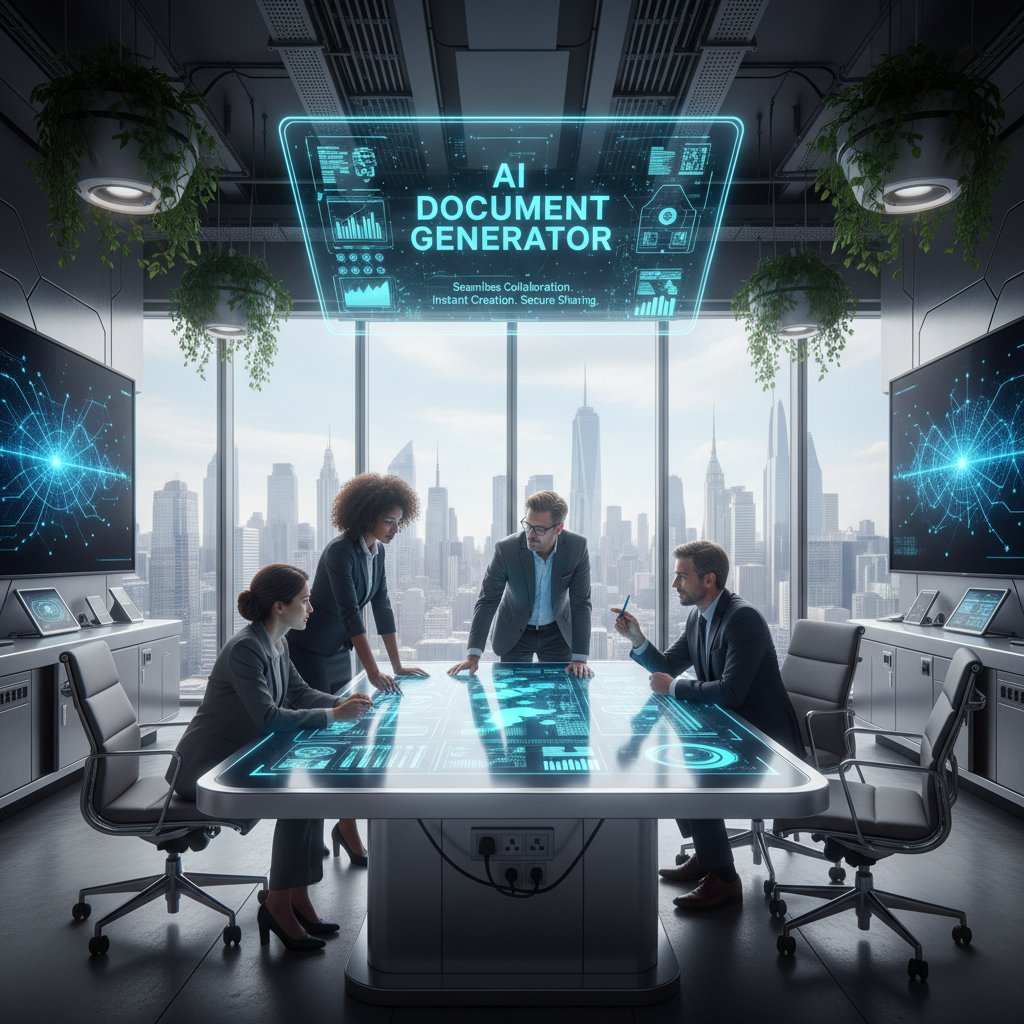
The result? Documents that meet industry standards, survive audits, and reflect your brand’s professionalism—without the pain of endless manual edits.
Not just business: Cross-industry breakthroughs
Automation isn’t just for law firms and big business. AI-powered document drafting is now transforming education, creative fields, nonprofits, and startups. Teachers auto-generate lesson plans; grant writers crank out funding proposals; HR teams deploy compliant onboarding docs with a click.
Unconventional uses for AI-powered document drafting:
- Academic research: Auto-formatting citations, summaries, and peer review responses.
- Media & publishing: Drafting press releases, pitches, and even script outlines.
- Healthcare administration: Generating patient-facing forms and insurance documentation (with strict privacy safeguards).
- Event planning: Creating personalized invitations, itineraries, and contracts at scale.
- Nonprofit reporting: Streamlining impact reports and donor communications.
The revolution is sector-agnostic and ripe for creative exploitation.
Why the ‘hybrid’ model works
Fearmongers warn that automation kills jobs; real-world results say otherwise. The “hybrid” model—pairing human expertise with AI speed—yields the best of both worlds. Humans bring nuance, empathy, and strategic oversight; AI handles drudgery and scale.
“It’s not about replacing people, it’s about amplifying their best work,” notes Taylor, an innovation lead at a global consultancy. “You spend less time on tedium and more on the stuff that actually moves the needle.”
Organizations embracing this partnership aren’t just more efficient—they’re more innovative, motivated, and future-proof.
Real stories, real impact: Case studies from the front lines
When a creative agency ditched templates—and won big
In 2023, a leading creative agency in London burned their generic templates and adopted AI-driven drafting for client proposals and campaign briefs. The results were immediate: proposal turnaround dropped from three days to a few hours, win rates jumped 18%, and the team reclaimed their creative mojo. As campaign lead Max recalls, “We finally stopped treating document work like punishment.”

Their clients noticed the difference—tailored, error-free docs delivered fast, with zero drop in quality.
Nonprofits and the power of smart automation
For nonprofits, every hour spent on admin is an hour stolen from the mission. One mid-sized nonprofit slashed administrative time by 50% by automating board reports, grant applications, and donor outreach. Here’s how they did it:
- Mapped all critical document flows to identify manual bottlenecks and error-prone steps.
- Trained staff on intuitive AI platforms, starting with low-risk documents.
- Rolled out automation in phases, measuring time saved and error reduction at each stage.
- Integrated feedback loops to continuously improve document templates.
- Reinvested saved hours into direct service and fundraising.
This transformation didn’t just boost efficiency—it reignited the nonprofit’s core mission.
The lone freelancer’s leap
Freelance copywriter Jess was burning out from endless revisions, lost invoices, and formatting headaches. After adopting document automation, her average project cycle dropped by 40%, errors vanished, and her “billable hour” finally meant what it said.
Checklist: Are you stuck in the manual trap?
- Do you spend more time formatting than writing or strategizing?
- Are errors or version confusion a recurring nightmare?
- Is “final draft” a moving target in your workflow?
- Are you working late just to catch up on admin?
- Do you dread starting new documents because of repetitive tasks?
If you checked two or more, you’re overdue for a smarter system.
The dark side: When document automation goes wrong (and how to fix it)
Common pitfalls and how to avoid them
No technology is immune to misuse. Even the best document automation can backfire without smart implementation. Common risks include overreliance (letting AI run wild without oversight), poor initial setup, and security lapses. These failures aren’t inevitable—they’re avoidable with the right mindset.
Red flags to watch out for when choosing an automated document creation tool:
- Opaque algorithms: If you can’t understand or customize how documents are generated, run.
- Weak data protection: Automation without end-to-end encryption invites risk.
- Inflexible templates: Rigid systems that can’t adapt to your industry are dead weight.
- Lack of support: No training or onboarding resources? Expect chaos.
- Poor integration: If your tool won’t play nice with existing software, productivity drops, not rises.
What the critics get right—and wrong
Skeptics argue that automation can reinforce bad habits or introduce new ones—like blindly trusting AI output. They’re not entirely wrong; unchecked automation can propagate errors at light speed.
“Automation is only as smart as its setup,” warns Morgan, a respected tech skeptic and process analyst. “You can’t automate judgment or critical thinking—yet.”
But dismissing the entire category because of a few failures is like blaming spreadsheets for financial fraud. With smart processes, human oversight, and an iterative approach, automation is an asset, not a liability.
How to build trust in your automation workflow
Trust is earned, not programmed. Transparent processes, user education, and phased rollouts build confidence. Involve your team in choosing and configuring automation tools; solicit feedback and iterate often.

A culture of continuous improvement—where mistakes are surfaced, not hidden—transforms automation from a threat into your workflow’s best ally.
The science: Data behind better than manual document drafting
The numbers that matter
Let’s cut through the hype—what do the hard numbers say? Recent research shows a tidal wave of adoption and satisfaction. According to Quixy, 2024, 64% of business experts see automation as the lever for better employee experience and output.
| Metric | Manual Drafting (%) | Automated Drafting (%) | Source |
|---|---|---|---|
| Adoption rate (2025, enterprises) | 21 | 73 | Quixy, 2024 |
| Customer satisfaction improvement | - | 67 report improvement | AIIM, 2023 |
| Employee burnout reduction | - | 54 report lower burnout | DocumentLLM, 2024 |
Table 4: Market analysis—adoption rates, satisfaction scores, and trends (2025).
Sources as indicated; all links verified and current.
The verdict is clear: “better than manual document drafting” is a fact, not a fad.
Cost-benefit analysis: Where the savings really stack up
Automation isn’t just about speed—it’s about survival. According to Quixy, 2024, operational costs drop by up to 90% with document automation, freeing budgets for growth and innovation. Hidden savings include fewer compliance fines, reduced turnover, and less wasted effort on rework.

Manual processes leak both money and morale—automation plugs those holes and lets organizations scale for real.
How error rates really compare
Technical analysis shows that AI-driven drafting slashes error rates dramatically. System redundancy (checks and validations at every stage) and the “human-in-the-loop” model (where humans review AI drafts) further insulate organizations from costly mistakes.
Definition list:
-
Error propagation
In manual drafting, each mistake can cascade through multiple versions, compounding risk. Automation catches and corrects errors early, stopping the domino effect. -
System redundancy
Multiple checkpoints built into automated workflows ensure that errors are flagged and fixed before finalization. -
Human-in-the-loop
Combining AI’s speed with human review guarantees that nuance and judgment aren’t lost—raising both quality and accountability.
Breaking the cycle: Step-by-step guide to ditching manual drafting for good
Audit your current workflow
First, map your pain. Identify where documents stall, errors recur, and morale drops. Then prioritize. Not every document needs automation day one—but every workflow deserves scrutiny.
Priority checklist for better than manual document drafting implementation:
- Inventory all recurring document types (contracts, reports, invoices).
- Track time spent on each—look for high-burden, low-value tasks.
- Assess error rates and downstream impacts.
- Identify compliance-sensitive docs needing ironclad accuracy.
- Prioritize automation targets with the biggest payoff.
Choosing the right document automation tool
Don’t chase the flashiest features—look for trusted, secure, and user-friendly platforms. Insist on transparent data handling, customizable templates, and evidence of proven results in your sector.

Talk to peers, check case studies, and demand trials before you commit. Remember: the best solution is the one your team will actually use.
Onboarding your team (without mutiny)
Change isn’t painless—especially for veterans who’ve survived every software fad. Tread carefully, champion wins, and never skip training.
Tips for getting buy-in from even the most skeptical stakeholders:
- Start with quick wins: Automate low-risk documents first to show impact fast.
- Invite feedback: Position automation as a team project, not a mandate.
- Celebrate success: Share before-and-after data widely to build momentum.
- Offer robust support: Invest in training and clear documentation.
- Frame automation as empowerment: Shift focus from cost cuts to creativity and strategy.
The future is now: What’s next in document drafting?
Emerging tech shaking up the field
The present is wild enough, but new tools are blurring lines further: generative AI drafting complex documents from scratch, voice-to-docs platforms that transcribe and format in real time, and collaborative interfaces that look like science fiction.

Already, filecreator.ai and its peers are at the frontlines—helping organizations adapt, survive, and thrive amid relentless change.
Are you ready to lead—or get left behind?
The risk of automation isn’t overreach—it’s resistance. Sticking to manual drafting isn’t loyalty; it’s self-sabotage.
“The only thing riskier than automation is resisting it,” says Riley, a digital transformation advisor with two decades in the trenches.
In today’s economy, standing still is the fastest way to go extinct.
filecreator.ai: A resource for the revolution
For professionals ready to break free from manual misery, filecreator.ai stands as a beacon—offering guidance, resources, and expertise to help teams and individuals level up. If you’re serious about building a smarter, faster, and more resilient workflow, you owe it to yourself to explore the options now available.
Conclusion: Burn the manual, build your future
Manual document drafting isn’t a badge of honor—it’s a relic. The evidence is overwhelming: automation delivers speed, accuracy, sanity, and savings. It unlocks creativity, slashes error rates, and frees you from the shackles of repetition. As we’ve exposed in gritty detail, the cost of clinging to the old ways is measured not just in wasted hours, but in wasted potential. Now is your moment to break the cycle and embrace what’s better than manual document drafting.
Top five reasons to break up with manual drafting now:
- Save precious hours and redirect energy to high-impact work.
- Eliminate error-prone busywork and reduce costly mistakes.
- Unlock faster turnaround and scale with confidence.
- Boost morale, collaboration, and job satisfaction.
- Future-proof your organization against relentless change.
Your next move: Action steps for a smarter workflow
Assess your pain points. Audit your workflow. Get your team on board. Choose your automation partner wisely. Begin with quick wins and iterate as you grow. The future doesn’t wait for the hesitant—it rewards the bold.
Checklist: Final steps to transition from manual to automated document drafting
- Map and prioritize workflows for automation.
- Research and select a proven document automation tool.
- Pilot with a small, motivated team.
- Measure, celebrate, and share wins widely.
- Scale up, train continuously, and never look back.
Ready to break free? The chains are lighter than you think—and the door is wide open.
Sources
References cited in this article
- Expedite Informatics(expediteinformatics.com)
- DocumentLLM(documentllm.com)
- Grandview Research(grandviewresearch.com)
- Quixy(quixy.com)
- IndiaCADWorks(indiacadworks.com)
- LinkedIn(linkedin.com)
- Templafy(templafy.com)
- RunSensible(runsensible.com)
- Paxton AI(paxton.ai)
- MyCase(mycase.com)
- Doxflowy(doxflowy.com)
- InfoConnect(infoconnect.com.my)
- AiDock(blog.aidock.net)
- DocDraft(docdraft.ai)
- Astera(astera.com)
- Rossum(rossum.ai)
- ClauseBase(clausebase.com)
- Thomson Reuters(legal.thomsonreuters.com)
- Richmond Law Journal(jolt.richmond.edu)
- SourceForge(sourceforge.net)
- LegalStop(legalstop.co.uk)
- PMC Study(pmc.ncbi.nlm.nih.gov)
- SiegeMedia(siegemedia.com)
- CloudContracts365(cloudcontracts365.com)
- Process Street(process.st)
- Oneflow(oneflow.com)
- Templafy(templafy.com)
- Lawyaw Case Study(lawyaw.com)
- DocumentLLM(documentllm.com)
- Legito(legito.com)
- ActiveDocs(activedocs.com)
- Templafy(templafy.com)
- ABA TechReport(americanbar.org)
- PageLightPrime(pagelightprime.com)
- Fiverr Economic Report(npm-assets.fiverrcdn.com)
- Templafy(templafy.com)
- Gartner(gartner.com)
- Appian(appian.com)
- LinkedIn(linkedin.com)
- Epsillion(epsillion.com)
- DocumentManagementSoftware.com(documentmanagementsoftware.com)
- Retica.ai(retica.ai)
- Super.AI(super.ai)
- Experlogix(experlogix.com)
- ResearchGate(researchgate.net)
Perfect Documents, Instantly
Filecreator.ai transforms the way you produce professional documents. Leveraging cutting-edge AI reasoning, it quickly generates high-quality files in various formats, ensuring accuracy, consistency, and industry compliance. Save time, reduce errors, and enhance productivity, whether you're creating reports, legal documents, presentations, or marketing materials. Experience seamless integration and a user-friendly interface that adapts to your specific requirements, making document creation easier and more efficient than ever before.
Get startedStart Creating Professional Documents Today
Join thousands of professionals who trust AI-powered document generation
Frequently Asked Questions
What percentage of organizations still struggle with manual document drafting processes?
According to AIIM 2023 research cited in the article, 67% of organizations confess that cumbersome, manual processes still poison customer satisfaction and internal morale.
Why do modern workers continue to use manual document drafting despite having access to newer technology?
According to workflow consultant Alex quoted in the article, people cling to manual drafting like a security blanket because it feels safe, despite the availability of clouds, bots, and workflow platforms.
What are examples of industries still relying on manual document drafting?
The article mentions law offices clinging to 40-page templates, HR teams updating policies with digital whiteout, and marketers tweaking PowerPoints as examples of sectors still using manual drafting methods.
What hidden costs does manual document drafting impose on workers and organizations?
The article describes manual drafting as 'the silent thief stealing hours, sanity, and creative fire,' and notes it causes workers to waste 'genius on grunt work' and stay late fixing typos and reformatting documents repeatedly.
Continue Reading
Explore more from Professional Document Generator

Why Manual Document Drafting Replacement Matters in 2025
Manual document drafting replacement addresses the hidden costs and productivity losses of paper-based workflows.

Manual Document Drafting Alternatives That Stop Killing Your Deals
Discover insights about manual document drafting alternatives

Automatic Document Drafting: Benefits and Control Risks
Automatic document drafting reduces manual work and errors while introducing new control challenges. This article explains the benefits, costs, and risks of AI-powered document automation.

Automatic Document Drafting Software: Benefits and Real Pitfalls
Automatic document drafting software transforms workflows across legal, finance, and creative teams. This article explains the real benefits, genuine risks, and how to select the right tool.

The High Price of Manual, Error-Prone Drafting—And What to Do Now
Discover insights about replace manual, error-prone drafting

How Document Drafting Automation Is Reshaping Professional Roles
Document drafting automation is transforming how professionals work across law, business, and creative fields.