


Why Teams Choose AI Over Freelance Document Writers: the Real Costs and Risks
Written with AI assistance under our editorial guidelines
Leading companies are shifting from freelance document writers to AI-powered solutions because freelancers face market saturation, declining quality standards, unpredictable turnaround times, and error risks that can prove costly. AI alternatives deliver consistent, instant document generation without the overhead of hiring, managing, and verifying independent contractors, making them more reliable for mission-critical business documents.
It’s 2025, and the business world’s most closely-guarded secret is out: the dream of seamless, pitch-perfect business documents delivered overnight by freelance writers is fraying at the edges. The gig economy promised flexibility and affordability, but the reality is starting to feel like déjà vu with a side of chaos. In a field where “professional document generator” is more than just a buzzword, the stakes are higher than ever—errors aren’t just embarrassing; they’re contract-killing. This is not a doom-and-gloom piece about robots taking over your job. Instead, it’s a guided tour through the real costs, hidden dangers, and unspoken truths of freelance document writing, and a candid look at why businesses are flocking to instant, AI-powered alternatives like never before. If you’re tired of second-guessing your next white paper, proposal, or HR policy, keep reading for the insights you won’t find in the glossy gig marketplace ads—and discover how to future-proof your operations with solutions that are truly better than freelance document writers.
The freelance document writer dilemma: why the status quo is broken
The rise and fall of the freelance writing myth
Rewind the clock a decade, and freelance document writers were the darlings of the digital transformation age. Flexibility, on-demand expertise, and budget-friendly rates made hiring a freelancer feel like cheating the system. Businesses could skip the headaches of onboarding, dodge benefits packages, and tap into a global talent pool with a few clicks. The promise was simple: get any document, anytime, tailored to your brand, without ever hiring full-time. Platforms exploded, and “freelance document writer” became a staple in job posts and LinkedIn profiles.
Yet, the cracks in this utopia have widened. As the freelance market ballooned—reaching 76.4 million US freelancers in 2024, up from 73.3 million the previous year (Source: Exploding Topics, 2024)—competition has squeezed rates and standards. Incomes dropped to an average of $30–$40 per hour, or roughly $42,000 annually, according to Make a Living Writing, 2024. With saturation, quality became unpredictable. Turnover increased; so did the stories of missed deadlines, botched details, and “creative” interpretations of briefs that cost companies more than they bargained for.

“Mark, COO: ‘I used to think freelancers were the answer—until I realized how much time I spent fixing their work.’”
Hidden costs and risks nobody talks about
The sticker price of a freelance document writer might look appealing, but dig deeper and the true cost structure emerges—often ugly, rarely advertised. Management overhead eats up your schedule: explaining requirements, fielding questions, scrutinizing drafts, and navigating time zones. Revision cycles pile up, with each “minor tweak” adding days or weeks and draining momentum. And when a freelancer ghosts you mid-project, the scramble to cover their absence can torpedo operations.
The numbers, when compared side-by-side with modern automated solutions, are telling:
| Cost Factor | Freelancers | Professional Document Generator (AI) |
|---|---|---|
| Average hourly rate | $30–$40/hr | Flat monthly fee or pay-per-use |
| Typical turnaround time | 24–72 hours (plus revisions) | Minutes to hours |
| Revision cycles | 2–4 (often more) | 1–2 (often automated) |
| Error rate | 8–12% (typos, formatting, compliance) | 1–3% (AI-checked, standardized) |
| Total annual cost (mid-size) | $42,000+ (variable, recurring) | $2,000–$8,000 (predictable) |
Table 1: Real-world cost comparison between freelancers and automated document generators. Source: Original analysis based on Make a Living Writing, 2024, Montanus, 2023, and industry data.
If you’re considering freelance document writers, here are the red flags that should make you pause:
- Opaque pricing: “Project” bids rarely reflect the time sunk into briefings, feedback, and do-overs.
- Unpredictable availability: Freelancers juggle multiple clients—your urgent need isn’t always their priority.
- Variable quality: An impressive portfolio isn’t a guarantee for every deliverable.
- Confidentiality risks: Sensitive business data often passes through personal devices and unsecured networks.
- Compliance gaps: Many freelancers lack up-to-date knowledge of legal or industry-specific standards.
- No long-term accountability: Once paid, most freelancers move on—errors discovered later are your problem.
When freelance goes wrong: real-world horror stories
Consider the case of a mid-size consulting firm that lost a major client when a single typo in a proposal—missed by their freelancer—invalidated a bid. The fallout? A lost six-figure contract, a damaged reputation, and an all-hands scramble to repair the relationship. Or the startup whose confidential product roadmap leaked after a freelance writer uploaded the draft to a public file-sharing service, exposing months of R&D to the competition.
Vetting unknown writers is a gamble. Reviews are easy to game; credentials hard to verify. And in a saturated market, the pressure to cut corners is real. The cost of a single breach, error, or missed deadline far outweighs the supposed savings of the gig economy.

The evolution of document creation: from gig work to generative intelligence
A brief history of business documents
Business documentation has always been a moving target. Decades ago, companies employed in-house teams—secretaries, legal staff, technical writers—whose work shaped the backbone of internal and external communications. The freelance revolution fragmented this model, outsourcing everything from contracts to proposals at scale, but often at the expense of consistency and control.
Today, the rise of AI-powered tools marks a new era. No longer just “helpers,” these platforms independently generate, format, and even audit documents, slashing turnaround times and error rates. The transition from human to hybrid to machine marks an inflection point for any business that values accuracy, compliance, and speed.
Key terms:
An advanced AI-powered platform (like filecreator.ai) designed to instantly create, format, and audit business documents across multiple formats while adhering to best practices and compliance standards.
An independent contractor or gig worker hired to draft, edit, or format business documents for a fee, typically on a per-project basis.
The use of software or AI to streamline, standardize, and accelerate the creation and management of business documents, reducing reliance on manual input and eliminating repetitive tasks.
How AI-powered tools are rewriting the rules
The professional document generator is not just a shiny new toy; it’s a paradigm shift. By leveraging large language models, real-time compliance checking, and customizable templates, these AI-driven tools break the cycle of human error, burnout, and endless revisions. Unlike freelancers, AI doesn’t need coffee breaks or time to “get in the zone”—it produces on-point documents at a moment’s notice, adapting instantly to new inputs and requirements.
"Sasha, CTO: 'AI doesn’t sleep, doesn’t ghost, and doesn’t get distracted by TikTok.'"

What makes a document truly 'professional' in 2025?
The gold standard has changed. What used to be “well-written” now demands a new level of precision: bulletproof formatting, instant compliance checks, seamless brand integration, and lightning-fast delivery. In 2025, a professional business document is one that’s error-free, audit-ready, and tailored for both human and machine readers.
Industry standards have had to keep pace. Regulatory frameworks (from GDPR to SEC reporting) now require not just accuracy, but traceability and version control—features that modern document automation tools build in by default. Companies no longer see quality as a nice-to-have; it’s a minimum requirement, and it’s fueling the rise of platforms like filecreator.ai that can deliver it without the drama.
Debunking the myths about freelance document writers vs. AI
Myth #1: Freelancers are always more creative
It’s a comforting story: the human touch, the spark of inspiration, the subtlety of voice. But in practice, AI-generated content is closing the gap fast, especially for routine business documents. Recent advances in large language models have enabled AI to mimic tone, structure, and even nuance—often outperforming rushed, overworked freelancers who are juggling multiple gigs.
AI isn’t infallible, but the notion that only a human can tap into creativity is outdated. For standardized documents—think HR policies, contracts, technical manuals—AI can outpace humans in both consistency and clarity. Of course, for niche storytelling and brand manifestos, expert writers still have the edge, but for the vast majority of business use cases, machine learning has raised the bar.
Myth #2: Automation means generic, soulless documents
This myth dies quickly once you see a modern AI document generator in action. Today’s tools are not one-size-fits-all: they’re endlessly customizable, learning and adapting to your voice, brand, and context with every use. Adjustable templates, adaptive tone, and real-time feedback banish the specter of “cookie-cutter” outputs. Multiple industries—including finance, legal, and healthcare—now rely on AI for documents that must be both unique and compliant.
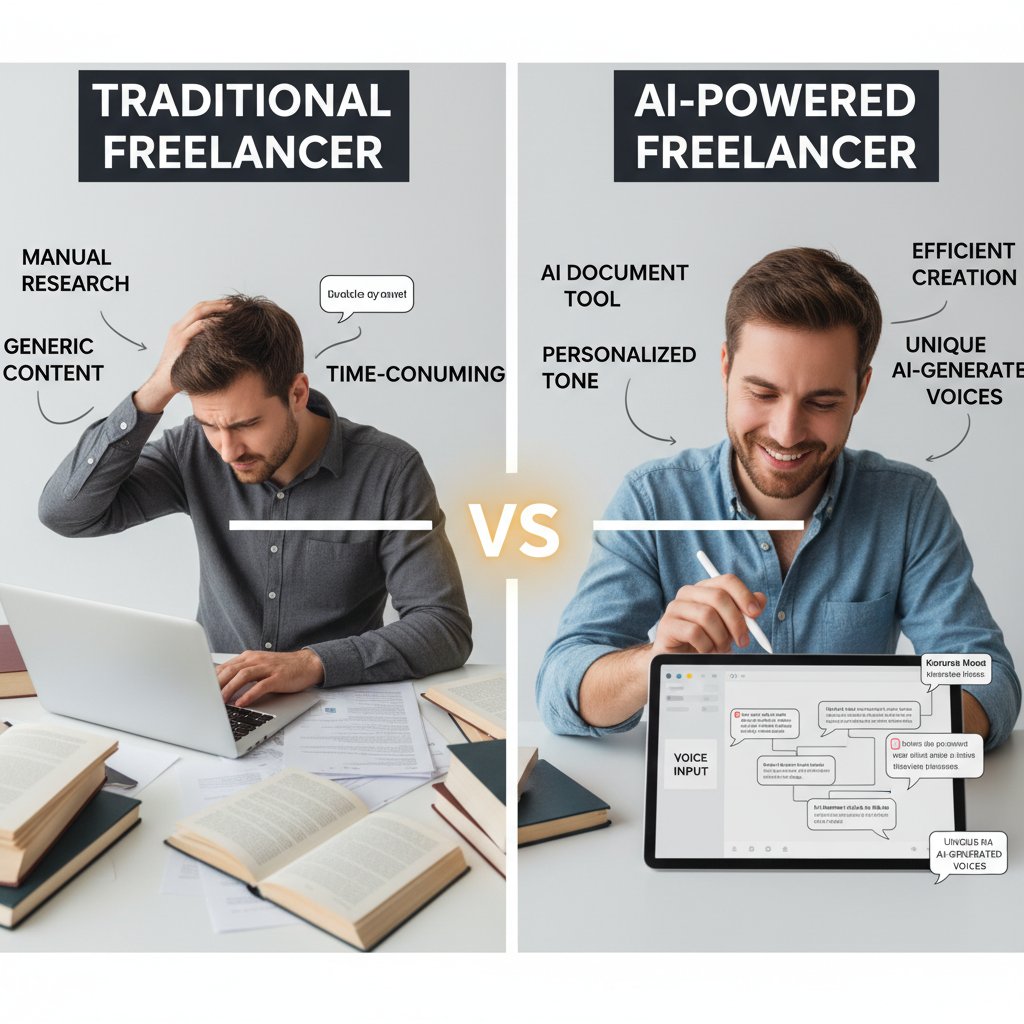
Myth #3: Only freelancers can handle sensitive information safely
Data privacy is not the exclusive domain of the human freelancer. In fact, the opposite may be true. Professional document generators now bake encryption, access controls, and audit trails into every step. Unlike freelancers—who may use unsecured personal devices or unvetted cloud storage—AI tools can guarantee compliance with standards like ISO 27001 and SOC 2, and can be monitored for vulnerabilities.
"Alex, InfoSec analyst: 'I trust a well-audited algorithm more than a stranger with my payroll data.'"
The business case: cost, speed, and quality compared
Breaking down the numbers: freelancers vs. AI document generators
When businesses finally put freelancers and AI head-to-head, the numbers speak for themselves. According to Montanus, 2023, AI-powered solutions can deliver typical business documents up to 10 times faster than the average freelancer, with up to 75% fewer errors.
| Metric | Freelance Document Writer | AI Document Generator | Hybrid Approach |
|---|---|---|---|
| Average turnaround | 24–72 hours (plus revisions) | 5–60 minutes (immediate iterations) | 2–24 hours |
| Cost per document | $120–$500 (variable, recurring) | $10–$80 (predictable, scalable) | $50–$200 |
| Error rate | 8–12% (manual checks) | 1–3% (automated compliance) | 4–7% |
| Satisfaction (survey) | 70–78% (variable by freelancer) | 88–94% (platforms with high ratings) | 82–89% |
Table 2: 2025 industry data on document creation solutions. Source: Original analysis based on Montanus, 2023, Forbes, 2024.
Case study: How switching to automation saved a company thousands
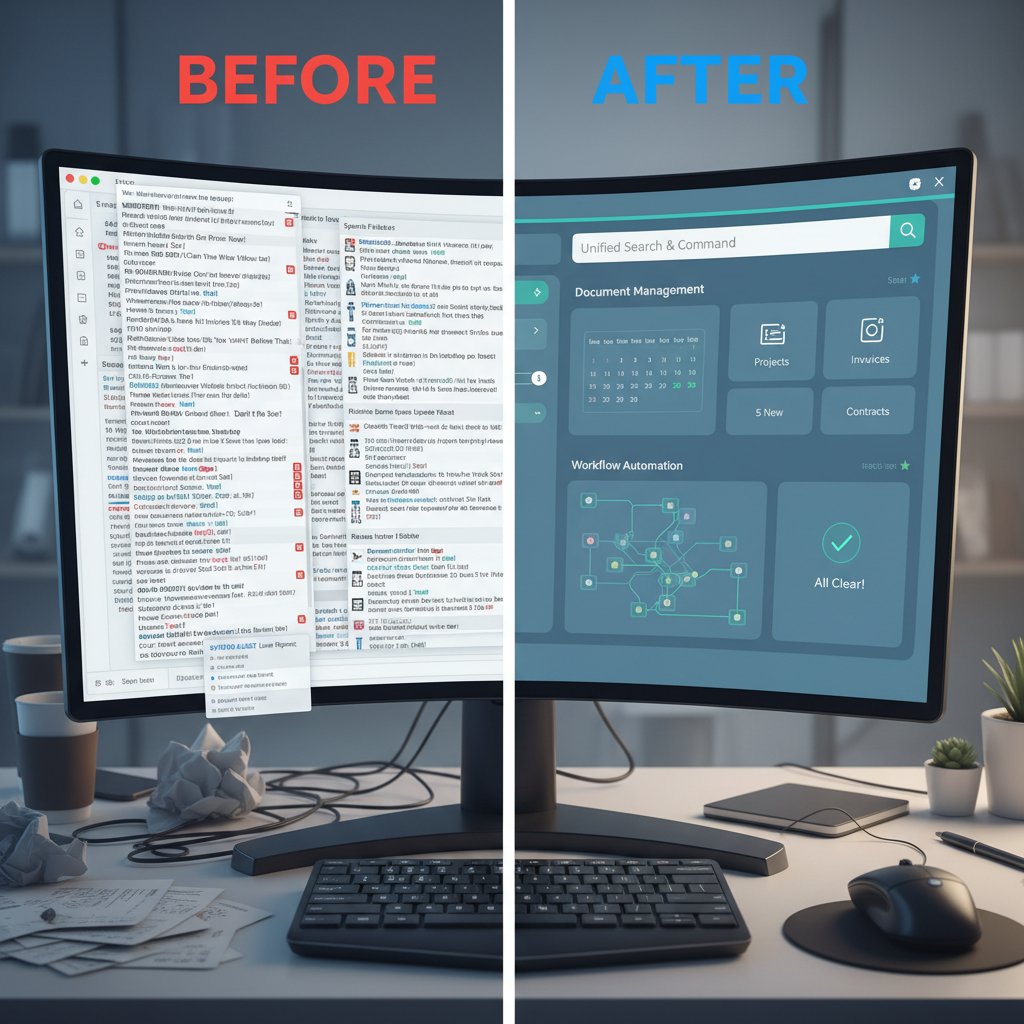
A fintech startup, overwhelmed by a backlog of investor reports and compliance documents, made the leap from three freelance writers to adopting filecreator.ai as their main document engine. The results were stark: drafting time dropped by 70%, error rates plummeted, and annual documentation costs shrank from $60,000 to under $10,000. Employees, previously stuck in revision purgatory, shifted to higher-value work, while clients noticed the uptick in professionalism and consistency.
When humans still have the edge
To be clear: freelancers aren’t obsolete. In domains where creative storytelling, deep local nuance, or hyper-specialized knowledge are critical, a veteran document writer can inject authenticity and flair that AI is still learning to replicate. For high-stakes pitches, brand manifestos, or regulatory submissions in rapidly shifting sectors, the human touch remains invaluable. The savviest businesses are mixing both—using automation for 80% of their needs, and bringing in experts for the rest.
How to choose the right document creation solution for your needs
Key questions every business should ask
Not every company is ready to flip the switch overnight. Before ditching freelancers or legacy tools, ask yourself:
- Do we consistently struggle with document errors, delays, or compliance issues?
- Are our document needs routine and standardized, or highly specialized?
- How much time do managers spend overseeing document production and revisions?
- Is sensitive information ever at risk in our current workflow?
- Could automation free up staff for more strategic work?
Priority checklist for better than freelance document writers implementation:
- Audit your current document workflows for pain points and opportunities.
- Identify your “must-have” features—compliance checks, template variety, custom formatting.
- Assess your team’s readiness for change; plan for training and phased rollout.
- Run pilot projects with both freelancers and AI solutions to benchmark results.
- Collect feedback and iterate; keep your benchmarks up to date as your needs evolve.
Checklist: Are you ready to ditch freelancers?
If you’re eyeing automation but unsure where to start, this interactive checklist can help:
- Predictable output: You need documents that are always on-brand and error-free.
- Time-critical delivery: Your business can’t afford missed deadlines.
- Sensitive data: Privacy and compliance are non-negotiable.
- Budget constraints: You’re looking to cut documentation costs without sacrificing quality.
- Scalability: Your document needs fluctuate or are growing rapidly.
Hidden benefits of professional document generators experts won't tell you:
- Built-in compliance updates keep you ahead of regulatory shifts.
- Instant version control and audit trails for every document.
- Multi-format export means no more copy-paste errors.
- Reduced burnout and higher job satisfaction for in-house teams.
- Data security features that freelancers can’t match.
Avoiding the common pitfalls of automation
Transitioning to document automation is not a magic bullet. Common missteps include underestimating the time needed for onboarding, neglecting to train staff, and failing to tailor templates for your specific business needs. Best practices? Start small. Choose a single document type to automate, gather real feedback, and scale up gradually. Always keep a human in the loop for final reviews—tech, no matter how advanced, still benefits from expert oversight.
Real-world impact: stories from the frontlines of document transformation
From chaos to control: business leader testimonials
The real transformation comes when chaos gives way to control. A logistics firm recounts how, after years of missed shipments due to invoice errors, switching to automated document generation slashed mistakes and salvaged client relationships. Another company in healthcare reported halving their patient documentation time, freeing up staff for actual patient care.
“Priya, Head of Ops: ‘We cut our turnaround time by half and never looked back.’”

Unexpected wins: how automation unlocked new opportunities
Sometimes the biggest gains are invisible at first. Automated document tools allow companies to scale into new markets—handling multi-language documents, adapting instantly to local regulations, and supporting 24/7 operations without burnout. Employees report higher job satisfaction, less time chasing freelancers for edits, and more focus on core strategy. According to a Forbes, 2024 survey, businesses cite “improved morale” and “increased productivity” as unexpected but powerful outcomes of ditching manual document creation.
When the unexpected happens: risk and contingency planning
No system is bulletproof—not even AI. Glitches, outages, and human error can strike at the worst times. Smart businesses build in contingency plans and monitor every step.
Definitions:
Automated switching to a backup system or process to maintain document availability during an outage.
Systematic tracking of document changes to enable edits, rollbacks, and audit trails.
A workflow in which human experts review and approve AI-generated outputs, ensuring accuracy and context.
The future of document creation: what’s next after freelancers?
Emerging trends in document automation
The next wave of document automation is about more than speed—it’s about intelligence and adaptability. AI tools are moving beyond simple text generation to offer analytics, real-time compliance, and collaborative features. As demand grows for multi-language support and cross-industry versatility, platforms are expanding to cover everything from technical manuals to interactive marketing collateral.
Will AI replace all freelance writers?
The debate is ongoing, but the most likely scenario is a hybrid one. AI will handle the bulk of routine, compliance-driven documents, while expert freelancers or in-house staff tackle the edge cases: deep-dive research, creative campaigns, and high-stakes negotiations. Companies that master the mix will have a lasting advantage.

How to future-proof your business documentation
Staying ahead means embracing change without losing your edge. Here’s a step-by-step guide:
- Stay informed: Regularly review industry best practices and emerging technologies.
- Test early, test often: Pilot new tools on non-critical documents before full adoption.
- Invest in training: Upskill your team to work alongside automation, not against it.
- Set benchmarks: Track turnaround time, error rates, and satisfaction metrics.
- Keep a human in the loop: For high-impact documents, always include final human review.
Your action plan: making the switch to a professional document generator
Step-by-step: how to implement automation in your workflow
Ready to see what’s truly better than freelance document writers? Here’s how to get started:
- Map your existing document creation process.
- Identify pain points and high-frequency document types.
- Research solutions (like filecreator.ai) and shortlist based on your needs.
- Run a limited pilot and compare outcomes—cost, speed, satisfaction.
- Roll out in phases, gathering feedback at each step.
Timeline of better than freelance document writers evolution:
- Freelance-only era: 2010–2020 (flexibility, but chaos)
- Hybrid workflows: 2021–2023 (experimentation, learning)
- AI-powered automation: 2024–present (speed, standardization)
- Integrated intelligence: 2025– (analytics, compliance, collaboration)
Measuring success: what to track and why it matters
Success is more than just cost savings—it’s about quality, consistency, and peace of mind.
| Feature | Freelance Writer | AI Generator | Hybrid |
|---|---|---|---|
| Consistency of output | Variable | High | High |
| Turnaround speed | Slow–Moderate | Immediate–Fast | Moderate |
| Compliance & auditability | Manual | Automated | Partial |
| Customization & voice | High | Moderate–High | High |
| Total cost | High (recurring) | Low (predictable) | Moderate |
| Error rate | Moderate | Low | Low–Moderate |
Table 3: Feature matrix for decision-making—freelance vs. AI vs. hybrid. Source: Original analysis based on Medium, 2024 and industry data.
Resources to get started
If you’re ready to explore deeper, check out:
- Industry guides and benchmarking studies from reputable sources (Forbes, 2024, Exploding Topics, 2024)
- Trusted business communities and automation forums
- Direct experimentation with professional document tools like filecreator.ai, an expert resource trusted by businesses across industries for instant, compliant document creation
Conclusion: rewriting the rules of professional document creation
The brutal truth? The era of relying solely on freelance document writers is drawing to a close, not with a bang but with a relentless, tech-fueled whimper. The hidden costs, risks, and constant firefighting are giving way to a new paradigm—one where precision, compliance, and instant delivery aren’t just aspirations, but everyday reality. If you’re tired of missing deadlines, chasing freelancers, or patching last-minute errors, now is the time to make the leap.

So here’s the provocation: Will your next business win be written by a freelancer, or generated—flawlessly—by a platform that never forgets, never sleeps, and never asks for a raise? The answer will shape not just your documentation, but the future of your business.
Your next move: where do you stand?
Take a hard look at your current document creation strategy. Is it fueling your future, or holding you back? The choice isn’t just about saving money or moving faster—it’s about reclaiming control. Ready to explore a future that’s truly better than freelance document writers? Start now, and don’t look back.
Sources
References cited in this article
- Medium: 2024 Writing Trends(medium.com)
- Forbes: 2024 Freelance Revolution(forbes.com)
- Exploding Topics: Freelance Stats(explodingtopics.com)
- Montanus: Freelance Writers vs AI(montanus.co)
- Make a Living Writing: Writer Income 2024(makealivingwriting.com)
- Upwork Projects Analysis 2024(vollna.com)
- Location Rebel: Future of Freelance Writing(locationrebel.com)
- Nerdynav: High-Paying Niches(nerdynav.com)
- Texta: AI and Document Efficiency(texta.ai)
- Docsumo: AI Document Processing(docsumo.com)
- Templafy: AI and Document Automation(templafy.com)
- SEMrush: AI Writing Stats(semrush.com)
- Forbes Tech Council(forbes.com)
- Adlib: Big 8 Trends in Document Management 2025(adlibsoftware.com)
- OPEX: 2025 Document Management Trends(opex.com)
- WhyMeridian: Future of Document Management(whymeridian.com)
- BBC Future: Humanizing AI Content(bbc.com)
- Forbes: AI and Freelancing(forbes.com)
- BuzzSumo, SEMrush: Content Performance Data(ddiy.co)
- SideHustles.com: Freelance Writer Opinions(sidehustles.com)
- WorkGenius: AI in Freelancer Recruitment(workgenius.com)
- Analytics Insight: AI Tools for Freelancers(analyticsinsight.net)
- Freelancermap: Cybersecurity Risks(freelancermap.com)
- BrandWell: Agencies vs Freelancers vs AI(brandwell.ai)
- Big Apple Media: AI Writing Tools(bigapplemedia.com)
- Scientific Reports: Human vs AI Creativity(nature.com)
- Harvard Business Review: Human Edge(hbr.org)
- Content Whale: AI vs Human Writers(content-whale.com)
- Digital Project Manager: Best Document Workflow Software(thedigitalprojectmanager.com)
- Windward Studios: Document Automation Guide(windwardstudios.com)
- Templafy: Document Generation Tools(templafy.com)
- Leap AI: AI Content Creation Tools(blog.tryleap.ai)
- Hootsuite: AI Content Tools(blog.hootsuite.com)
- Jasper AI: Content Creation(jasper.ai)
- Leap AI: AI-Driven Case Studies(blog.tryleap.ai)
- Data Axle: Generative AI Case Studies(data-axle.com)
- Document LLM: AI Document Processing(documentllm.com)
- Matrix Marketing Group: AI Content Transformation(matrixmarketinggroup.com)
Perfect Documents, Instantly
Filecreator.ai transforms the way you produce professional documents. Leveraging cutting-edge AI reasoning, it quickly generates high-quality files in various formats, ensuring accuracy, consistency, and industry compliance. Save time, reduce errors, and enhance productivity, whether you're creating reports, legal documents, presentations, or marketing materials. Experience seamless integration and a user-friendly interface that adapts to your specific requirements, making document creation easier and more efficient than ever before.
Get startedStart Creating Professional Documents Today
Join thousands of professionals who trust AI-powered document generation
Frequently Asked Questions
How many freelancers were there in the US in 2024?
There were 76.4 million US freelancers in 2024, up from 73.3 million the previous year, according to the article.
What is the average income for freelance document writers?
The average income for freelance document writers is $30–$40 per hour, or roughly $42,000 annually, as stated in the article.
Why has the quality of freelance document writing become unpredictable?
As the freelance market has become saturated, competition has squeezed rates and standards, leading to unpredictable quality, increased turnover, and issues like missed deadlines and botched details.
What is the main argument of this article about AI versus freelance writers?
The article argues that the traditional freelance document writing model is becoming unreliable and expensive, and that businesses are increasingly turning to AI-powered alternatives as a more dependable solution for producing business documents.
Continue Reading
Explore more from Professional Document Generator

Automated Document Creation Versus Freelancers: Cost and Quality Tradeoffs
Comparing automated document creation with freelancers reveals tradeoffs in cost, speed, and quality. This article analyzes the practical differences for your workflow.

AI Document Creator: Efficiency Versus Hidden Costs
AI document creators automate pitch decks, contracts, and reports. This article examines the efficiency gains, hidden trade-offs, and impact on workplace roles.

Why Freelance Writing Services Are Failing Brands in 2025
An alternative to freelance writing services explores why the traditional model fails brands and presents newer options including AI tools and hybrid collectives.

AI-Powered Document Generation: Costs, Risks, and Adaptation
AI-powered document generation is reshaping how knowledge workers create documents. This article examines the real costs of manual creation, the risks, and how organizations can adapt.

Automatic Document Creator or Freelancer: Which Delivers
This article compares speed, cost, and quality outcomes to show which approach fits different business needs.

Professional Document Creator Reviews: What Actually Works
Professional document creator reviews expose hidden costs and real performance. This article examines template reliability, formatting issues, and which tools justify their price.