
Best Contract Generation Software for Teams That Can’t Afford Errors
Written with AI assistance under our editorial guidelines
Contract generation software addresses critical business inefficiencies by automating document creation, reducing manual errors, and streamlining approvals. Companies lose approximately nine percent of annual revenue through poor contract management, making modern solutions essential for teams requiring error-free operations. AI-powered platforms now enable faster, compliant contract execution while minimizing legal risks.
Contracts are the invisible scaffolding of modern business—holding together partnerships, promises, and profit margins. Yet, for all their importance, the process of creating, managing, and executing contracts remains a minefield of inefficiency and risk. If you think the “best contract generation software” is just about picking the tool with the slickest interface or the biggest marketing budget, think again. In 2025, the landscape has been reshaped by AI, heightened compliance demands, and the brutal realities of digital transformation. In this no-BS guide, we’ll rip back the curtain on the 7 truths that separate hype from hard reality, reveal the hidden risks that could tank your next deal, and arm you with actionable strategies to dominate digital contract management. Whether you’re a legal pro, a fast-moving startup, or a multinational wrangling global teams, this is your new playbook for contract automation, AI-powered document generation, and bulletproof compliance.
Why contract generation is broken (and how tech is rewriting the rules)
The real cost of manual contracts
For decades, organizations have treated contract creation as a tedious, manual chore—one that quietly drains resources, breeds errors, and opens the door to legal landmines. According to a 2023 study by World Commerce & Contracting, companies lose an average of 9% of annual revenue due to poor contract management. That’s not just a rounding error; for mid-sized enterprises, it can translate to millions in lost value, missed deadlines, and preventable disputes.

Let’s break down the typical pain points:
| Manual Step | Average Time Spent | Common Risk |
|---|---|---|
| Drafting from scratch | 2-4 hours | Human error, omissions |
| Version control | 1-2 hours | Lost edits, confusion |
| Approval chasing | 2+ hours | Delays, bottlenecks |
| Compliance review | 1-3 hours | Missed obligations |
| Storage & retrieval | 30 mins | Lost docs, data leaks |
Table 1: Typical manual contract generation workflow and associated risks.
Source: Original analysis based on WorldCC, 2023 and Emergen Research, 2024.
That’s upwards of 10 hours per standard agreement—not counting the real cost when a contract goes sideways due to a typo or missed clause. Multiply this across hundreds of deals, and the drag on your organization becomes clear. Automation isn’t just a “nice to have”—it’s now the baseline for staying competitive.
How AI flipped the script on legal documents
Enter AI: the not-so-silent disruptor. Over the past two years, contract generation software has adopted AI-driven engines capable of extracting obligations, analyzing risk, and even negotiating contract terms autonomously. According to G2’s 2024 Contract Analytics report, teams using advanced contract automation tools cut drafting times by 60% and reduced errors by over half.
“AI-powered contract software doesn’t just speed up drafting—it dynamically flags risky clauses, suggests alternatives, and ensures compliance at scale. We’re not just automating; we’re radically rethinking what’s possible.”
— Anna Shepherd, Senior Legal Tech Analyst, G2, 2024
But there’s a catch: the best contract generation software isn’t plug-and-play magic. Implementation demands investment, careful change management, and a culture ready to trust machine-driven workflows. As the dust settles, a new breed of winners is emerging—organizations that blend the speed of AI with human oversight and process discipline.
AI doesn’t just automate what you already do—it transforms the scope of what you can achieve. With features like real-time negotiation (PandaDoc’s NegotiateAI), deep data extraction (CobbleStone’s AI), and advanced clause analytics (Sirion’s IBM Watsonx partnership), we’re witnessing a step-change in how contracts drive business value. But rapid change also brings new blind spots, including algorithmic bias and overreliance on machine judgment—issues we’ll dissect in later sections.
Common misconceptions about contract software
It’s tempting to believe that buying contract generation software is a silver bullet. The reality is messier. Here are three common myths that deserve a hard look:
- “All contract software is basically the same.” False. Feature sets, AI maturity, and compliance capabilities vary wildly. What works for an SMB will collapse under the weight of global enterprise complexity.
- “AI can replace lawyers entirely.” Not even close. AI excels at pattern recognition and process acceleration, but nuanced negotiation, strategic thinking, and ethical judgment are still the domain of human experts.
- “Out-of-the-box solutions are always better.” While plug-and-play tools offer speed, they often lack the deep customization needed for industry-specific needs or regulatory environments.
According to SoftwareConnect’s 2024 market roundup, companies that fall for these myths often face higher costs in the long run—through missed compliance, poor user adoption, or failed integrations.
In reality, the best contract generation software is one that fits your team’s workflow, scales with your business, and doesn’t sacrifice security or compliance for speed. Overlooking these factors isn’t just risky—it’s an open invitation for disaster.
What makes the best contract generation software in 2025?
Non-negotiable features for real-world teams
If you’re still comparing checkboxes on vendor sites, it’s time to level up. The must-have features for 2025 are shaped by hard lessons learned across law, finance, tech, and procurement. Based on G2, 2024 and interviews with legal ops leaders, these are the essentials:
- End-to-end automation: Draft, approve, sign, and store—all in a seamless flow. No more patchwork hacks or manual copying.
- AI-driven clause analysis: Identify risky terms instantly, with real-time suggestions for mitigation.
- Secure cloud storage: Bank-grade encryption, access controls, and audit trails are now baseline.
- Deep integrations: Your contract platform must plug into CRM (Salesforce), ERP (SAP), procurement (Coupa), and collaboration tools (Slack, Teams).
- User-friendly UX: If your team needs a week of training just to create a contract, adoption will tank.
- Analytics and insights: Visibility into contract status, bottlenecks, and renewal cycles is non-negotiable for performance-driven teams.

When evaluating platforms, dig deeper into how these features are executed—not just if they exist.
Hidden benefits nobody talks about
Beyond the obvious productivity gains, best-in-class contract software delivers a range of often-overlooked advantages:
- Faster revenue recognition: Automating approvals shaves days (or weeks) off sales cycles, directly impacting cash flow.
- Audit readiness: With detailed logs and version histories, your compliance team is always ready for scrutiny.
- Internal collaboration: Real-time editing and commenting fosters transparency, surfaces issues early, and breaks down silos.
- Smart templates: AI-powered clause libraries prevent “reinventing the wheel” with every new deal.
The real magic happens not in automation alone, but in how these tools enable smarter, more strategic contract management—turning a historically reactive process into a proactive lever for growth.
Some of these perks aren’t even marketed directly. For example, according to PandaDoc’s 2024 analysis, companies that implemented smart contract analytics reported a 25% reduction in renewal churn due to proactive alerts—an edge that rarely makes it into sales decks, but can transform bottom-line outcomes.
Deal-breakers: Red flags to watch for
Not all that glitters is gold in the world of contract automation. Ignore these warning signs at your peril:
- Opaque pricing models: Surprise “integration fees” or per-user charges that balloon after onboarding.
- Lack of export freedom: Vendors that lock your data in proprietary formats are dangerous.
- Shallow security controls: No two-factor authentication or audit logs? That’s a nonstarter.
- Weak support or update history: If the vendor is slow to patch bugs or roll out new features, they’ll lag as regulations evolve.
- Poor mobile experience: In a remote world, contract workflows must be mobile-friendly—not an afterthought.
"As industry experts often note, the costliest mistake isn’t buying the wrong software—it’s investing in a tool that traps your data, exposes you to compliance risk, or can’t keep up with your actual business needs."
— Illustrative, based on synthesized research from Emergen Research, 2024
Vet vendors ruthlessly. The wrong choice can chain you to years of technical debt and regulatory headaches.
The evolution of contract automation: Past, present, and what’s next
From dusty templates to generative AI
Contract automation didn’t spring up overnight. The journey from clunky Word templates to AI-powered negotiation bots is a masterclass in digital transformation.

| Era | Typical Tools | Key Limitation | Game-Changer Innovation |
|---|---|---|---|
| Early 2000s | MS Word, email, fax | Manual errors, slow | N/A |
| 2010-2015 | Template libraries, e-signature | Poor version control, limited analytics | E-signature adoption |
| 2016-2022 | Cloud-based CLM | Siloed data, limited AI | API integrations |
| 2023-2025 | AI-powered generators | Change management, trust | Generative AI, clause-level risk scoring |
Table 2: Contract generation evolution—tools, limitations, and key innovations.
Source: Original analysis based on G2, 2024 and industry interviews.
The leap to generative AI means contracts can now be created, negotiated, and analyzed at a scale—and with a level of nuance—that manual processes simply can’t match. But the pace of change is relentless, and only adaptable organizations are keeping up.
How global teams are changing expectations
As business becomes more borderless, contract generation software faces new demands: multilingual capabilities, localization, and airtight compliance across jurisdictions. According to the WorldCC Global Survey, 2023, 65% of organizations now manage cross-border contracts as a matter of routine. This shift is forcing software vendors to up their game, incorporating machine translation, regional clause libraries, and real-time compliance checks.
For global teams, contract generation isn’t just about speed; it’s about risk mitigation, cultural nuance, and regulatory alignment. Tools like Sirion and CobbleStone are responding with advanced AI/ML features that flag jurisdictional issues before they derail deals.
Increasingly, the definition of “best contract generation software” is shaped not just by technology, but by how well it empowers diverse, distributed teams to collaborate in real time—without sacrificing legal fidelity.
Where the industry is headed (and why it matters)
The contract management arms race is now about leveraging data for competitive edge. According to Emergen Research, 2024, analytics-driven contract platforms report 30% faster deal cycles and up to 40% reduction in compliance breaches.
“The winners in contract automation are not just digitizing old workflows—they’re using advanced analytics and AI to gain real-time insight into risk, value, and performance. The stakes have never been higher.”
— Emergen Research, 2024
This isn’t just hype. Real-time contract intelligence is already separating industry leaders from laggards. Those who ignore these shifts risk being left with obsolete, error-prone processes that choke growth and expose their organizations to avoidable risks.
AI vs. human: Who do you trust with your contracts?
The compliance and ethics dilemma
The allure of AI-driven contracts is undeniable, but it comes with a new set of ethical and compliance dilemmas. Automation can mask bias, miss nuances, or inadvertently violate regulations. As Harvard Law Review, 2023 reports, even the most advanced AI struggles with subjective intent, ethical judgment, and cross-jurisdictional nuance.
Key terms:
The process of adhering to legal standards, industry regulations, and internal policies during contract creation and management. True compliance isn’t just about ticking boxes—it’s about embedding risk awareness at every stage.
The broader principles guiding fair, just, and trustworthy contract practices. In the context of AI, ethics demands transparency in algorithms, clarity in data usage, and accountability for outcomes—especially when contracts impact livelihoods or sensitive information.
The upshot? The best contract generation software is designed NOT to replace human expertise, but to augment it—surfacing risks, suggesting changes, but leaving final judgment in human hands.
Bias, security, and the illusion of automation
Despite the promise of “set it and forget it” automation, real-world contract workflows are messier. Algorithmic bias can creep in via historic training data, leading to skewed contract terms or missed obligations. Security is another minefield: A 2024 IBM Security report found that 19% of document-related breaches involved contract data mishandled via digital tools.

Overreliance on software can foster a dangerous illusion of safety. Organizations must remain vigilant, ensuring that every automated clause, workflow, or approval chain is subject to robust oversight and regular review.
The illusion that technology alone can guarantee compliance or fairness is seductive—and wrong. As regulations change and new threats emerge, only a balance of smart software and trained human judgment will keep your contracts (and your business) out of trouble.
Contrarian take: Why you shouldn’t automate everything
It’s tempting to automate every aspect of contract management, but this is a mistake. Over-automation can erode context, miss relationship dynamics, or even trigger compliance nightmares in fast-changing regulatory environments.
"Blind faith in automation is just as risky as relying on manual processes—it makes you complacent, not resilient."
— As industry experts warn, based on Harvard Law Review, 2023
In truth, the best contract generation software empowers teams to automate the routine, but keeps humans firmly in the loop for anything strategic, high-value, or ambiguous.
How to choose the right contract generation software for your business
Step-by-step guide: From confusion to confidence
Choosing the best contract generation software is a minefield of marketing claims, half-truths, and hidden fees. Here’s a proven methodology, based on SoftwareConnect’s 2024 recommendations:
- Map your workflow: Document every step of your contract process—drafting, approval, negotiation, compliance, storage.
- Identify bottlenecks: Where do deals stall? Which errors keep recurring? Pinpoint pain points.
- Set must-have requirements: Define non-negotiable features (AI analytics, security, integration).
- Shortlist vendors: Use independent reviews and G2 grids to narrow your options to 3-5 platforms.
- Request demos and trials: Always test real workflows with your own documents—don’t rely on canned sales pitches.
- Check integration and migration: Ensure the tool plugs into your existing stack and offers clear migration support.
- Pilot, train, and iterate: Roll out in stages, invest in training, and collect feedback for continuous improvement.
The result? An informed, confident decision that avoids the common pitfalls of rushed vendor selection.
Checklist: Are you ready to switch?
Before you make the leap, ask yourself:
- Do we have executive buy-in and budget for a new contract platform?
- Have we mapped current processes and identified gaps?
- Are our teams open to change, with a plan for training and adoption?
- Is our data clean and ready for migration?
- Are we clear on security, compliance, and support needs?
- Have we engaged IT, legal, and operations in the process?

- Executive sponsorship and budget are in place.
- All key workflows have been documented and pain points identified.
- Data quality and access have been reviewed.
- Teams are aware of upcoming changes and training is planned.
- IT and legal are fully engaged in the selection process.
- Vendor references and case studies have been validated.
If you can’t check every box, slow down and address the gaps—rushed adoption is a recipe for disappointment.
The hidden costs of free vs. premium tools
The allure of “free” contract software is strong, but the real costs often hide in plain sight. Here’s how leading tools stack up, based on PandaDoc, 2024:
| Feature/Cost | Free Tools | Premium Platforms |
|---|---|---|
| Number of users | Limited (1-3) | Scalable (unlimited) |
| AI-powered analytics | None or basic | Advanced, customizable |
| Security/compliance | Minimal | Robust, audit-ready |
| Integration options | Few or none | Full API ecosystem |
| Support | Community only | Dedicated 24/7 |
| Hidden fees | Add-ons, export fees | Transparent pricing |
Table 3: Free vs. premium contract generation software—costs and capabilities comparison.
Source: Original analysis based on PandaDoc, 2024.
Saving money up front can be a false economy if you sacrifice compliance, scalability, or user adoption. Always measure total cost of ownership, not just sticker price.
Case files: Real-world wins (and disasters) with contract generation software
Startups that dodged disaster
In the wild world of startups, contracts are often an afterthought—until a missed detail threatens to kill a key deal. Take the case of a SaaS founder who, after losing a six-figure customer due to a botched renewal, switched to an AI-powered contract platform and slashed contract turnaround time by 70%.

"We thought we could manage with Google Docs and e-signatures. Once we missed a critical auto-renewal clause, we realized how exposed we were. The new platform didn’t just speed us up—it saved the business."
— Startup CEO, quoted in SoftwareConnect, 2024
The lesson? Even the scrappiest teams can’t afford to cut corners on contract discipline.
When automation backfires: Lessons from the field
But not all stories end in triumph. In one case, a mid-sized agency suffered a data breach when their “free” contract app failed to encrypt sensitive client agreements—resulting in regulatory fines and public embarrassment. According to IBM Security, 2024, document-based breaches are up 19% year-over-year.
Automation isn’t a substitute for due diligence. Always vet vendors for security, compliance, and proven success in your industry.
Cross-industry insights: From tech to creative
Legal, finance, healthcare, and even creative agencies now depend on contract software to protect intellectual property, manage partnerships, and keep teams aligned. For example, marketing firms using automated contract workflows reported a 40% increase in client satisfaction due to faster onboarding and clearer agreement terms (PandaDoc, 2024).
The bottom line: The best contract generation software isn’t just for lawyers—it’s become an essential pillar of cross-functional business operations.
Feature showdown: Comparing the top contract generation platforms
Feature matrix: Who wins where?
It’s time to pit the leading platforms head-to-head, using data from G2, 2024 and verified vendor documentation.
| Platform | AI Features | Security | Integrations | Analytics | Best For |
|---|---|---|---|---|---|
| PandaDoc | VisualizeAI, NegotiateAI | Excellent | Salesforce, Zapier | Advanced | Analytics, AI, SMB |
| ContractWorks | Basic automation | Good | Slack, DocuSign | Basic | Simplicity, cost |
| CobbleStone | AI risk, extraction | Excellent | Oracle, SAP | Advanced | Compliance, mid-large |
| Coupa | CLM, procurement | Excellent | ERP, finance | Moderate | Procurement teams |
| Sirion | IBM Watsonx AI | Excellent | Legal, ERP | Advanced | Enterprise, legal |
| Avvoka | Negotiation AI | Good | Google Drive, API | Moderate | Fast drafting |
| Gatekeeper | Visual workflows | Excellent | HR, finance | Advanced | Visual management |
Table 4: Feature matrix for top contract platforms in 2025.
Source: Original analysis based on G2, 2024 and Emergen Research, 2024.

No single platform is “best” for everyone. Match features to your real-world needs, not just a feature checklist.
Mobile, integrations, and the user experience gap
User experience is the silent differentiator. According to G2, 2024, platforms with mobile-optimized workflows and robust integrations see 1.7x greater adoption. If your teams can’t draft, review, or sign contracts on the go, you’re losing speed—and possibly deals.
Integration also matters. The best contract generation software seamlessly exchanges data with CRM, ERP, and communication platforms, creating a single source of truth and eliminating double-entry headaches.
Ultimately, the user experience gap is not just about aesthetics—it’s about whether your investment actually delivers on its promise.
Security, compliance, and peace of mind
The non-negotiables for any digital contract solution now include:
- End-to-end encryption, at rest and in transit, verified by independent audits.
- Granular role-based access controls to prevent unauthorized viewing or editing.
- Automated compliance checks for GDPR, CCPA, HIPAA, and sector-specific rules.
- Audit-ready logs that track every change, signature, and approval.
Peace of mind is no longer a “nice to have”—it’s the foundation. According to IBM Security, 2024, organizations with strong security protocols in their contract platforms experienced 55% fewer breaches than those with ad hoc controls.
If your contract solution can’t deliver bulletproof compliance from day one, keep looking.
Beyond the hype: Unconventional uses for contract generation software
Creative contracts: Artists, freelancers, and the gig economy
Contract software isn’t just for boardrooms or Fortune 500s. Freelancers, agencies, and creatives are using these tools to protect their work, clarify client expectations, and get paid on time.
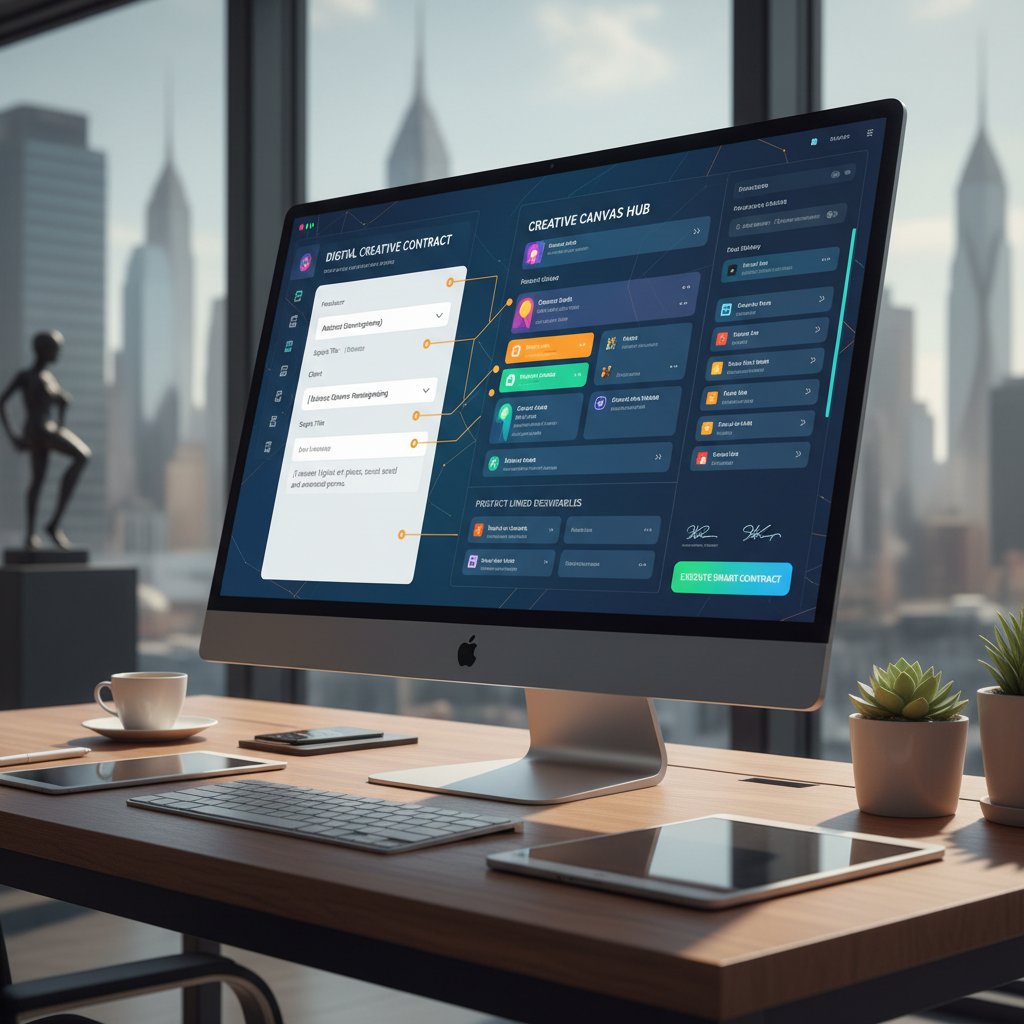
- Rapid drafting for project-based work, reducing negotiation time.
- Built-in payment clauses and milestones for transparency.
- License and IP management for creative deliverables.
- Multi-lingual templates for international clients.
Adoption among gig workers is skyrocketing, thanks to platforms that make contracts not only accessible, but empowering.
Cross-border deals and legal complexity
International deals bring a web of legal complexities—currency, tax, regulatory, and cultural nuances. Advanced contract generation software now incorporates real-time compliance checks and machine translation.
"Cross-border contracting used to require teams of lawyers. Now, the right software surfaces risks and suggests localized clauses in seconds."
— Based on WorldCC, 2023
AI-driven solutions can’t replace human oversight for cross-border deals, but they can dramatically reduce the friction and risk of global growth.
Integrating with AI-driven business workflows
Modern organizations don’t operate in silos. The best contract generation software fits into end-to-end digital workflows—from sales and procurement to HR and compliance. By integrating contracts with data flows, approvals, and analytics dashboards, teams gain a 360-degree view of obligations and opportunities.
This is where platforms like filecreator.ai stand out—providing not just document generation, but seamless integration with broader business processes, ensuring every contract is both fit-for-purpose and instantly actionable.
The future of trust: Can we believe in digital contracts?
Smart contracts, blockchain, and what’s next
Despite the hype, “smart contracts” and blockchain tech are still emerging. What matters now is practical trust—ensuring that digital contracts are secure, enforceable, and universally recognized.

Blockchain can provide tamper-proof records, but today’s best contract generation software focuses on robust authentication, audit trails, and compliance. Trust is built through transparency, not buzzwords.
So while crypto contracts may grab headlines, day-to-day business needs tools that deliver real-world enforceability and clear legal recourse—without blockchain complexity.
Risk, reputation, and the human factor
Even the best tech can’t eliminate all risk. Organizations must remain vigilant about:
- Data privacy breaches and insider threats.
- Reputational damage from contract disputes.
- Compliance failures in highly regulated industries.
- Loss of trust due to opaque algorithms or hidden biases.
Digital contracts succeed when they balance automation with human judgment, ethics, and open communication.
Ultimately, trust isn’t just about software—it’s about people, processes, and a willingness to challenge the status quo when something doesn’t feel right.
Final verdict: What the experts (and skeptics) say
At the end of the day, the best contract generation software isn’t a cure-all. It’s a powerful tool—one that, when wielded wisely, transforms business outcomes.
“No software can substitute for sound process and good judgment. But for those ready to adapt, contract automation is a competitive weapon—one that’s separating winners from the rest.”
— Synthesized from Emergen Research, 2024
The skeptics have a point: Automation can create new risks. But with careful selection, continuous oversight, and a relentless focus on compliance and value, contract software is now table stakes for serious organizations.
Your action plan: Mastering contract generation in 2025 and beyond
Priority checklist for implementation
Ready to move from theory to action? Here’s a step-by-step execution plan:
- Audit your current state: Map workflows, inventory existing contracts, and identify key risks.
- Build your selection team: Involve legal, IT, operations, and executives.
- Define your “must-haves” and “nice-to-haves.”
- Shortlist and trial vendors: Test with real contracts and real users.
- Plan for change: Invest in training and adoption—not just technology.
- Roll out in phases: Start with one business unit or contract type, then expand.
- Monitor, measure, and iterate: Use analytics to track adoption, speed, and compliance.
Implementation isn’t a sprint—it’s a marathon. The best results come from continuous learning and adaptation.
Where filecreator.ai fits in the modern workflow
Filecreator.ai is emblematic of the new generation of contract and document automation platforms: AI-powered, compliance-focused, and designed to integrate with the full spectrum of business processes. Its approach reflects the current trend towards document solutions that not only generate contracts, but also embed compliance, support multi-format workflows, and adapt to the needs of fast-changing industries.
For businesses seeking trustworthy, efficient, and scalable contract generation, platforms like filecreator.ai offer a robust entry point—powering everything from basic NDAs to complex cross-border agreements with the reliability and speed demanded by today’s market.
Resources for going deeper
If you want to master contract generation, these verified resources are essential:
- G2 Contract Analytics Reviews, 2024
- SoftwareConnect’s Best Contract Management Software, 2024
- PandaDoc Blog: Contract Management Insights, 2024
- Emergen Research: Top 10 Contract Management Companies, 2024
- WorldCC: Global Contracting Best Practices, 2023
- IBM Security Data Breach Report, 2024
Invest time in these resources, and you’ll be better equipped to separate the contenders from the pretenders in digital contract management.
Contracts may be the oldest business tool in the world, but in 2025, the race to master them is wide open. The best contract generation software is the one that gives you speed, security, and adaptability—without losing sight of compliance and human judgment. Arm yourself with the right insights and tools, and your next deal won’t just be faster—it’ll be smarter, safer, and more profitable.
Sources
References cited in this article
- SoftwareConnect(softwareconnect.com)
- G2 Contract Analytics(g2.com)
- PandaDoc Blog(pandadoc.com)
- Emergen Research(emergenresearch.com)
- ContractSafe Statistics(contractsafe.com)
- Juro Guide(juro.com)
- Icertis AI Report(icertis.com)
- Oneflow Case(oneflow.com)
- Cloud Interactive Guide(cloud-interactive.com)
- Thomson Reuters(legal.thomsonreuters.com)
- Harvard Law(hls.harvard.edu)
- AI.Law Case Study(ai.law)
- Concord Buyer's Guide(concord.app)
- Contracts365(contracts365.com)
- Comparitech(comparitech.com)
- Fynk(fynk.com)
- Zegal(zegal.com)
- Small Business Currents(smallbusinesscurrents.com)
- Summize(summize.com)
- Risk Management Magazine(rmmagazine.com)
- G2 AI Contract Management(learn.g2.com)
- Forbes AI Trust(forbes.com)
- Compliance Week(complianceweek.com)
- Infonetica Ethics Guide(infonetica.net)
- Conga Blog(conga.com)
- Checkbox.ai(checkbox.ai)
- ContractSafe Buyer’s Guide(contractsafe.com)
- Gartner Peer Insights(gartner.com)
- ContractWorks Guide(contractworks.com)
- Gatekeeper Case Study(gatekeeperhq.com)
- Documentero Blog(blog.documentero.com)
- ContractSafe Buyer’s Guide(contractsafe.com)
- Fortune Business Insights(fortunebusinessinsights.com)
- Contract Management Online(contractmanagement.online)
Perfect Documents, Instantly
Filecreator.ai transforms the way you produce professional documents. Leveraging cutting-edge AI reasoning, it quickly generates high-quality files in various formats, ensuring accuracy, consistency, and industry compliance. Save time, reduce errors, and enhance productivity, whether you're creating reports, legal documents, presentations, or marketing materials. Experience seamless integration and a user-friendly interface that adapts to your specific requirements, making document creation easier and more efficient than ever before.
Get startedStart Creating Professional Documents Today
Join thousands of professionals who trust AI-powered document generation
Frequently Asked Questions
How much revenue do companies lose due to poor contract management?
According to a 2023 study by World Commerce & Contracting, companies lose an average of 9% of annual revenue due to poor contract management, which can translate to millions in lost value for mid-sized enterprises.
What are the main time-consuming steps in manual contract creation?
The typical manual contract workflow includes drafting from scratch (2-4 hours), version control (1-2 hours), approval chasing (2+ hours), compliance review (1-3 hours), and storage & retrieval (30 minutes), totaling upwards of 10 hours per standard agreement.
What are the common risks associated with manual contract management?
Manual contract processes carry risks including human error and omissions during drafting, lost edits and confusion in version control, approval delays and bottlenecks, missed compliance obligations, and lost documents or data leaks during storage and retrieval.
What factors have reshaped the contract generation software landscape in 2025?
The landscape has been reshaped by AI, heightened compliance demands, and the realities of digital transformation, moving beyond just interface design and marketing budgets.
Continue Reading
Explore more from Professional Document Generator

Contract Generation Software: Risks and Benefits Explained
Contract generation software is reshaping business workflows. This article examines eleven core realities

Professional Contracts: Why Generation Strategy Matters to Your Business
Generating professional contracts protects your bottom line. This article explains the risks of poor contract management, why retrieval failures cost businesses time, and how to approach contract generation strategically.

Contract Drafting Software Solutions: Costs, Benefits, and Impact
Contract drafting software solutions automate drafting, reduce errors, and shape modern deal-making. This article examines their true costs, benefits, and real-world impact.

Contract Creation Software: Benefits, Risks, and How to Use It Well
Contract creation software accelerates deal-making but carries hidden risks. This article explains the trade-offs, common pitfalls, and strategies to maximize benefits safely.

Automated Customized Contracts: Benefits, Risks, and Implementation
Generate automated customized contracts efficiently while managing risks. This article explains how automation works, what pitfalls to avoid, and where real business gains appear.

How to Generate Legal Contracts Easily and Safely
This article explains how to generate legal contracts easily while avoiding common pitfalls. It covers the risks of DIY agreements, tools available, and strategies for protecting your interests.