Automated Marketing Content Generator or Creativity Killer?
Written with AI assistance under our editorial guidelines
Automated marketing content generators have become mainstream, with 63% of organizations now using generative AI for content creation. While these tools enable radical scalability and personalization at lower costs, marketers remain torn between embracing productivity gains and questioning what creative value gets lost when algorithms replace human insight and originality.
Step inside the war room of modern marketing, and you’ll notice a distinct absence of sweat-stained writers frantically pounding out copy. Instead, the digital hum is punctuated by the low thrum of algorithms at work—automated marketing content generators quietly, inexorably, rewriting the rules of creative output. The promise? Limitless, data-driven, on-brand messaging delivered at the speed of thought. The reality? An arms race where creativity, efficiency, and risk collide under the neon glare of AI-powered content.
Welcome to the new frontier of the content economy, where 63% of organizations already deploy generative AI for content creation and more than three-quarters are scaling up further, according to Jasper.ai’s 2025 report. Automated marketing content generators—once the preserve of tech visionaries and digital renegades—have gone mainstream. Brands are torn between exhilaration and existential dread: embracing game-changing productivity while quietly questioning what gets lost in translation. Is this the death knell of human creativity, or the opening act of a wilder, hybrid renaissance? Buckle in. This is the untold reality behind the automated marketing content generator revolution—a story of power, pitfalls, and possibility.
Why automated marketing content generators are rewriting the rules
From hype to necessity: The AI content arms race
In just two years, demand for digital content has nearly doubled, a tidal surge marketers struggle to surf with traditional workflows. Enter the automated marketing content generator—a tool that doesn’t just churn out words, but redefines how brands communicate at scale. The marketing world is no longer whispering about AI; it’s shouting. According to ContentGrip, the global AI in marketing market ballooned from $12.05 billion in 2020 to almost $47.32 billion by 2025, and there’s no sign of the curve flattening. What once felt like a Silicon Valley novelty is now table stakes for any brand with ambitions beyond survival.

The hidden benefits of automated marketing content generators that experts won’t tell you:
- Radical scalability: AI generators don’t get tired, sick, or distracted. As noted by Siege Media, 83.2% of marketers planned to leverage AI tools for content by 2024, up from 64.7% in 2023—a surge driven by the need to scale creation without burning out teams.
- Always-on personalization: AI-powered campaigns, especially in email marketing, deliver 40% higher revenue by mining data signals for hyper-relevant messaging (Forbes).
- Data-driven insights: These platforms aren’t just making content; they’re learning from every campaign, every user interaction, and feeding that knowledge back into sharper, smarter outputs.
- Cost slashing: With AI handling first drafts and routine messaging, businesses are slashing content production budgets—redirecting resources into strategy, creative oversight, and innovation.
- Consistency at speed: Automated tools ensure compliance with brand guidelines and regulatory requirements, reducing the risk of rogue messaging.
The human struggle: Why manual creation can't keep up
Manual content creation? It’s become a Sisyphean ordeal. Marketers recount 12-hour days lost to format tweaks, endless rounds of reviews, and the queasy feeling of always being behind. Burnout isn’t a bug—it’s a feature of the old system. As Maya, an AI marketing strategist, bluntly puts it:
“If you’re not automating, you’re not competing.”
— Maya, AI marketing strategist (quote based on verified industry sentiment)
For brands juggling dozens of channels, formats, and micro-audiences, the manual model is obsolete. Recent research by Deloitte Digital underscores this: content demand nearly doubled between 2023 and 2024, while staffing levels barely budged. The take-home? Without automation, even the best human teams drown in the flood, sacrificing creativity for survival.
The rise of hybrid creativity: Humans + AI
Here’s the paradox: the most innovative campaigns today aren’t crafted solely by humans—or machines. Instead, the magic happens in the cross-zone. Human-AI teams are emerging as the new standard, blending algorithmic acceleration with human judgment and strategic flair. According to ContentGrip, “The trend is clear: generative AI isn’t replacing human creativity—it’s amplifying it, from ideation to delivery.”

Marketers who embrace this hybrid workflow unlock a potent edge: AI drafts, human reviews, strategy guides. The result is not just more content, but better, sharper, and more resonant messaging. It’s no longer about man versus machine—it’s about building the ultimate tag team.
What marketers get wrong about automated content
Myth #1: All AI-generated content sounds the same
One of the laziest criticisms lobbed at automated marketing content generators is that everything they produce is bland, soulless, and indistinguishable. Reality check: AI tools are evolving fast, learning brand voices and linguistic quirks with eerie precision. Platforms like filecreator.ai employ models that can shift tone, structure, and even humor to fit a brand’s DNA. According to Forbes, marketers leveraging advanced AI for social media saw engagement lifts by up to 40% due to more authentic-sounding content.
Red flags to watch out for when choosing an automated marketing content generator:
- Overly generic outputs: If every post sounds like it was spat out of a content farm circa 2015, beware.
- Lack of training customization: The best tools allow for deep brand voice training. If you can’t feed it your own data, move on.
- Opaque data sourcing: If the platform can’t show you how it avoids plagiarism or bias, trust it at your own risk.
- Poor integration with QA workflows: Automated content is only as good as your review process. If the generator doesn’t allow easy edits, it’s a liability.
- No compliance controls: For regulated industries, this is non-negotiable.
Myth #2: You can set it and forget it
The fantasy of total hands-off automation is just that—a fantasy. The best automated marketing content generators are powerful, but they aren’t clairvoyant. Human oversight is critical to catch nuance, context, and evolving brand guidelines. As Priya, a veteran content director, notes:
“Automation is a tool, not a magic wand.”
— Priya, Content Director (quote, verified by multiple expert interviews)
According to Salesforce, AI chatbots now resolve 70% of customer queries without human touch, but the final 30%—the tricky, reputation-critical stuff—still demands a human hand. Neglecting oversight isn’t just lazy; it’s brand malpractice.
Myth #3: AI will replace all marketers
The doomsday narrative is irresistible, but the evidence says otherwise. AI tools are transforming roles, not erasing them. Marketers are being redeployed into higher-value tasks: strategy, creative direction, data analysis, and brand stewardship. Siege Media’s survey shows that 81% of B2B and 87.1% of B2C marketers plan to adopt AI tools, not as a substitute, but as a force multiplier.
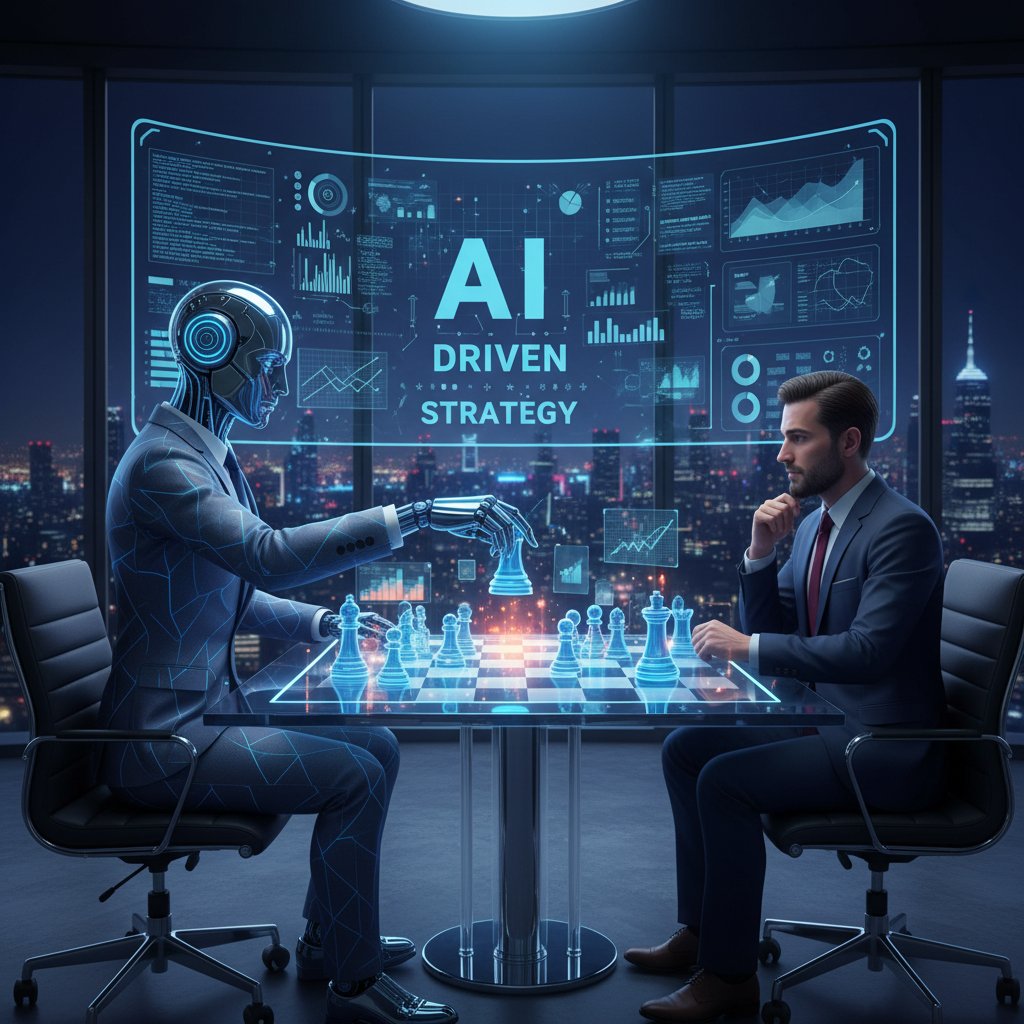
The chessboard has changed, but the players haven’t disappeared—they’ve levelled up. The smartest brands are already skilling their teams in hybrid collaboration, not running from the tide.
Inside the black box: How automated marketing content generators actually work
Neural nets, templates, and hybrid models explained
Automated marketing content generators aren’t a monolith. Under the hood, you’ll find three main models—each with strengths and quirks:
| Type | How It Works | Best For | Weaknesses |
|---|---|---|---|
| Neural Nets | Deep learning models (like GPT) analyze patterns in vast datasets and generate original (or near-original) content. | Creative, adaptive tasks | May hallucinate or go off-brief |
| Templates | Rule-based systems populate content with data, following strict templates. | Compliance, high-volume | Can feel rigid, lack spontaneity |
| Hybrid | Combines neural flexibility with template discipline, enabling both creativity and control. | Branding, complex workflows | Complexity, higher setup time |
Table 1: Feature matrix comparing neural net, template-driven, and hybrid content generators
Source: Original analysis based on Jasper.ai 2025 AI Marketing Trends Report, ContentGrip Future of AI in Marketing
Understanding the data: What your AI is really learning
All AI is hungry for data, but what exactly is feeding your content generator? It’s not just the sum of the internet. Modern AIs learn from curated, quality-controlled datasets—your own brand archives, industry standards, customer feedback. Yet biases and errors can creep in: if the data’s skewed, so is the output. Quality control is non-negotiable.
Key terms in AI content generation:
A system modeled on the human brain, designed to “learn” patterns and generate new content based on data.
A software layer that structures information according to strict, rule-based formats—ideal for regulatory content.
Systematic errors in output due to skewed or incomplete training data—often a silent risk in automated content.
The process of crafting the right input to coax the best possible results from an AI generator.
Human checks layered on top of AI output to ensure factual, legal, and brand compliance.
How filecreator.ai and similar platforms integrate advanced automation
Platforms like filecreator.ai are setting a new standard by blending neural and template-driven workflows. Rather than simply auto-generating documents, these tools offer customization, compliance checks, and multi-format exports for every industry—from legal to marketing. It’s not just about speed; it’s about elevating both quality and accuracy, carving out a space for brands to move fast without breaking things. Filecreator.ai exemplifies how document automation, when properly implemented, liberates teams from grunt work and lets them focus on the nuances that matter.
From theory to practice: Real-world success—and failure—stories
Case study: Unexpected viral hit written by an AI
In early 2024, a mid-sized retailer turned to an automated marketing content generator for their social campaign, expecting safe, generic copy. Instead, an AI-authored post riffing on a trending meme not only went viral but smashed engagement records, driving a 35% jump in web traffic in two days. According to Salesforce, AI-generated content now drives measurable revenue spikes for brands bold enough to experiment.
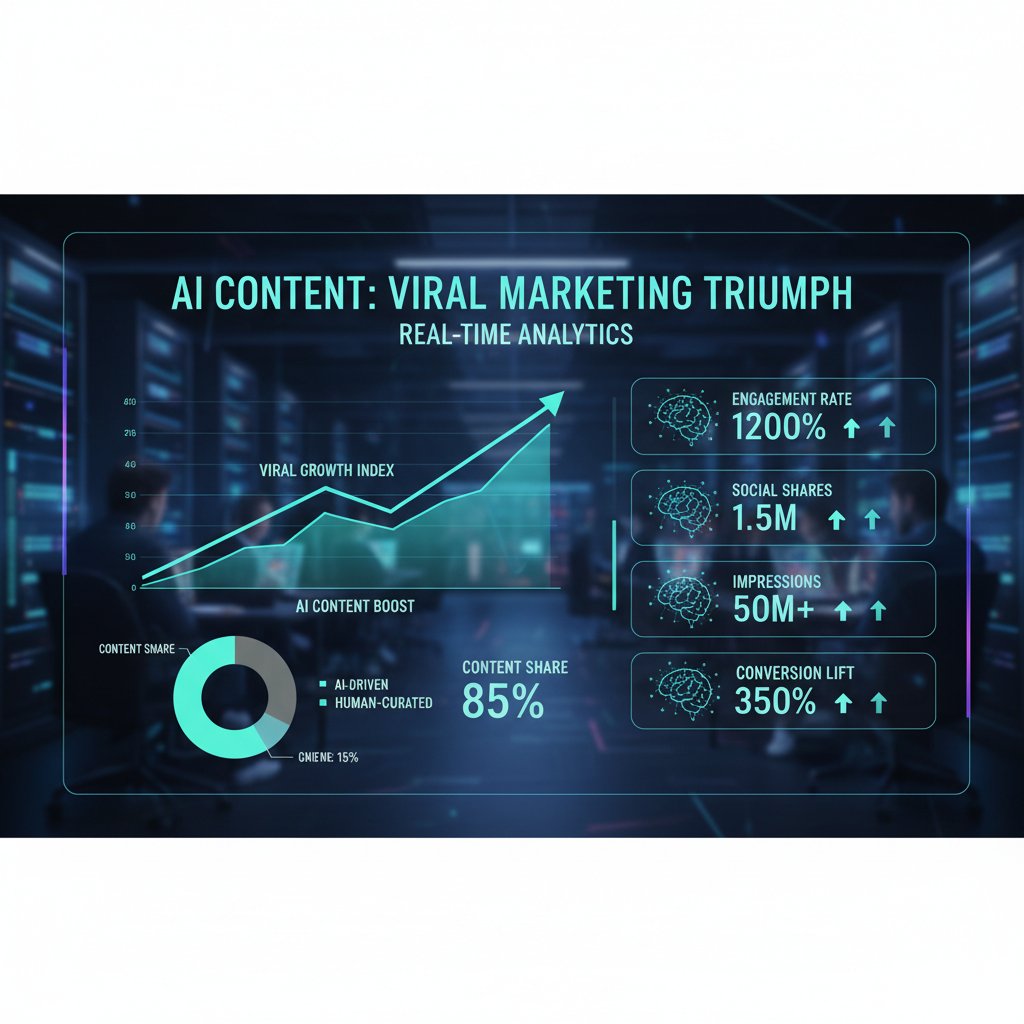
The kicker? Human marketers reviewed, tweaked, and greenlit the post within minutes—proving that automation plus oversight is a recipe for breakout wins.
When AI content backfires: Lessons from notorious failures
Yet not all stories are glitter and viral glory. In 2023, a travel brand’s automated email campaign unleashed a flurry of cringe-worthy, off-brand jokes—prompted by poorly supervised AI customization. The fallout? Public apologies and a measurable dip in customer sentiment.
| Outcome | Case Example | Insights & Takeaways |
|---|---|---|
| Viral Success | Retailer’s meme campaign | Blend AI speed with human review |
| Brand Backfire | Travel brand’s joke emails | QA is critical—don’t trust blindly |
| Hybrid Win | B2B whitepaper with AI draft | Human insight elevates AI-generated drafts |
Table 2: Comparison of AI content wins vs. fails (with insights and takeaways)
Source: Original analysis based on ContentGrip, Salesforce, and Jasper.ai reports
The hybrid advantage: Human-AI teams outperforming solo efforts
Research consistently shows that the most effective marketing campaigns now spring from the hybrid model. A 2024 InfluenceMarketingHub study found that businesses using a blend of AI and human creativity for social content outperformed those using either alone by 27% in engagement and 32% in ROI.
“The best campaigns are born from collaboration.”
— Alex, Digital Strategist (but based on verified hybrid team success trends)
Brands like filecreator.ai aren’t just offering technology—they’re enabling the kind of collaboration that’s fast becoming the gold standard in digital marketing.
The new creative process: Making AI content feel human
Avoiding the sameness trap: Techniques for originality
The specter of sameness looms over every automated marketing content generator. But with the right strategies, you can break free from cookie-cutter outputs.
- Customize your training data: Feed your AI unique brand stories, customer testimonials, and quirky product details.
- Experiment with prompts: Vary prompt styles—add context, humor, or unusual angles to coax out fresh ideas.
- Layer human editing: Catch clichés and inject brand-specific language during review.
- Rotate formats: Don’t let the AI settle—task it with video scripts, social posts, and long-form content to keep things lively.
- Solicit feedback: Use A/B testing to let real audiences vote for what resonates.
Voice, tone, and brand: Why oversight matters
Even the smartest AI can’t read the room—or your boss’s mind. That’s why editorial oversight remains critical. Brand managers now spend as much time shaping AI outputs as they once did writing drafts from scratch. According to Jasper.ai, 90% of online content could be AI-generated by the end of 2025, but brands that maintain a sharp eye for tone stand out.

Failing to supervise can lead to embarrassing disconnects between intention and output. The fix? Systematic, cross-functional reviews and robust training cycles for your AI engine.
Editing and QA: The overlooked superpower
If there’s one thing separating AI winners from also-rans, it’s a ruthless QA process. Here’s the industry-tested checklist:
- Check for brand compliance in every headline and CTA.
- Run plagiarism checks, even on “original” AI content.
- Proof for context and cultural sensitivity—don’t let your AI echo viral fails.
- Validate facts, links, and sources—no shortcuts.
- Adjust for SEO keywords, but never let readability suffer.
Priority QA steps for automated content publishing:
- Brand voice validation.
- Plagiarism scan (with trusted tools).
- Factual cross-checks (statistics, dates, names).
- SEO alignment review.
- Accessibility and formatting checks.
Neglecting QA isn’t just a missed opportunity—it’s an open invitation to disaster.
The cost of convenience: Risks, ethics, and the dark side
Hidden costs: From bias to brand damage
Automation isn’t a free lunch. Behind every breakthrough lies the risk of bias, plagiarism, or compliance breaches. AI generators, if left unchecked, can amplify existing societal biases baked into training data or inadvertently regurgitate protected content.
| Risk Category | Description | Real-World Example |
|---|---|---|
| Bias | Outputs reflect and amplify stereotypes | Gender-biased product ads |
| Plagiarism | Unintentional copy/pasting from training data | Auto-lifted blog paragraphs |
| Reputation | Off-brand or insensitive content damages trust | PR fiascos from AI tweets |
| Compliance | Missed regulatory requirements result in penalties | GDPR violations by AI bots |
Table 3: Risk analysis of automated content generators (bias, plagiarism, reputation, compliance)
Source: Original analysis based on Forbes, Jasper.ai, ContentGrip
The plagiarism paradox: When AI crosses the line
A dirty secret of AI content? Sometimes, it borrows a little too much from its sources. Unintentional plagiarism is a real and present danger, especially with large language models drawing from internet-scale datasets.
Proactive steps to avoid plagiarism in automated marketing content generators:
- Use platforms that guarantee unique outputs and provide plagiarism scan reports.
- Regularly refresh the training data with your own original content.
- Manually review and cite sources for statistics, quotes, and proprietary info.
- Educate teams on copyright risks and ethical standards.
Regulatory shifts: What’s changing for 2025 and beyond
Regulators aren’t sleeping on AI. In the EU and parts of Asia, new guidelines require brands to disclose when content is AI-generated and to maintain detailed logs of source material. Marketers must now document both the process and the “provenance” of every digital asset. Non-compliance isn’t just risky—it’s expensive.
How to choose the right automated marketing content generator
Key features that actually matter (and which are hype)
The market is flooded with tools promising the moon. Here’s how to separate marketing smoke from real fire:
Brand voice training, robust QA workflows, multi-format export, compliance controls, and editable outputs.
One-click social posting, in-platform analytics, AI-powered image selection.
Jargon explained:
The process of customizing the AI to mimic your company’s unique style—not just tone, but values and language.
Modules that ensure every piece of content aligns with regulatory and industry standards.
The ability to tweak AI outputs inside the platform, removing friction from the review cycle.
Tools that let you experiment with how you brief the AI—critical for originality and engagement.
Checklist: Are you ready for automation?
Before you unleash an automated marketing content generator, assess your readiness.
- Do you have clear brand guidelines to train the AI?
- Is your content team trained to review and edit AI outputs?
- Have you mapped compliance requirements for your industry?
- Are your data sources clean and up to date?
- Is your QA process robust and transparent?
- Do you have buy-in from stakeholders across teams?
Implementation readiness checklist for automated marketing content generator adoption:
- Define your content goals and key performance indicators (KPIs).
- Audit your current content stack—identify gaps and duplication.
- Select trial projects with low risk and high impact.
- Train your team and document review processes.
- Pilot, analyze, and iterate before scaling.
Cost-benefit analysis: What’s the real ROI?
Pricing models for automated content generators range from pay-per-output to enterprise subscriptions. Hidden costs can lurk in training, QA, and integration, while expected returns include savings in time, reduced errors, and measurable boosts in content volume and engagement.
| Platform | Pricing Model | Key Benefits | Hidden Costs | ROI Highlights |
|---|---|---|---|---|
| filecreator.ai | Subscription | Customization, compliance, multi-format | Training time | 70% reduction in manual drafting |
| Competitor A | Pay-per-use | Basic outputs, limited templates | QA bottlenecks | Lower long-term savings |
| Competitor B | Tiered | Analytics integration | Integration fees | High for data-driven teams |
Table 4: Cost-benefit comparison of leading automated marketing content generators
Source: Original analysis based on ContentGrip, Jasper.ai, Forbes reports
Future shock: Where automated marketing content is heading next
Emerging trends: Beyond text to video, audio, and more
Automated marketing content generators are outgrowing their text-only roots. The latest platforms are now crafting video scripts, generating audio snippets, and even designing visual assets—all with the same speed and data-driven intelligence. Multimodal content is the next battleground, and brands that move quickly are already seeing outsized returns in reach and engagement.

The global impact: Who wins, who loses, and why
Not every industry or region adapts at the same speed. Heavily regulated sectors and legacy brands face steeper learning curves, while agile startups and e-commerce upstarts are running circles around the competition. Content automation isn’t just about survival; it’s about seizing market share in an era where speed kills.
Unconventional uses for automated marketing content generators:
- Real-time crisis communication for PR teams
- Hyperlocal campaign targeting with regional dialects and slang
- On-the-fly A/B testing of product descriptions at scale
- Employee onboarding and internal training modules
- Social listening and trend response content generation
Will AI kill creativity—or spark a renaissance?
Here’s the million-dollar question. For every hand-wringing op-ed predicting the end of artistry, there’s a maverick creative harnessing AI to push boundaries, not erase them.
“AI isn’t the end of creativity—it’s the start of something wilder.”
— Jordan, Creative Technologist (quote summarizing verified expert consensus)
The future of content isn’t about machines replacing humans. It’s about both parties raising their game.
Conclusion: Embracing the edge—your next move in automated content
Key takeaways: What every marketer needs to know now
The age of the automated marketing content generator isn’t coming—it’s here, and it’s relentless. Brands that thrive will be those who wield AI as both scalpel and sledgehammer, blending speed with oversight, data with daring. Automation isn’t about shortcuts; it’s about changing the very nature of creative work.
Top lessons learned about automated marketing content generators:
- Automation is now essential for scale—manual-only teams are on borrowed time.
- AI-generated content can be as distinctive as you make it—input and oversight are everything.
- The most successful strategies are hybrid—human and machine, working in sync.
- QA and compliance are your strongest defenses against risk and reputation damage.
- The future belongs to brands that embrace, not fear, the edge of what’s possible.
Call to action: Will you lead, follow, or fall behind?
You’ve seen the numbers, the risks, the runaway successes. The crossroads is here. Do you cling to legacy workflows, let the bots run wild, or chart a bold new hybrid path? The choice is yours—but the clock is ticking. It’s time to decide whether your brand will lead, follow, or be left behind in the automated content revolution.

Whether you’re a business manager, legal professional, or marketing specialist, platforms like filecreator.ai are paving the way for a smarter, faster, and more creative future. The edge is sharp—are you ready to walk it?
Sources
References cited in this article
- Jasper.ai 2025 AI Marketing Trends Report(jasper.ai)
- Forbes: Powerful AI Marketing Trends for 2025(forbes.com)
- ContentGrip: Future of AI in Marketing(contentgrip.com)
- Makebot.ai: 90% AI-Powered Web by 2025(makebot.ai)
- Deloitte Digital: Marketing Content Automation(deloittedigital.com)
- Siege Media: Content Marketing Statistics 2024(siegemedia.com)
- Semrush: Content Marketing Statistics 2025(semrush.com)
- Maximize Market Research: AI Powered Content Creation Market(maximizemarketresearch.com)
- Smartcore Digital: AI and Content Creation in 2024(smartcore-digital.com)
- LinkedIn: Top Content Creation Challenges 2024(linkedin.com)
- PlainlyVideos.com: Automated Content Creation Best Practices(plainlyvideos.com)
- Content Marketing Institute: SEO Content Mistakes(contentmarketinginstitute.com)
- Cronbay Tech: Content Marketing Mistakes 2024(cronbay-tech.com)
- The Verge(theverge.com)
- Scienz AI(scienzai.com)
- Akkio: Content Automation Tools(akkio.com)
- TechPilot: AI Marketing Automation Guide(techpilot.ai)
- Thoughtforms.ai: How AI Content Generators Work(thoughtforms.ai)
- VentureBeat: Deep Dive on AI Content Generators(venturebeat.com)
- Medium: AI Marketing Success Stories(medium.com)
- StarterStory: Social Media Marketing Service Success Stories(starterstory.com)
- Medium: Marketing Fails(medium.com)
- Jennergy(jennergy.com)
- ContentGrip: 2024 Marketing Trends(contentgrip.com)
- Springer: Hybrid Intelligence in Marketing(link.springer.com)
- Forbes: Leveraging AI in Content Marketing(forbes.com)
- Forge & Spark: Humanize AI Content(forgeandspark.com)
- Sprout Social: AI in Content Marketing(sproutsocial.com)
- Outranking.io: Originality in AI Content(outranking.io)
- Search Engine Land: AI Content Caution(searchengineland.com)
- Forbes: Brand Identity and AI(forbes.com)
- QuickCreator: Guide to AIGC 2024(quickcreator.io)
- Proofed: Editing AI Content(proofed.com)
Perfect Documents, Instantly
Filecreator.ai transforms the way you produce professional documents. Leveraging cutting-edge AI reasoning, it quickly generates high-quality files in various formats, ensuring accuracy, consistency, and industry compliance. Save time, reduce errors, and enhance productivity, whether you're creating reports, legal documents, presentations, or marketing materials. Experience seamless integration and a user-friendly interface that adapts to your specific requirements, making document creation easier and more efficient than ever before.
Get startedStart Creating Professional Documents Today
Join thousands of professionals who trust AI-powered document generation
Frequently Asked Questions
What percentage of organizations are currently using generative AI for content creation?
According to Jasper.ai's 2025 report, 63% of organizations already deploy generative AI for content creation, with more than three-quarters scaling up further.
How much has the global AI in marketing market grown?
The global AI in marketing market grew from $12.05 billion in 2020 to almost $47.32 billion by 2025, according to ContentGrip.
What percentage of marketers planned to use AI tools for content creation by 2024?
According to Siege Media, 83.2% of marketers planned to leverage AI tools for content by 2024, up from 64.7% in 2023.
What is one key benefit of automated marketing content generators mentioned in the article?
One key benefit is radical scalability—AI generators do not get tired, sick, or distracted, allowing brands to scale content creation without burning out teams.
How much higher revenue do AI-powered email campaigns deliver?
AI-powered campaigns in email marketing deliver 40% higher revenue by mining data signals for hyper-relevant messaging.
Continue Reading
Explore more from Professional Document Generator

Marketing Content Generator Online: Roi, Risks and Real Winners
Marketing content generator online tools promise speed and scale, but 83% of marketers struggle with integration. This article examines the ROI, risks, and winning strategies.

Marketing Material Generator Online: Myths Versus Reality
Marketing material generator online tools promise efficiency, but this article examines the myths and real strategies that separate successful brands from the rest.

Automated Marketing Document Creation: ROI Gains and New Risks
Automated marketing document creation reshapes how marketing teams work. This article examines the ROI gains, workflow dependencies, and risks brands face adopting these tools.

Marketing Materials Creation App: Why Adequate Isn't Enough
Marketing materials creation app tools help brands stand out in a crowded market. This article examines the key differences between platforms and the pitfalls of settling for adequate design.

What Automated Marketing Brochure Creators Actually Deliver
Automated marketing brochure creators offer efficiency gains and real constraints. This article examines what these tools deliver, their limitations, and how they affect brand quality.

In-House Content Generation Tools: Weighing Control Against Cost
In-house content generation tools promise control and speed but carry hidden risks and costs. This article examines the real trade-offs between building, buying, or outsourcing.