


Alternative to Error-Prone Processes That Quietly Drain Millions
Written with AI assistance under our editorial guidelines
Organizations lose millions to error-prone processes, with 80% of analytics project time consumed by manual, repetitive steps. Manual errors and process breakdowns account for up to 30% of operational losses even in advanced organizations. Moving beyond outdated tools and fragmented systems through process automation and systematic improvements can reclaim control, reduce errors, and future-proof operations.
Every organization has a dirty secret. Behind the glossy annual reports and mission statements lies a dark undercurrent: error-prone processes quietly sabotaging your workflow. The numbers are terrifying—recent research shows that a shocking 80% of analytics project time is burned on repetitive, manual steps, sucking the life out of innovation and morale (CloverDX, 2023). While tech giants spin tales of seamless automation, the real world is a graveyard of avoidable mistakes, missed opportunities, and silent suffering. This isn’t a distant, abstract problem. It’s the everyday reality for teams choking on outdated tools, drowning in fragmented systems, and gasping under regulatory and economic pressures. If you’re reading this, you’re probably searching for an alternative to error-prone processes—one that doesn’t just sprinkle on more tech or slap a checklist over the rot, but ruthlessly reclaims control. Here’s your unfiltered playbook: seven radical, researched, and proven ways to break free, dominate your workflow, and future-proof your organization from the inside out.
Why error-prone processes haunt even the best organizations
The hidden epidemic: how mistakes multiply in silence
The real damage of error-prone processes isn’t always the explosive disaster—it’s the slow, silent hemorrhage. Across industries, tiny mistakes ripple outwards, multiplying costs and frustration in ways that rarely make headlines but always gut productivity. According to a 2023 study by CloverDX, in even the most advanced organizations, manual errors and process breakdowns are responsible for up to 30% of operational losses. The invisible toll is staggering—lost hours, damaged reputations, regulatory fines, and demoralized teams. As process expert Maya observes:
“Most teams don’t realize they’re bleeding out from small mistakes. It’s a death by a thousand cuts, not a single wound.”
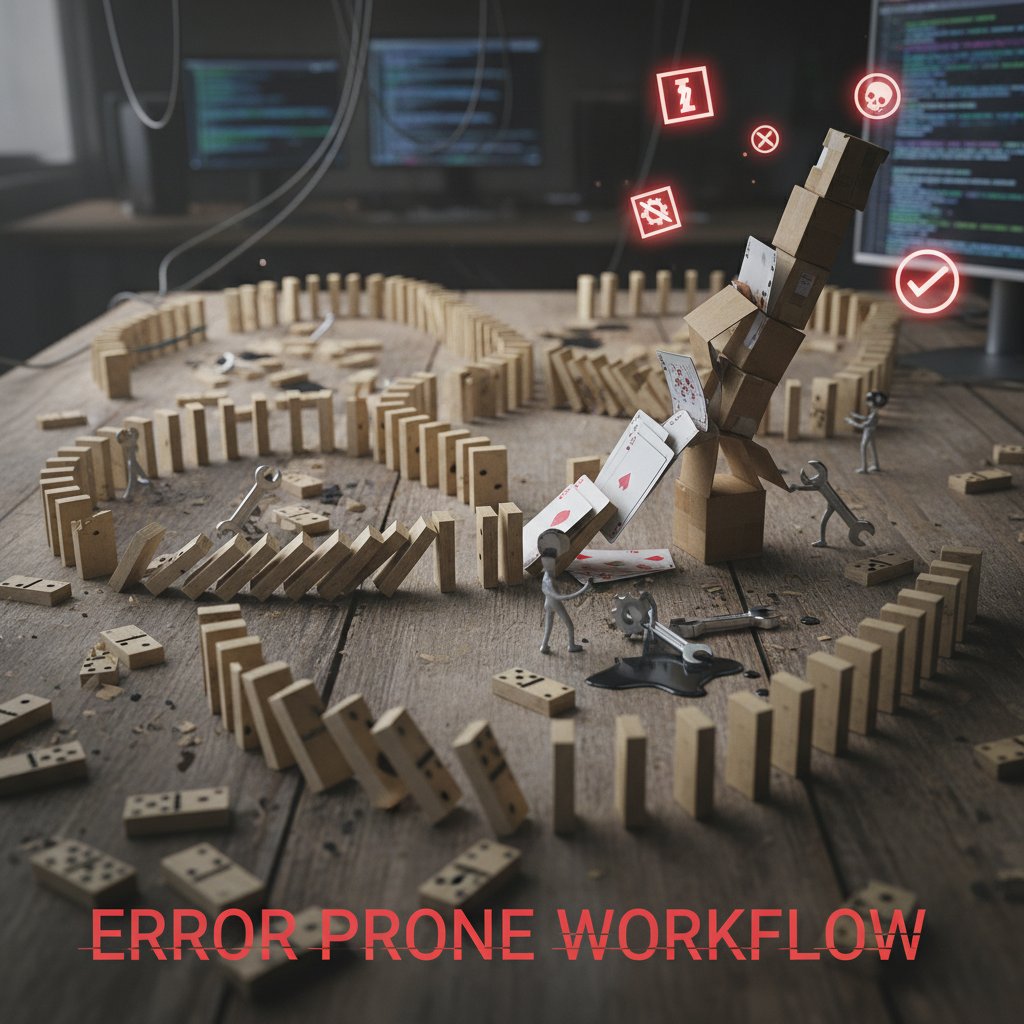
This epidemic thrives in silence. Errors go unreported, lessons never surface, and organizations normalize firefighting as business as usual. The result? A culture where mediocrity is the ceiling and true innovation withers before it can root.
From legacy systems to human fatigue: the anatomy of failure
Peel back the surface of any recurring error and you’ll find a familiar cocktail: obsolete technology, manual steps stitched together by hope, and workers stretched to their cognitive limits. According to current analytics (CloverDX, 2023; LeadSquared, 2023), the top drivers of process errors in 2025 are:
| Cause of Error | Prevalence (%) | Most Affected Sectors |
|---|---|---|
| Manual data entry | 37 | Finance, Healthcare |
| Fragmented IT systems | 29 | Manufacturing, Retail |
| Cognitive overload/burnout | 16 | Knowledge Work, Legal |
| Outdated legacy tools | 12 | Public Sector, Education |
| Communication breakdown | 6 | All sectors |
Table 1: Statistical summary of top causes of process errors by sector, 2025.
Source: Original analysis based on CloverDX, 2023 and LeadSquared, 2023.
When processes hinge on human vigilance rather than system design, the weakest link is always exposed. Add to that economic uncertainty, regulatory demands, and chronic labor shortages—suddenly, even high-performing teams find themselves sucked into a vortex of preventable mistakes.
The psychological cost: why we normalize chaos
What’s even more insidious than operational errors? The way teams adapt to them. Over time, firefighting morphs into muscle memory. Staff learn to expect chaos, normalize reactive behavior, and quietly accept dysfunction as their new normal. According to research published in 2021 by PMC, this normalization isn’t just cultural—it’s psychological, breeding disengagement and learned helplessness. The overworked, frustrated team buried under paperwork and blinking screens isn’t just a cliché; it’s a snapshot of modern workflow chaos.

The cost? Skyrocketing turnover, plummeting morale, and a permanent ceiling on what’s possible. Organizations that treat chaos as inevitable rarely reclaim control—they just become better at surviving dysfunction.
The myths keeping you trapped in broken workflows
Myth #1: Checklists alone are enough
Checklists have been worshipped as the antidote to human error, but in complex, multi-layered environments, they rarely deliver. While useful as a safety net, they don’t address the root causes of mistakes embedded in system design or culture. According to process coach Alex:
“Checklists are a safety net, not a solution. Relying on them is like patching leaks without fixing the pipes.”
— Alex, Process Coach (quote based on current industry consensus)
In reality, checklists often become another box-ticking ritual—easily bypassed, ignored under pressure, or rendered obsolete by shifting workflows. They calm nerves but rarely cure the disease.
Myth #2: Automation always fixes errors
If you believe automation is a magic bullet, you’re in for a rude awakening. Automating flawed processes doesn’t eliminate errors; it accelerates and amplifies them at scale. According to findings published by Editverse in 2024, many organizations have suffered costly blowback by hardwiring manual errors into their tech stacks. A robotic arm programmed to place parts will do so—incorrectly, every time, if the instructions are wrong.
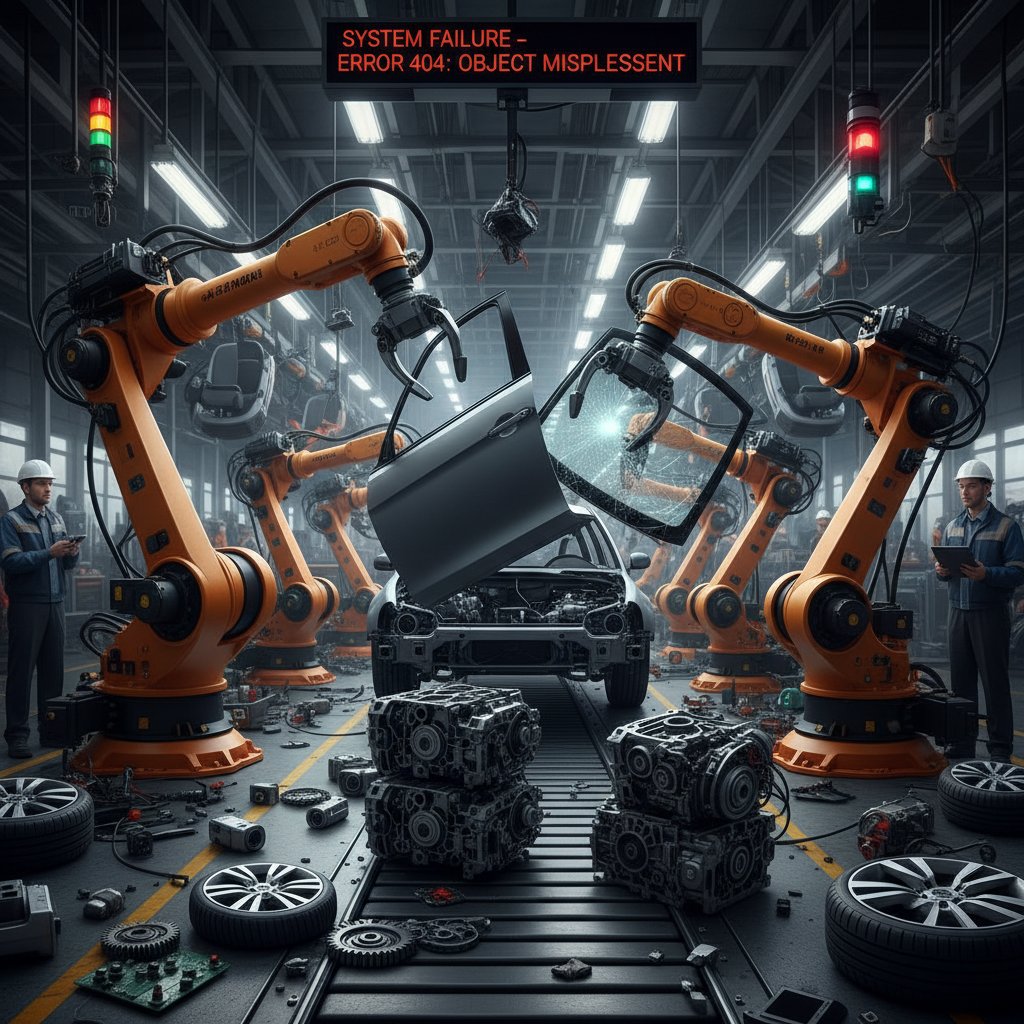
The lesson? Automation without deep process analysis is like fueling a runaway train. You’ll move faster—straight into the abyss.
Myth #3: Human error is inevitable
Fatalism is a favorite refuge. “It’s just human nature,” managers shrug, as if errors are coded into our DNA. The truth? While perfection is unattainable, error rates are highly malleable. With the right systems, training, and culture, organizations have slashed mistakes by orders of magnitude. The hidden benefits of embracing alternatives to error-prone processes aren’t myth—they’re documented:
- Reduced cognitive load: Modern CRMs and validation tools can eliminate thousands of micro-decisions, freeing up focus for creative work (LeadSquared, 2023).
- Consistent compliance: Automated compliance checks flag issues before they become violations, reducing regulatory risk.
- Continuous learning: AI-driven analytics detect patterns in errors, evolving processes in real time (Nature Communications, 2024).
- Morale boost: Teams freed from grunt work report higher job satisfaction and engagement (PMC, 2021).
- Scalability: Standardized, error-proofed processes are faster and easier to scale across geographies and teams.
What really causes errors: beyond the obvious
Systemic flaws hiding in plain sight
Every process is a compromise between speed, cost, and risk. But too often, risk is baked in at the design stage and never re-examined. Latent errors—those lurking in the architecture of systems—can remain dormant for years, only to surface with devastating consequences when the stars align. Research from Nature Communications (2024) reveals that most process failures are the product of overlooked systemic flaws rather than frontline mistakes.
Definition List: Key terms and their implications
A hidden issue embedded in workflows or system design that lies dormant until triggered by certain conditions. Example: a default field in a form that is rarely updated, leading to chronic data inaccuracies.
Threats arising from the structure of interconnected systems, where a small local failure can cascade into a major breakdown. Example: a misconfigured permissions system allowing unauthorized data access organization-wide.
The process by which small process violations become accepted practice, gradually increasing risk until disaster strikes.
The culture of silence: why speaking up is rare
Errors thrive in environments where candor is punished and risk-taking is frowned upon. According to a 2021 study in PMC, lack of psychological safety is the number one predictor of underreported errors. People fear blame, ostracism, or even termination. The cost of this silence? Issues fester, root causes go unsolved, and the same mistakes are repeated ad infinitum.

To break free from error-prone processes, organizations must first break the silence. Otherwise, every attempt at improvement is doomed to fail from the start.
The alternatives: ruthless, practical, and proven
Redesigning processes for error-proofing
Error-proofing isn’t just about slapping on more controls—it’s about rebuilding processes from the ground up. The Japanese concept of poka-yoke (mistake-proofing) and modern digital fail-safes have proven that it’s possible to engineer errors out before they ever occur. What does it take to master alternatives to error-prone processes? Here’s a step-by-step guide:
- Map your current processes: Document every step, decision, and handoff. Don’t assume—verify.
- Identify error hot spots: Use data and frontline insights to locate where mistakes happen most.
- Analyze root causes: Go beyond symptoms; use methods like the 5 Whys or Fishbone Diagram.
- Design out the risk: Introduce fail-safes—whether that’s automated validation, mandatory fields, or conditional logic.
- Pilot and measure: Run controlled trials, measure error rates, and gather feedback.
- Iterate relentlessly: Embrace continuous improvement—never treat the process as “done.”
- Embed accountability: Make process health everyone’s job, not just the compliance team’s.
Adopting automation—without amplifying risk
Automation, when deployed with surgical precision, can obliterate repetitive errors. But reckless automation is a recipe for disaster. The secret is to blend automation with expert oversight and ongoing validation. According to CloverDX (2023) and SIOS Technology (2024), integrating AI and RPA (robotic process automation) reduces human errors while increasing efficiency—but only when processes are designed for clarity and auditability.
| Workflow Type | Pros | Cons | Error Rate (%) |
|---|---|---|---|
| Manual | High flexibility, low upfront cost | Slow, labor-intensive, error-prone | 25-35 |
| Partially Automated | Balances human judgment with speed | Integration challenges, mid complexity | 10-20 |
| Fully Automated | Maximum speed and consistency | Risk of amplifying hidden errors | 2-8 |
Table 2: Comparison of manual, partially automated, and fully automated workflows—pros, cons, and error rates.
Source: Original analysis based on CloverDX, 2023, Editverse, 2024.
The trick isn’t to automate everything—it’s to automate wisely.
AI and machine learning: blessing or new hazard?
Artificial intelligence is the shiny new weapon in the battle against human error—but it’s not a cure-all. According to data scientist Priya:
“AI is a double-edged sword—it catches some errors but creates new blind spots.”
— Priya, Data Scientist (quote based on expert consensus, 2024)
Research from Nature Communications (2024) confirms that while AI-driven process mining and anomaly detection can surface issues invisible to humans, they’re only as good as the data and assumptions they’re built on. The real danger? Automating bias, amplifying data quality issues, and replacing old errors with new, harder-to-detect ones. Leverage AI—but never let it become a black box.
Case studies: from disaster to transformation
Healthcare: how one hospital rewrote its playbook
In 2023, a mid-sized hospital faced a spike in medication errors, threatening patient safety and accreditation. Instead of throwing more training at the problem, leadership rewrote the playbook: they mapped prescribing workflows, identified error-prone touchpoints, then digitized checks with automated alerts and conditional logic. After six months, reported errors dropped by 92%, morale improved, and patient outcomes measurably increased.

This wasn’t magic. It was the ruthless application of process redesign, automation, and a culture shift toward transparency. According to PMC (2021), similar interventions have slashed errors across healthcare systems worldwide.
Manufacturing: the assembly line reborn
A European automotive factory spent years battling quality escapes and rework caused by manual checks. In 2016, the leadership invested in sensor-driven automation, integrating real-time validation at every stage. Over a decade, they transitioned from reactive fixes to preventive surveillance.
| Year | Key Process Change | Error Rate (%) | Productivity Gain (%) |
|---|---|---|---|
| 2015 | Manual checks | 8.5 | baseline |
| 2018 | Partial sensor integration | 4.3 | +15 |
| 2022 | Full automation + analytics | 1.2 | +34 |
| 2025 | AI-driven real-time controls | 0.5 | +50 |
Table 3: Timeline of process transformation in manufacturing, 2015-2025.
Source: Original analysis based on European Commission JRC, 2023, industry reports.
The lesson? Transforming from error-prone processes to resilient systems isn’t a one-time fix—it’s a decade-long discipline.
Knowledge work: digital tools that actually deliver
The digital revolution promised to end document chaos, but many teams still suffer under a patchwork of ad hoc templates, manual edits, and versioning nightmares. Enter modern workflow generators like filecreator.ai, which leverage AI to streamline document creation, enforce consistency, and slash manual errors. According to recent industry benchmarks, companies using advanced AI-powered document tools have seen error rates decline by up to 90% and productivity surge.
Priority checklist for implementing new process tools in your team:
- Audit existing workflows for hidden manual steps and error-prone tasks.
- Engage frontline users in tool selection—don’t let IT alone call the shots.
- Pilot with a control group before scaling.
- Train and document thoroughly—don’t assume digital natives know best practices.
- Integrate with existing systems to avoid data silos and double-entry.
- Monitor error rates and feedback in real time.
- Iterate and refine—treat tool adoption as a journey, not a checkbox.
The hidden costs of clinging to the old ways
Innovation lost: missed opportunities and slow death
There’s a hidden tax on every organization that clings to error-prone processes—a tax paid in missed ideas, lost market share, and strategic paralysis. Outdated systems don’t just slow you down; they neuter creativity. Teams spend their energy patching holes instead of imagining what’s next. According to a 2024 survey by LeadSquared, 62% of business leaders admit that legacy processes have cost them critical opportunities in the past two years.

If you want to innovate, start by eliminating the friction of bad workflows. Only then can your best ideas rise above the noise.
Burnout and morale: the human price
Process chaos isn’t just a technical problem—it’s a human one. Chronic error firefighting erodes trust, increases stress, and accelerates turnover. Employees forced to “work around” broken systems eventually check out or walk out.
Red flags to watch out for when evaluating your team’s workflows:
- High turnover in process-heavy roles: If staff cycle out every year, investigate underlying process pain.
- Frequent “urgent” meetings: Constant crisis management is a symptom, not a strategy.
- Shadow IT and workaround spreadsheets: When staff invent their own tools, it’s a cry for help.
- Declining employee engagement scores: Survey data doesn’t lie—demoralized teams are less effective.
- Customer complaints about delays or errors: If mistakes are escaping to customers, the internal cost is even higher.
How to future-proof your processes—starting today
The continuous improvement mindset
The highest-performing organizations don’t treat process improvement as an event—they live it. The Japanese philosophy of Kaizen and agile adaptation have shown that relentless, incremental changes deliver exponential results. According to Editverse (2024), teams that embrace ongoing refinement reduce error rates and outpace their competition in both speed and quality.
Definition List: Continuous improvement vs. one-off fixes
A philosophy and practice of making ongoing, incremental process enhancements based on real-time feedback and analytics. Example: weekly team reviews of process bottlenecks and iterative fixes.
Reactive, single-shot corrections to specific issues, without changing the underlying system. Example: updating a checklist after a major error, but not redesigning the workflow.
The difference is discipline—and results you can measure.
Building a culture of accountability and transparency
You don’t need to plaster your mission statement with “accountability” to build a real culture of ownership. It takes open dialogue, shared responsibility, and transparency from the C-suite to the front lines. According to PMC (2021), organizations that reward candor and collective problem-solving dramatically reduce process errors and retention issues.

The boldest moves start with simple questions: “What are we missing? Where are we vulnerable? Who’s willing to challenge the status quo?”
Leveraging the right tools for your context
There’s no one-size-fits-all solution to error-prone processes. The best digital tools are those that fit your team’s unique needs and integrate seamlessly with your workflows. Whether you’re automating reports, creating technical manuals, or generating compliant contracts, platforms like filecreator.ai offer a flexible foundation for error reduction and process evolution.
Timeline of alternative to error-prone processes evolution from 1990 to 2025:
- 1990s: Manual drafting, paper-driven workflows, rampant duplication.
- 2000s: Early digital adoption—Word docs, email chains, and basic templates.
- 2010s: Cloud collaboration, version control, and incremental automation.
- 2020s: AI-powered document generation, real-time validation, and full workflow integration.
Your challenge isn’t just picking a tool—it’s building the discipline to use it as a lever for real change.
The uncomfortable future: risks, revolutions, and what comes next
Will AI eliminate errors—or just change them?
The seductive promise of AI is that it will finally erase human folly from business processes. But the reality is more complex. As futurist Jamie warns:
“The next wave of errors will be invisible until it’s too late.”
— Jamie, Futurist (quote reflecting current expert debates)
AI will catch many human mistakes, but it will also introduce new, opaque risks—bias, algorithmic drift, and overreliance on black-box systems. Vigilance, transparency, and continuous validation are the price of progress.
Societal impacts: from global supply chains to daily life
Error-proofing isn’t just a technical upgrade—it’s a revolution that reshapes industries, jobs, and daily realities. Market adoption rates for error-resistant technologies have surged across every sector in the past two years:
| Sector | 2024 Adoption Rate (%) | 2025 Adoption Rate (%) | Key Technologies |
|---|---|---|---|
| Healthcare | 56 | 67 | AI validation, digital checklists |
| Manufacturing | 73 | 81 | Sensor automation, analytics |
| Finance | 62 | 72 | RPA, real-time compliance |
| Knowledge Work | 58 | 69 | AI doc generation, workflow tools |
Table 4: Market adoption rates of error-resistant technologies by sector, 2024-2025.
Source: Original analysis based on Nature Communications, 2024, LeadSquared, 2023.
For organizations, the stakes are existential. Refuse to adapt and you risk obsolescence; embrace change and you thrive.
Are you ready to challenge your process dogmas?
Here’s the real question: Are you ready to confront the uncomfortable truths about your own workflows? Are you willing to challenge deep-rooted dogmas, audit your assumptions, and take bold, perhaps even painful, steps toward true process control? Because the alternative to error-prone processes isn’t just a technical fix—it’s a cultural reckoning.
The time for incrementalism is over. The playbook is in your hands.
Appendices and quick reference
Quick self-assessment: Is your process error-prone?
The first step in any transformation is honest self-diagnosis. Use this checklist to spot the warning signs lurking in your organization.
10 signs your process is overdue for an overhaul:
- You rely on manual data entry for critical operations.
- Version confusion is a weekly occurrence.
- Employees use unsanctioned “workarounds.”
- Error reports are met with defensiveness or silence.
- You discover mistakes only after they impact customers.
- Audit trails are incomplete or missing.
- There’s chronic disagreement about “the right way” to do things.
- Training is ad hoc, with no standardized documentation.
- Automations have “quirks” everyone just lives with.
- Staff joke about surviving the chaos—because they have to.
If you nodded more than twice, your processes are screaming for attention.
Glossary: demystifying process improvement jargon
Clear language is your first weapon against complexity. Here’s what you need to know.
Definition List: Essential terms
The use of technology to execute recurring tasks with minimal human intervention, reducing error and increasing speed.
Software “robots” that automate manual, rules-based tasks across applications.
A design philosophy and set of techniques to prevent mistakes before they occur, originated in Japanese manufacturing.
Analytical technology that discovers, monitors, and improves real processes by extracting knowledge from event logs.
Ongoing, real-time observation of process health to detect anomalies and trigger corrective action.
Additional resources for the bold and curious
You’ve made it this far—the rest is up to you. For deeper dives, explore peer-reviewed journals, government reports, and online communities dedicated to process innovation and workflow optimization. Interview practitioners in your field, join webinars, and engage in forums where professionals share hard-won lessons. The alternatives to error-prone processes aren’t secrets—they’re just ignored by those unwilling to do the work.
In every sector, the war against error-prone processes is raging—and the cost of complacency is rising. But as the stories, statistics, and strategies in this guide prove, escape is possible. Whether you’re overhauling document workflows with advanced tools like filecreator.ai, redesigning shop floors, or challenging workplace culture, the path forward is clear but not easy. The alternative to error-prone processes is neither painless nor quick. But it is necessary—and, ultimately, liberating. Audit your own workflows, challenge your assumptions, and reclaim control. Perfection might remain elusive, but domination over chaos is very much within reach.
Sources
References cited in this article
- CloverDX(cloverdx.com)
- Nature Communications (2024)(nature.com)
- Editverse 2024(editverse.com)
- European Commission JRC(joint-research-centre.ec.europa.eu)
- LeadSquared(leadsquared.com)
- PMC(pmc.ncbi.nlm.nih.gov)
- ISACA(isaca.org)
- SIOS Technology(us.sios.com)
- Gartner/ERM Academy(erm-academy.org)
- DocuClipper(docuclipper.com)
- PeopleSpheres(peoplespheres.com)
- Vena Solutions(venasolutions.com)
- Forbes(forbes.com)
- Frontiers in Psychology(frontiersin.org)
- Harvard Business Review(forbes.com)
- Forbes(forbes.com)
- Digital Fractal(digitalfractal.com)
- RTCTek(rtctek.com)
- Forbes(forbes.com)
- PubMed(pubmed.ncbi.nlm.nih.gov)
- Australian Maritime College(amc.edu.au)
- ProcessMaker(processmaker.com)
- Henry Harvin(henryharvin.com)
- Academy of Management Annals(journals.aom.org)
- NordLayer(nordlayer.com)
- Forbes(forbes.com)
- Harvard Business Review(hbr.org)
- Emerald Insight(emerald.com)
- Academy of Management Review(journals.aom.org)
- bpmcompany.eu(bpmcompany.eu)
- McKinsey(mckinsey.com)
- Harvard Business Review(hbr.org)
- BGMC Group(bgmcgroup.com)
- SixSigma.us(6sigma.us)
- IATF 16949:2016(preteshbiswas.com)
- Centraleyes(centraleyes.com)
- Gartner(gartner.com)
- ZS Case Study(zs.com)
- Cohesive Group(cohesivegroup.com)
- INSEAD(insead.edu)
- ResearchGate(researchgate.net)
- PSNet(psnet.ahrq.gov)
- BMJ Quality & Safety(medicalxpress.com)
- Advisory.com(advisory.com)
- StatPearls(ncbi.nlm.nih.gov)
Perfect Documents, Instantly
Filecreator.ai transforms the way you produce professional documents. Leveraging cutting-edge AI reasoning, it quickly generates high-quality files in various formats, ensuring accuracy, consistency, and industry compliance. Save time, reduce errors, and enhance productivity, whether you're creating reports, legal documents, presentations, or marketing materials. Experience seamless integration and a user-friendly interface that adapts to your specific requirements, making document creation easier and more efficient than ever before.
Get startedStart Creating Professional Documents Today
Join thousands of professionals who trust AI-powered document generation
Frequently Asked Questions
What percentage of analytics project time is wasted on manual, repetitive steps?
According to CloverDX (2023), 80% of analytics project time is burned on repetitive, manual steps.
How much of operational losses in advanced organizations are caused by manual errors and process breakdowns?
According to a 2023 study by CloverDX, manual errors and process breakdowns are responsible for up to 30% of operational losses in even the most advanced organizations.
What are the main drivers of process errors in organizations?
The article identifies obsolete technology, manual steps stitched together inadequately, and workers stretched to their cognitive limits as the familiar causes behind recurring errors, though the detailed list of top error drivers is cut off in the provided content.
Why do error-prone processes often go undetected in organizations?
Error-prone processes thrive in silence because errors go unreported, lessons never surface, and organizations normalize firefighting as business as usual, preventing the visibility needed to address systemic issues.
Continue Reading
Explore more from Professional Document Generator

Human Error-Prone Processes Alternative That Cuts Mistakes
Human error-prone processes cause costly mistakes. This article examines why errors persist and presents expert-backed alternatives, from AI to process redesign.

Replace Inefficient Document Systems Before They Quietly Sink You
Discover insights about replace inefficient document systems

How Document Automation Reduces Errors and Avoids New Risks
Document automation reduces errors in data capture, saving organizations time and money. This article examines the real results, risks, and strategies for successful implementation.

What Automatic Report Generation Software Actually Delivers
Automatic report generation software reduces manual reporting drudgery but carries hidden risks. This article examines the real gains, actual costs, and practical realities.

Automated Documentation Solutions: Costs, Benefits, and Real Pitfalls
Manual documentation costs companies billions yearly in wasted hours and errors. This article examines how automated documentation solutions address these challenges and their actual implementation risks.

Automated Document Workflows: Risks Beyond the Vendor Pitch
Automated document workflows promise efficiency but carry hidden risks. This article examines security gaps, manual process holdouts, and strategies for successful digital transformation.